South Asia / Bengal Delta
Bangladeshi
Also: Bangladeshi Cuisine, Bangla Cuisine, East Bengali Cuisine
A rice-and-river-fish delta cuisine, not a wheat one — pungent mustard oil, panch phoron, and hilsa (ilish) at its center, served in a formal course sequence from bitter shukto to sweet mishti, and more beef-forward than West Bengal.
Bangladeshi cooking is built on rice and freshwater fish, not wheat and meat — the defining contrast with the cuisines to its west. Mustard oil and the five-seed tempering blend panch phoron form the aromatic base; hilsa (ilish), a migratory river fish, is the cultural center of the cuisine in a way no single ingredient is elsewhere in South Asia. A formal Bengali meal is served as a sequence of distinct courses on one plate rather than as a single mixed thali, and Bangladeshi food is more meat- and beef-forward than West Bengali Bengali cooking, structured around a Muslim festival calendar rather than a Hindu one.
The flavour base
Mustard oil is the cuisine's defining fat, pungent and slightly sharp, used both for cooking and finishing raw. Panch phoron — a whole-seed blend of fenugreek, nigella, cumin, black mustard, and fennel — is tempered in hot oil at the start of most dals and vegetable dishes, giving a nutty, faintly bitter aromatic base distinct from the ground garam masalas of the north and west. Mustard paste (shorshe) is the primary sauce base for fish. Turmeric, green chili, and ginger-garlic paste round out the everyday base, with tamarind or green mango supplying sourness and, unusually for South Asian savory cooking, a tolerance for sugar in savory dishes.
Pantry staples
Key ingredients
Signature techniques
Signature dishes
At the table
Rice (bhat), not bread, is the base of nearly every meal. A properly served Bengali meal follows a defined course order eaten from one plate but never mixed together at once: it opens with a bitter or fried item such as shukto or a fritter, moves through dal, then vegetable preparations, then fish curries (the true center of the meal — "fish and rice make a Bengali," as the saying goes), then meat if served, and closes with a sour chutney (tok) and a milk-based sweet (mishti). This sequential structure, closer to a series of small formal courses than the single mixed thali common elsewhere in South Asia, is one of the region's most distinctive and least recognized features.
History & context
The Ganges-Brahmaputra-Meghna delta has supported intensive rice and freshwater fish agriculture for millennia, giving the region its foundational "fish and rice" identity. Mughal expansion into Bengal from the 17th century introduced pulao, biryani, and rich Persian-inflected breads to the Muslim elite of Dhaka, producing the distinct Old Dhaka Nawabi tradition of kacchi biryani and bakarkhani that survives as an urban high-cuisine strand alongside everyday delta cooking. British colonial rule culminated in the 1943 Bengal famine, a mass mortality event caused substantially by wartime policy failure, which left a lasting cultural weight around rice security still present in Bengali food memory. The 1947 Partition split Bengal along religious lines, placing the Muslim-majority east into Pakistan as East Bengal, later East Pakistan. The 1971 Liberation War, fought to separate from Pakistan and won at enormous human cost, was the decisive event in forging a distinct Bangladeshi identity, and in its aftermath, food became one register on which that identity diverged from West Bengal: more beef, a Muslim festival calendar centered on Eid rather than Durga Puja, and steadily less overlap with the Hindu-inflected vegetarian strand that runs through Kolkata Bengali cooking.
Regional variations
- Dhaka (Old Dhaka Nawabi legacy)
A distinct Persian-Mughal urban elite tradition of kacchi biryani, bakarkhani bread, and morog polao, layered over the delta's everyday fish-and-rice cooking.
- Sylhet
Known for a seven-layer tea culture, especially intense shutki (dried fish) use, and a large diaspora cuisine that has shaped Bangladeshi restaurant food abroad, particularly in the UK.
- Chittagong / coastal
A stronger seafood and dried-fish tradition, and home to the mezban, a large communal feast built around a distinctive spiced beef curry served to the whole neighborhood.
- Rural delta interior
Everyday cooking centers on khichuri and simple river-fish curries, with far less spice complexity than the urban Nawabi or festival traditions.
Related cuisines
- West Bengal (Indian Bengali)
Shares the rice-fish-mustard base and the sequential course structure directly, being one cuisine before 1947, but Bangladeshi cooking is markedly more beef- and meat-forward, built around the Muslim festival calendar (Eid, not Durga Puja), and uses dried fish and mustard more heavily than West Bengal's Hindu-inflected, more vegetarian tradition.
- Assamese
Shares a freshwater fish culture and a comparatively mild, sour-forward palate along the connected Brahmaputra system, but uses less mustard oil and a different souring agent (often fermented bamboo).
- Odia
Shares the eastern rice-and-fish delta logic and mustard use but follows a Hindu ritual calendar and a different, jaggery-forward sweets tradition centered on the Jagannath temple kitchens.
Canonical recipes
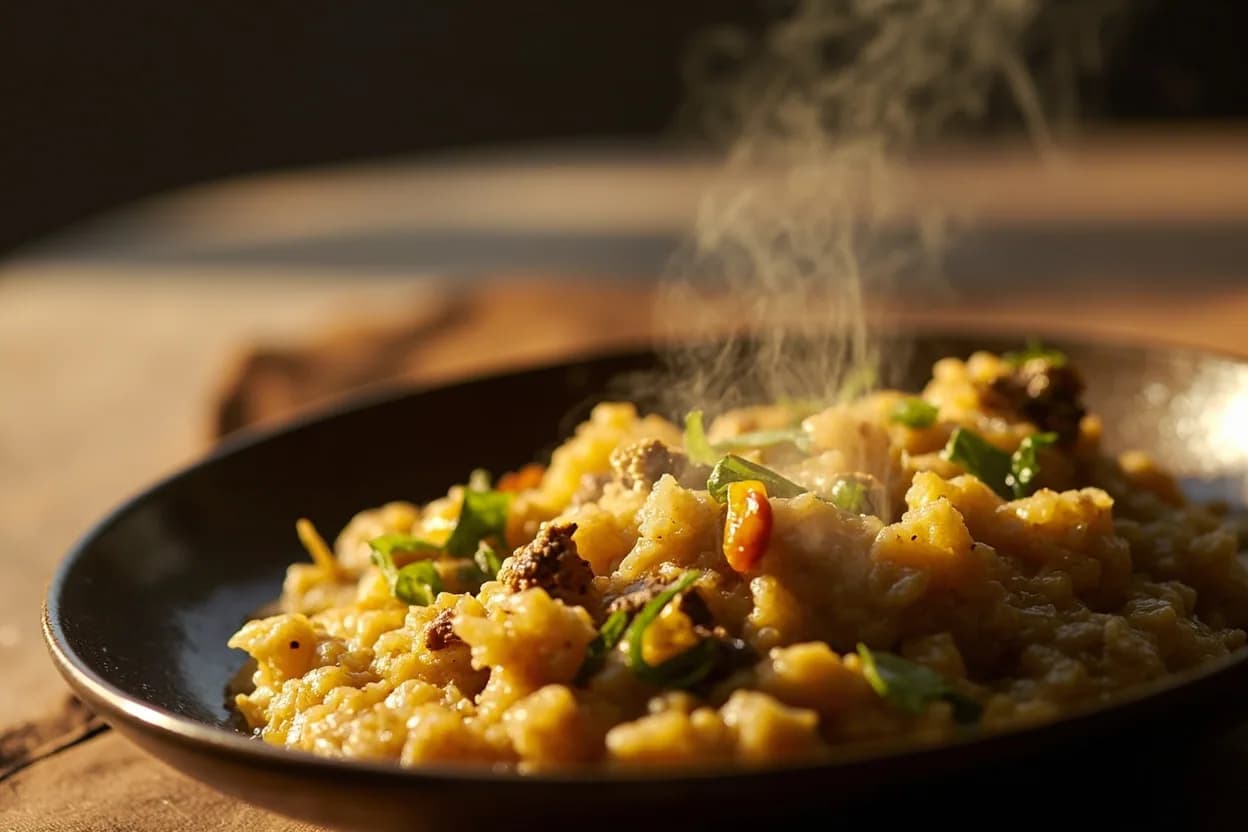
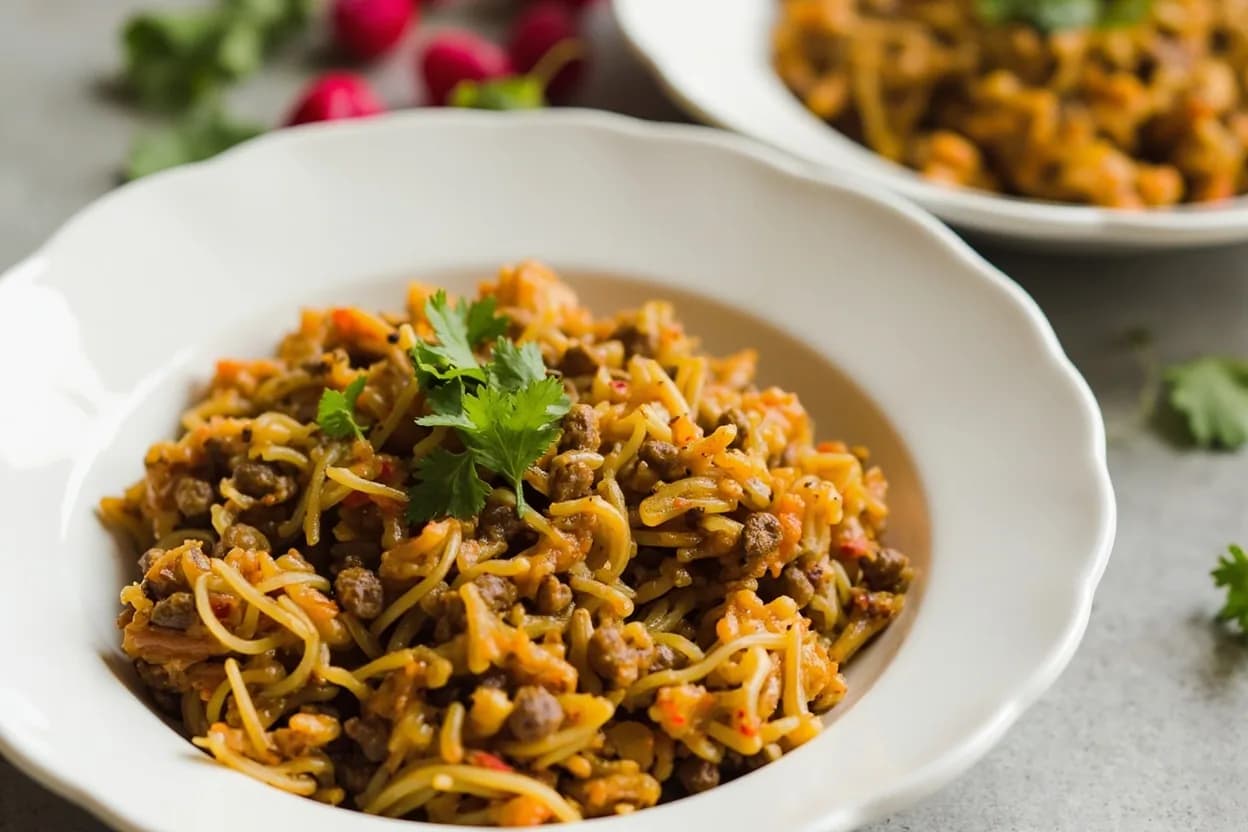
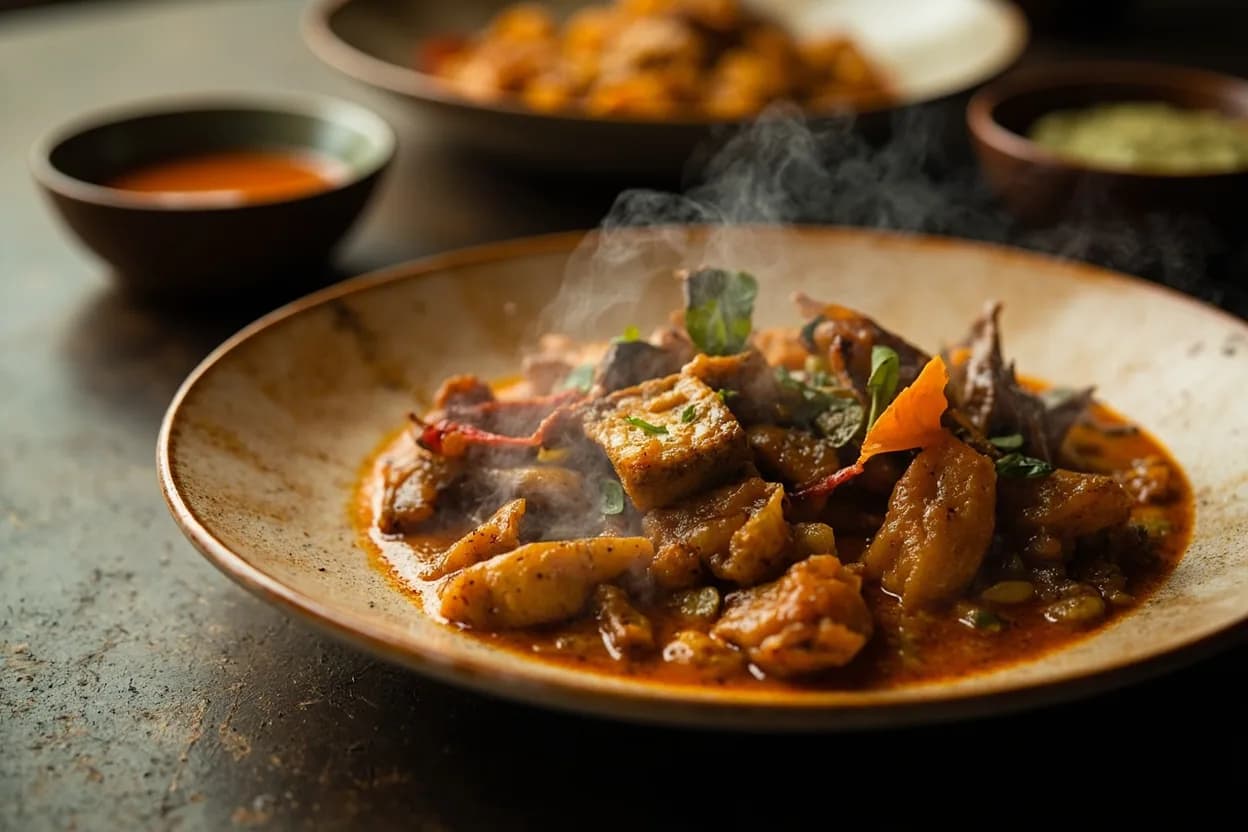
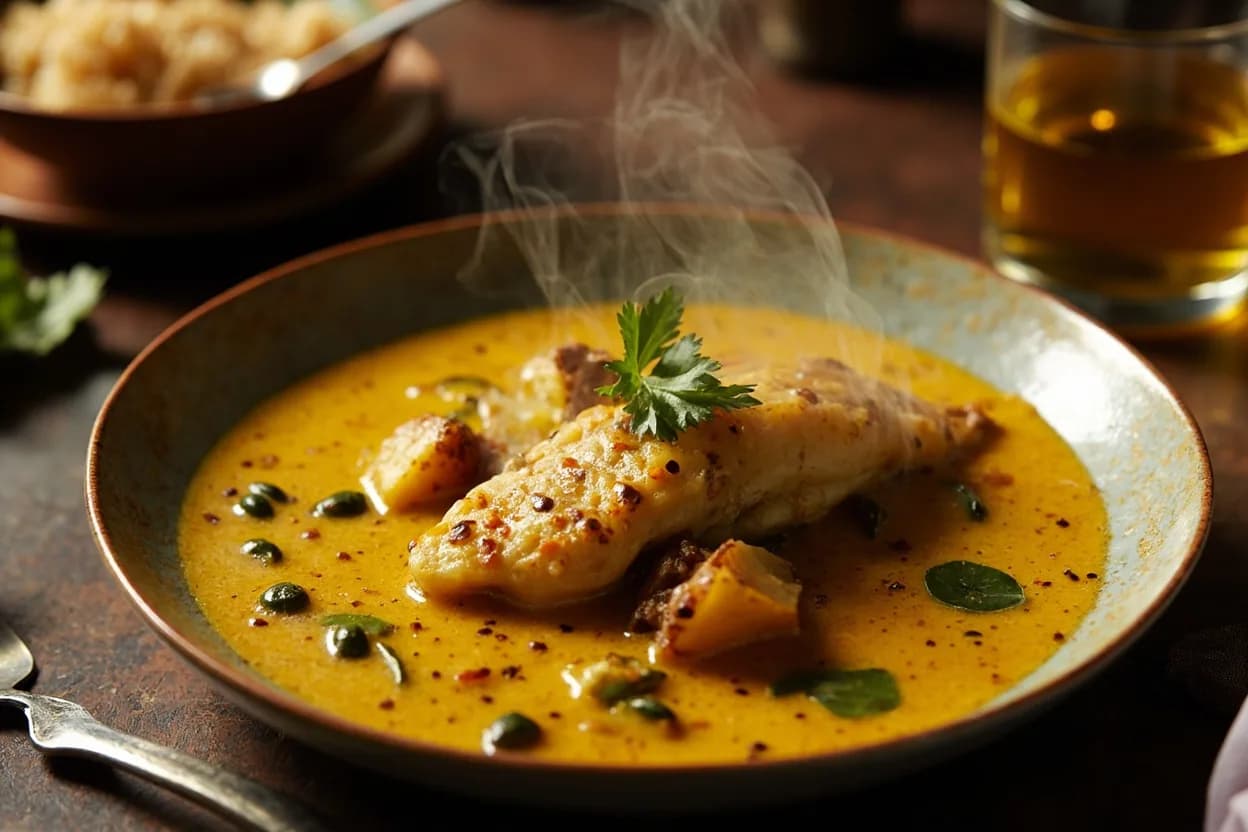
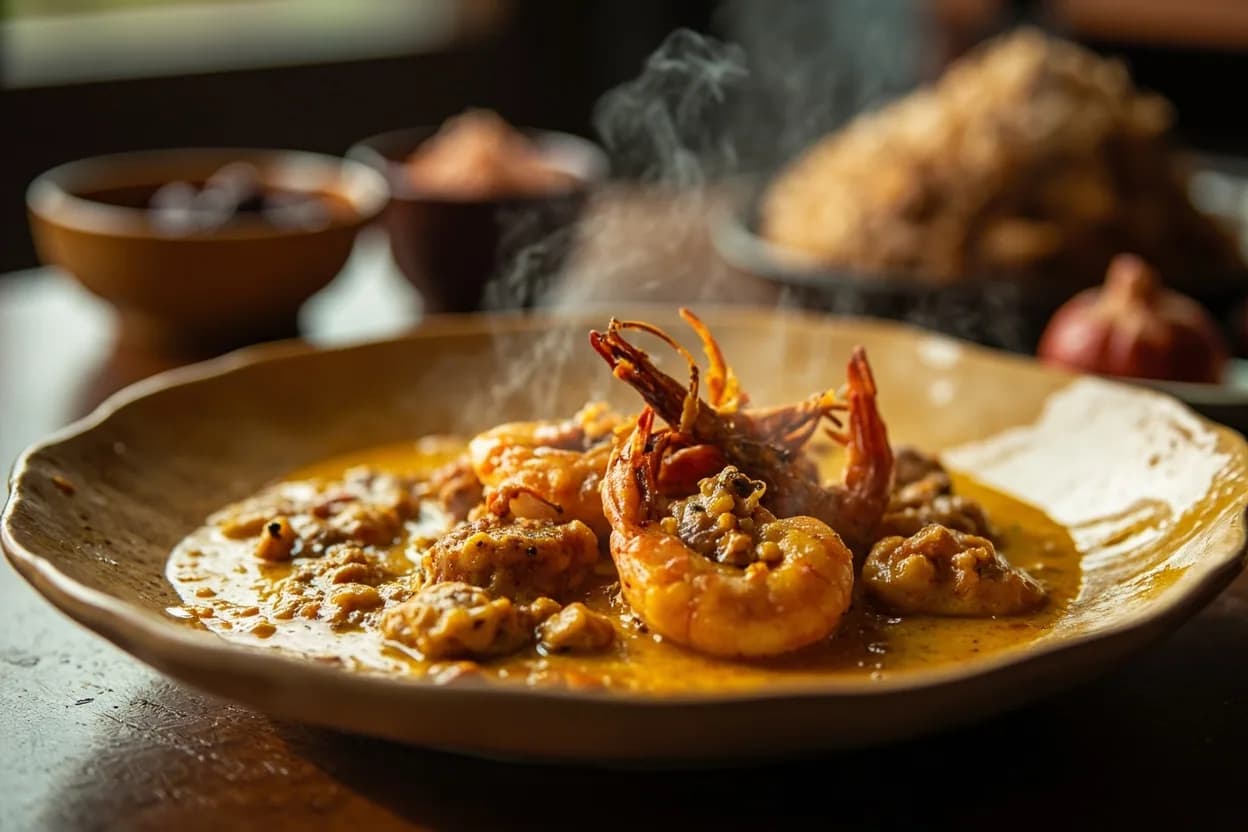
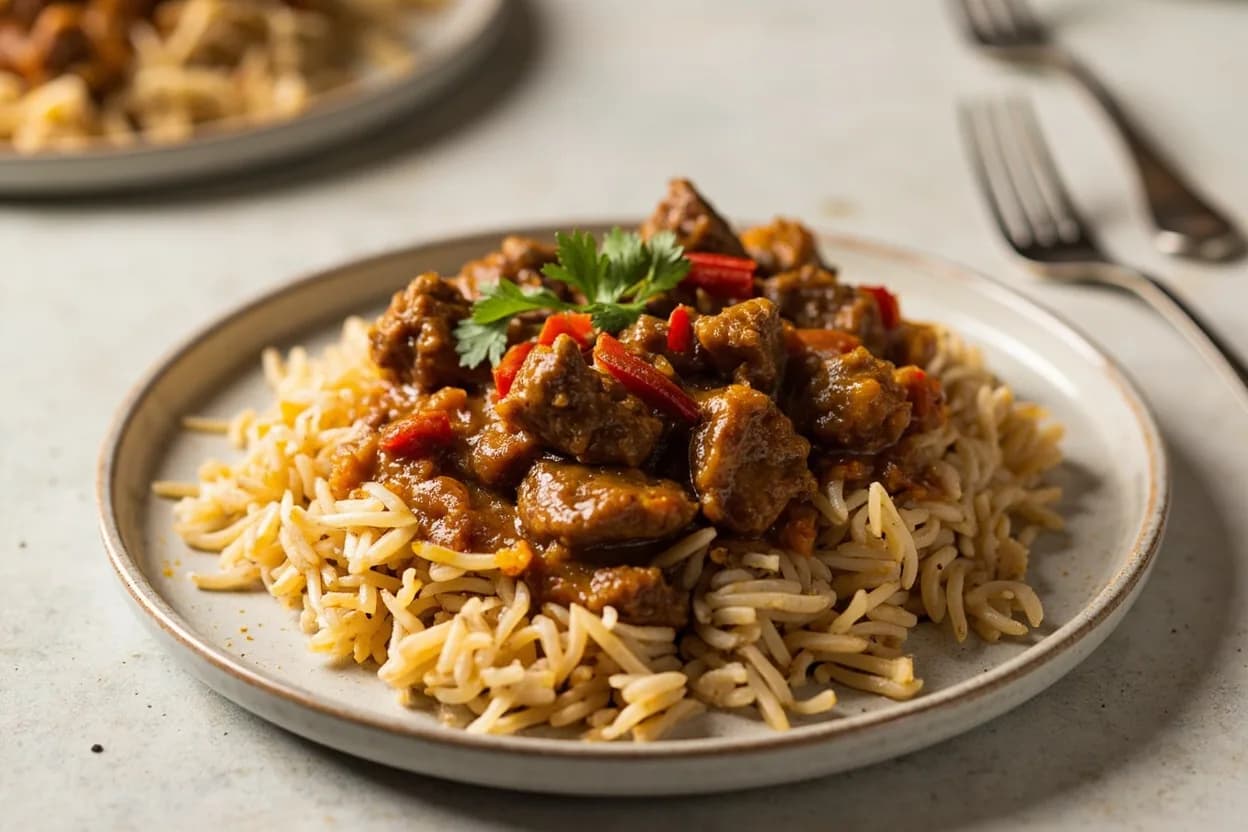
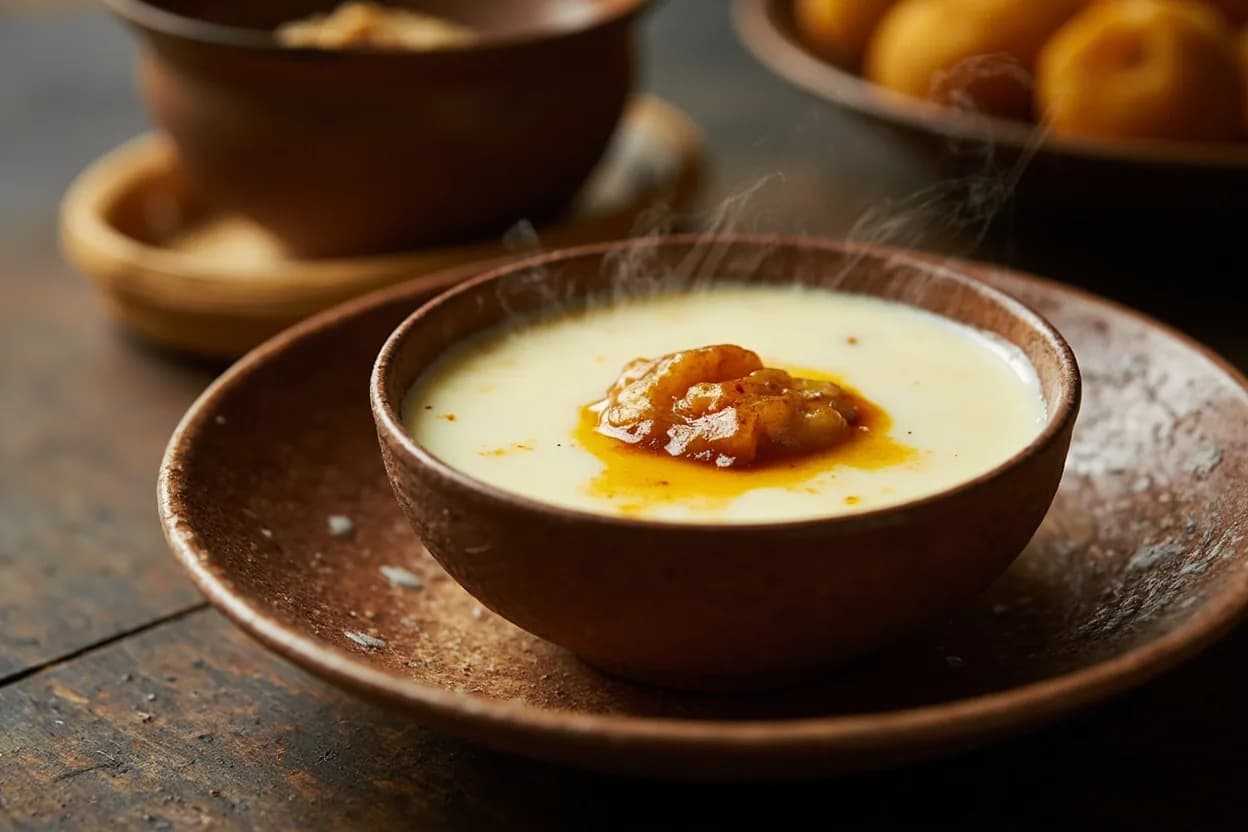
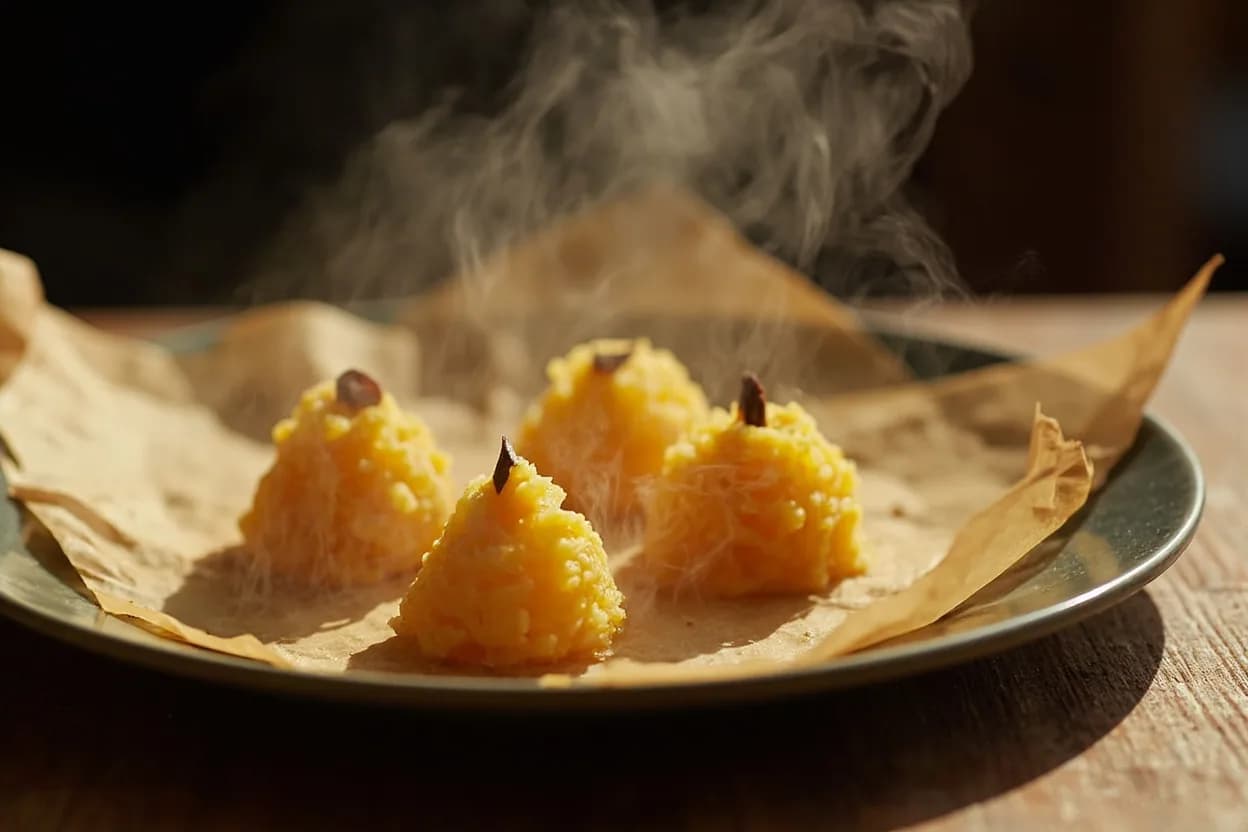
The dishes that define Bangladeshi, documented in the Canon.
References
- 1.Life and Food in Bengal — Chitrita Banerji (Seal Books, 1991)
- 2.Bengali Cooking: Seasons and Festivals — Chitrita Banerji (Serif, 1997)
- 3.Curry: A Tale of Cooks and Conquerors — Lizzie Collingham (Oxford University Press, 2005)
Confidence: medium
Notes
Hilsa: a fish with the cultural weight of a national symbol
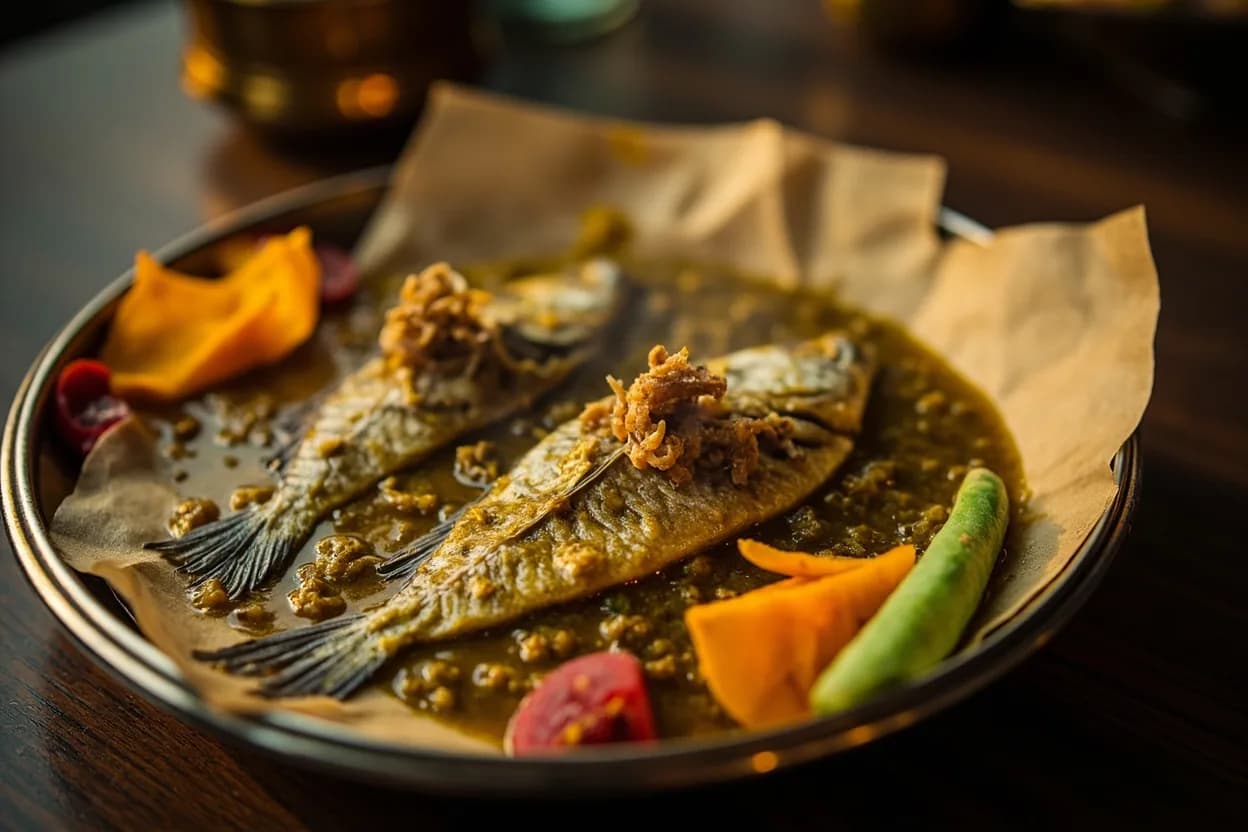
Ilish, the hilsa, is a migratory, anadromous fish that swims from the Bay of Bengal up the Padma, Meghna, and Jamuna rivers to spawn, and its capture window and quality shift by season and river reach, giving rise to intense regional preference for fish caught at a particular bend of a particular river. It is Bangladesh's national fish, central to the Bengali New Year (Poela Boishakh) table alongside panta bhat (soaked rice), and its price has become a genuine indicator of food-cost anxiety in Bangladeshi public life. Its many small, forked bones make it difficult to eat but are tolerated as part of the ritual of eating it properly, by hand, picking flesh from bone. The two canonical preparations, shorshe ilish (simmered in mustard sauce) and ilish bhapa (steamed in a mustard-chili paste, often over rice in a covered pot or wrapped in banana leaf), showcase the fish's fat content rather than masking it, and both depend on using raw, not fried, mustard paste to keep its sharp pungency intact.
Bhorta: an entire category built from leftovers and raw mustard oil
Bhorta is not a single dish but a technique and a category: almost any boiled or roasted vegetable, dried fish, or even egg can be mashed by hand with raw onion, green chili, and a generous pour of raw mustard oil to become a bhorta, eaten as an accompaniment to plain rice and dal rather than as a curry in its own right. Common versions include aloo bhorta (potato), begun bhorta (roasted eggplant), and shutki bhorta made from pounded dried fish, which delivers an intensely savory, almost fermented depth. The category reflects a household economy of using what is on hand rather than a fixed recipe list, and it is one of the more genuinely home-cooking-specific parts of Bangladeshi food that translates poorly to restaurant menus, where it is often underrepresented relative to its actual frequency at the everyday table.
The structured Bengali meal: courses on one plate
Unlike the mixed single-plate thali eaten across most of the rest of South Asia, a formally served Bengali meal — Bangladeshi or West Bengali — proceeds through a defined sequence even though everything may sit on the same plate or banana leaf: a bitter or fried opener (often shukto, a mixed-vegetable dish with a deliberately bitter note from bitter gourd), followed by dal, then vegetable preparations, then fish curries as the meal's true center, meat if served, and finally a sour chutney (tok) to cleanse the palate before a milk-based sweet (mishti) closes the meal, sometimes followed by paan. This bitter-to-sweet arc is often described locally as following older Ayurvedic ideas about ordering tastes across a meal, though the precise historical origin of the sequence is debated rather than firmly documented. Whatever its origin, the practice of eating in a fixed order rather than combining everything at once is a genuinely distinguishing structural feature of Bengali food culture within South Asia.