Western Europe
Belgian
Also: Belgian Cuisine, Cuisine Belge, Belgische Keuken
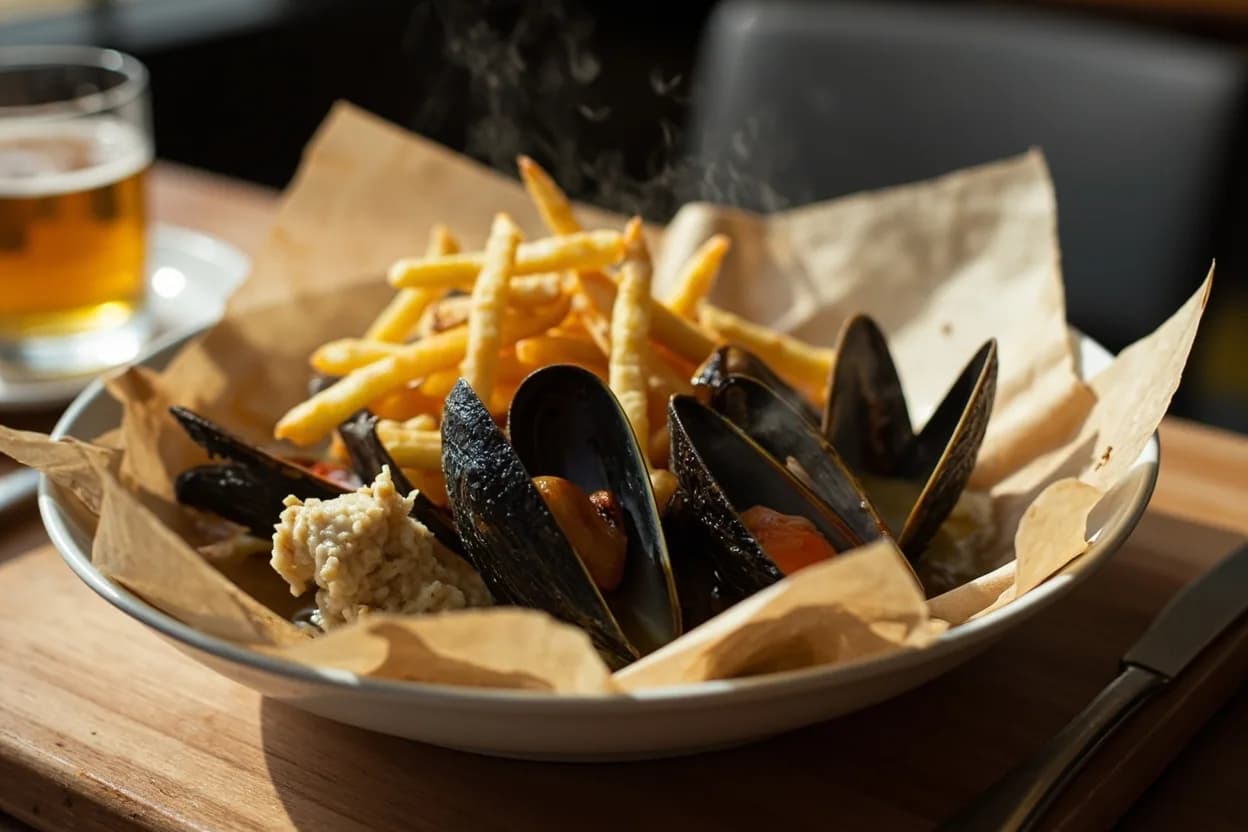
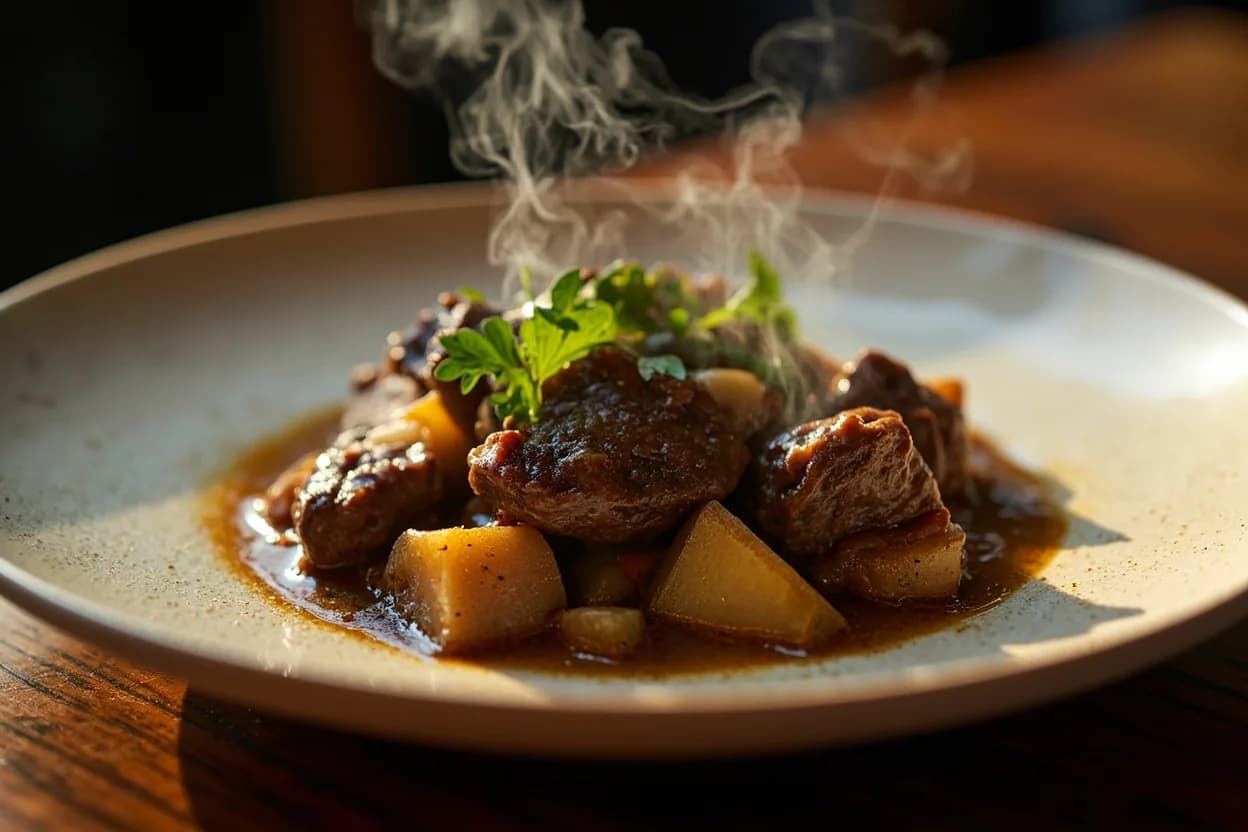
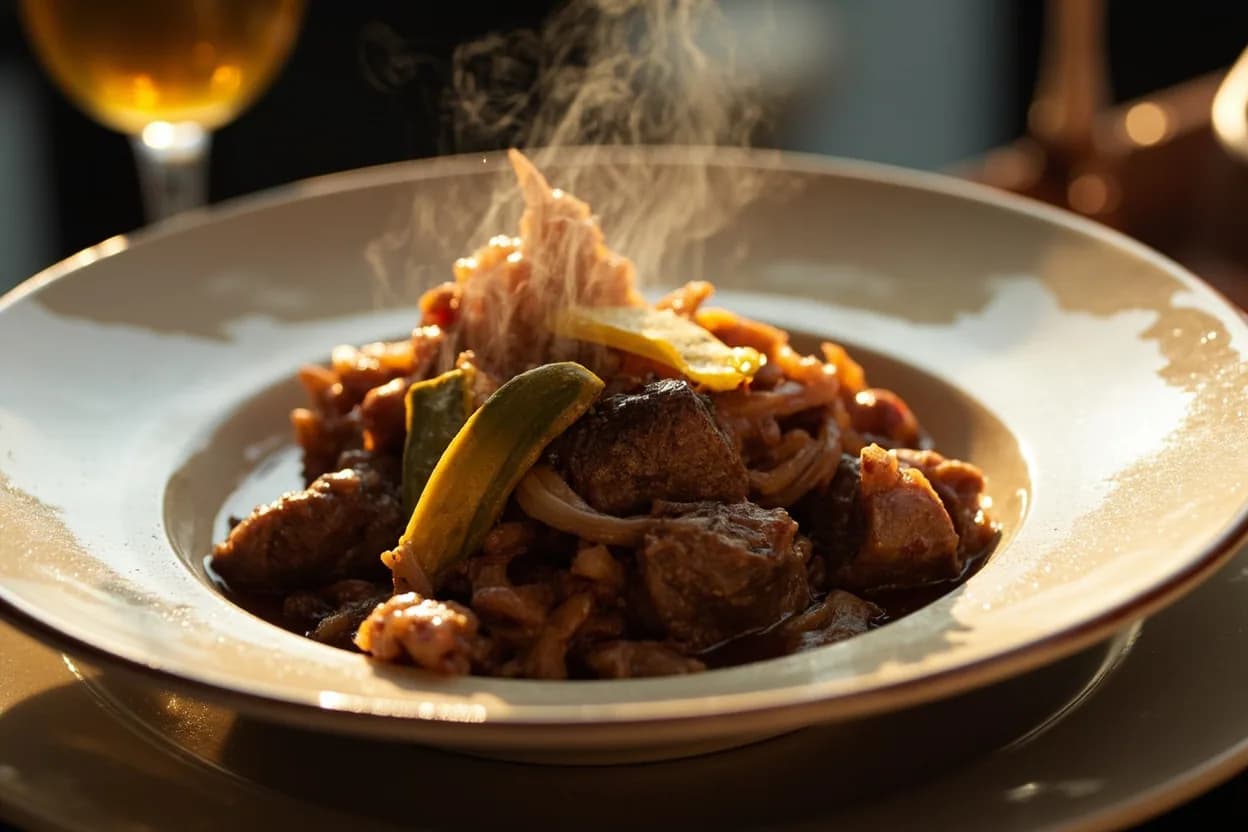
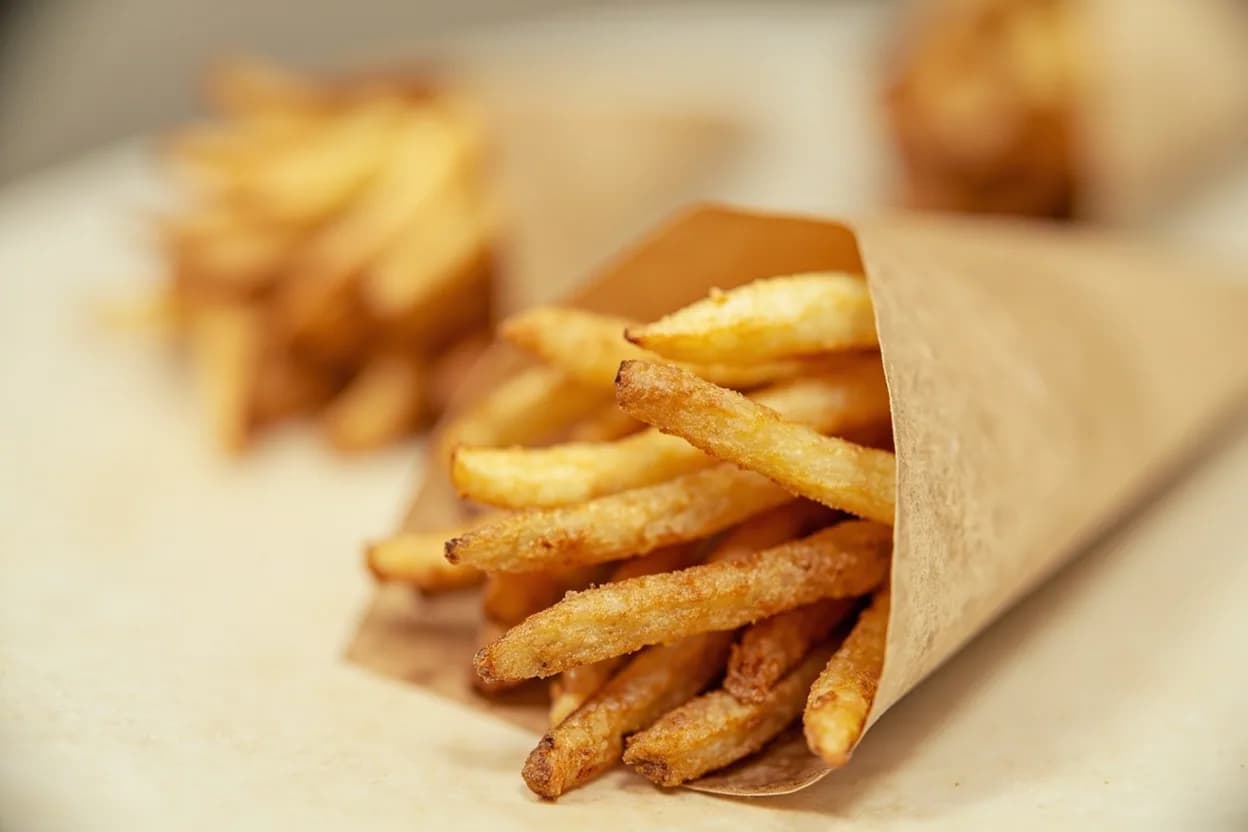
A country of two food cultures — Flemish beer-braised stoofvlees and Walloon French-leaning cooking — united by frites twice-fried in beef fat, mussels by the potful, and a beer tradition running from Trappist ale to wild-fermented lambic.
Belgian cooking is not one cuisine but two coexisting traditions on either side of the country's language line: a Flemish, Dutch/Germanic-leaning register of beer-braised meats, mussels, and stews in the north, and a Walloon, French-leaning register of butter-and-cream sauced dishes in the south, joined by a shared national repertoire of frites, chocolate, and beer used as an actual cooking liquid rather than only a drink. Its structural logic is richness built from fat (butter, beef fat, cream) and slow braising, softened by the sourness of beer or vinegar-based sauces.
The flavour base
Butter and beef fat are the primary cooking fats; beer — brown abbey ale for carbonnade, lambic or gueuze for some braises — supplies acidity and bitterness in place of wine in many stews. Cream and egg-yolk-thickened sauces dominate the Walloon side; mustard, vinegar, and bay leaf season braises, while nutmeg is a near-universal background note in cream sauces and mash.
Pantry staples
Key ingredients
Signature techniques
Signature dishes
At the table
Lunch and dinner both commonly run three courses in a sit-down setting, with dinner traditionally the more substantial meal in Flemish households; frites and a sauce function as a standalone snack meal sold from a dedicated friture/frituur rather than only as a side. Mussels served by the kilo-pot with frites is a full informal meal in itself, and a serious cheese-and-beer or chocolate course closes out a formal dinner rather than being an afterthought.
History & context
Modern Belgium's food culture was shaped less by one empire than by centuries of being fought over and split by shifting rule — Burgundian, Habsburg, Spanish, Austrian, and French administrations passed through the Low Countries between the 15th and early 19th centuries, layering French court cooking onto a Germanic peasant base and explaining the country's lasting Flemish/Walloon culinary split, formalized after independence in 1830. Brewing predates all of this: monastic brewing in Trappist abbeys goes back to the Middle Ages, and the spontaneous-fermentation lambic tradition of the Zenne valley near Brussels — beer inoculated by wild yeast rather than a pitched culture — is documented from at least the 16th-17th century and remains almost unique to that river valley's microclimate. Chocolate arrived via Spanish Habsburg trade routes from the Americas in the 17th century and became a serious industry in the 19th and 20th centuries; the modern filled praline was invented in 1912 by Jean Neuhaus II in Brussels, turning what had been an eaten-plain confection into a shell filled with ganache or cream. Witloof (Belgian endive) has an unusually precise origin story: Brussels grower Frans Breziers is credited with discovering, in the 1830s, that chicory roots stored in a dark cellar during the Belgian revolution's disruption sprouted pale, tender leaves — an accidental forcing technique that became a deliberate industry by the 1870s. Postwar affluence and EU institutions concentrated in Brussels helped build the country's disproportionately dense population of serious, often Michelin-starred, restaurants relative to its size.
Regional variations
- Flanders
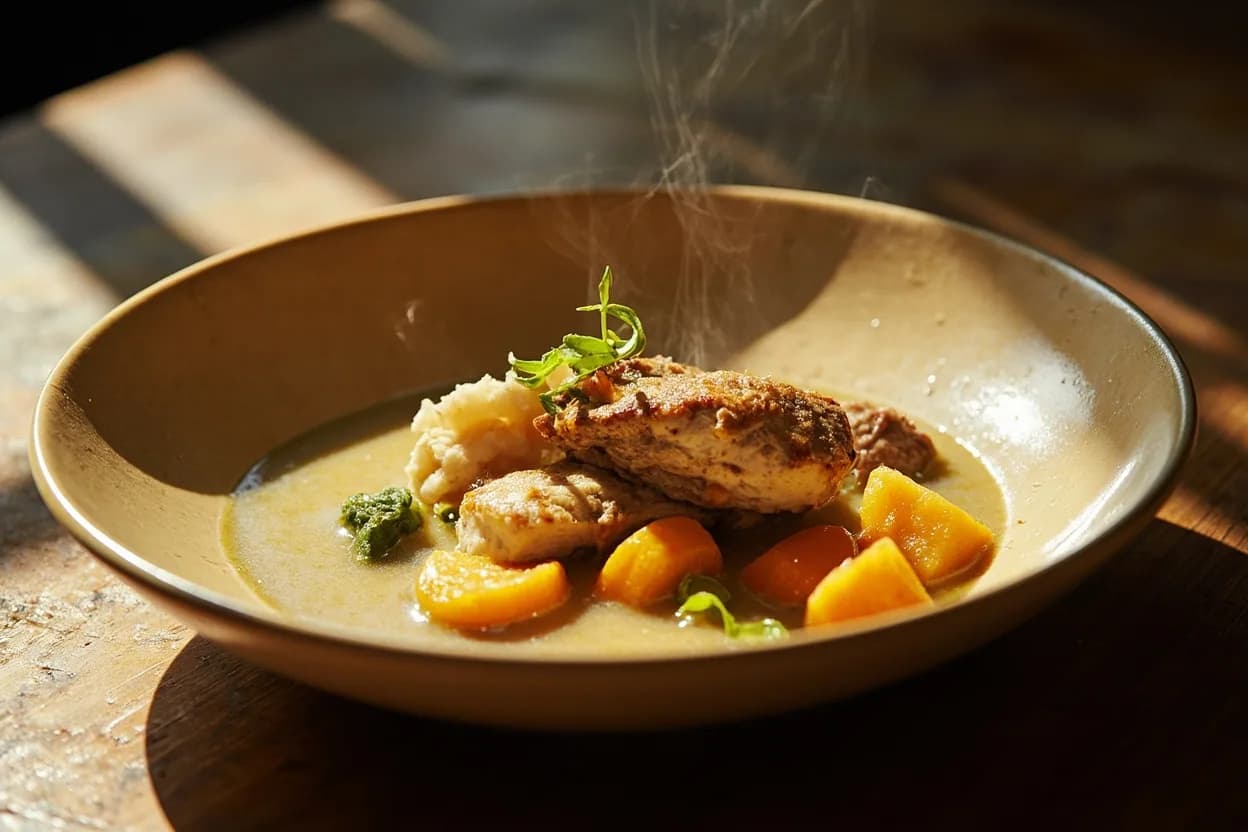
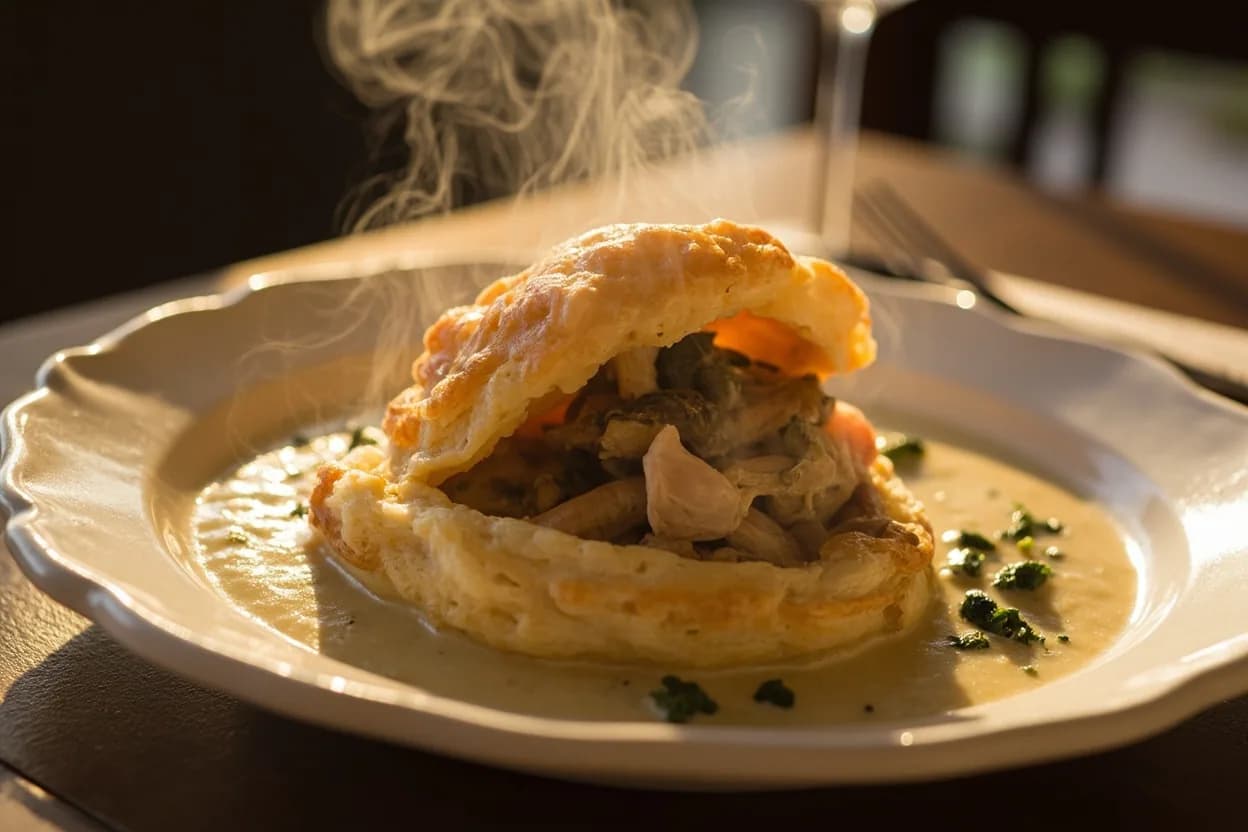
Dutch/Germanic-leaning: stoofvlees and carbonnade braised in beer, waterzooi, grey North Sea shrimp, and the bulk of the country's mussel consumption.
- Wallonia
French-leaning: richer cream and butter sauces, boudin and game cookery, and closer ties to Ardennes charcuterie and forest ingredients.
- Brussels
The bilingual capital blends both traditions and hosts the Zenne valley's lambic and gueuze brewing, plus the 1912 birthplace of the filled praline.
- Liège
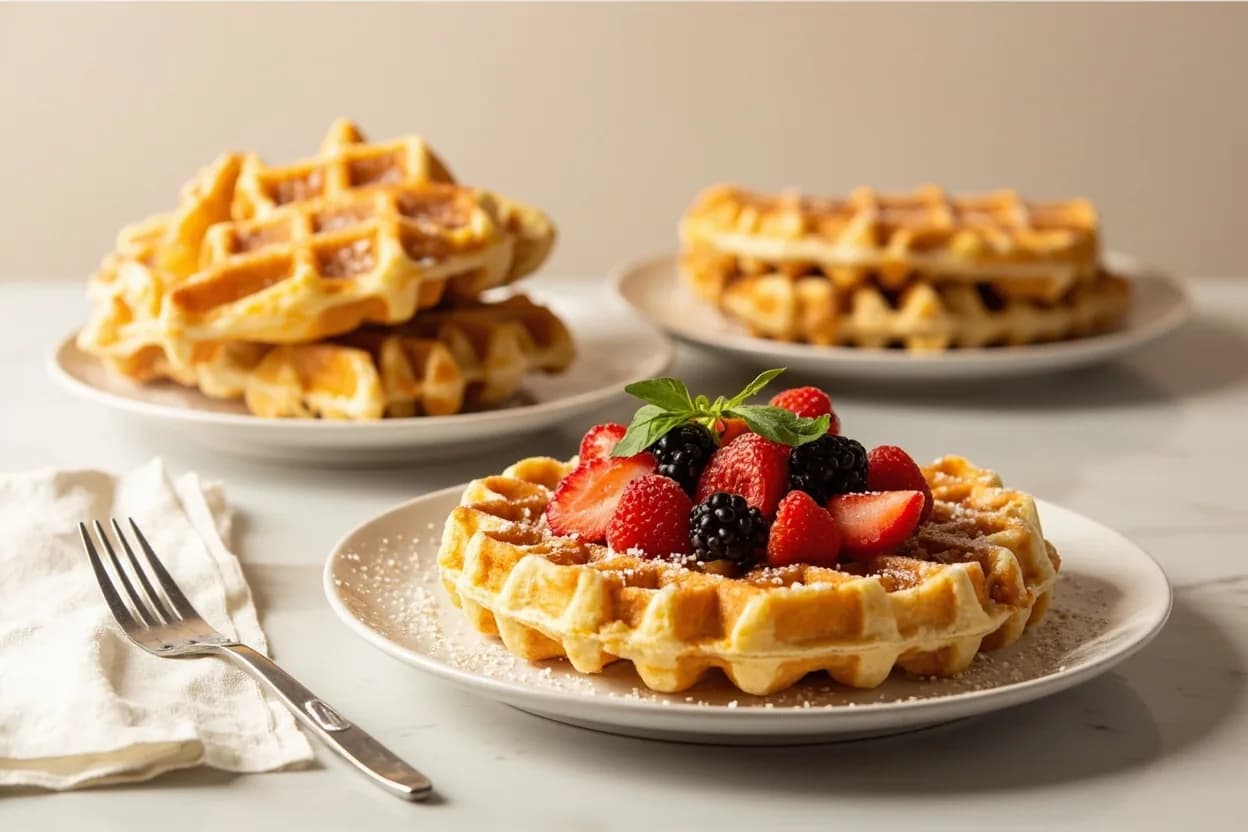
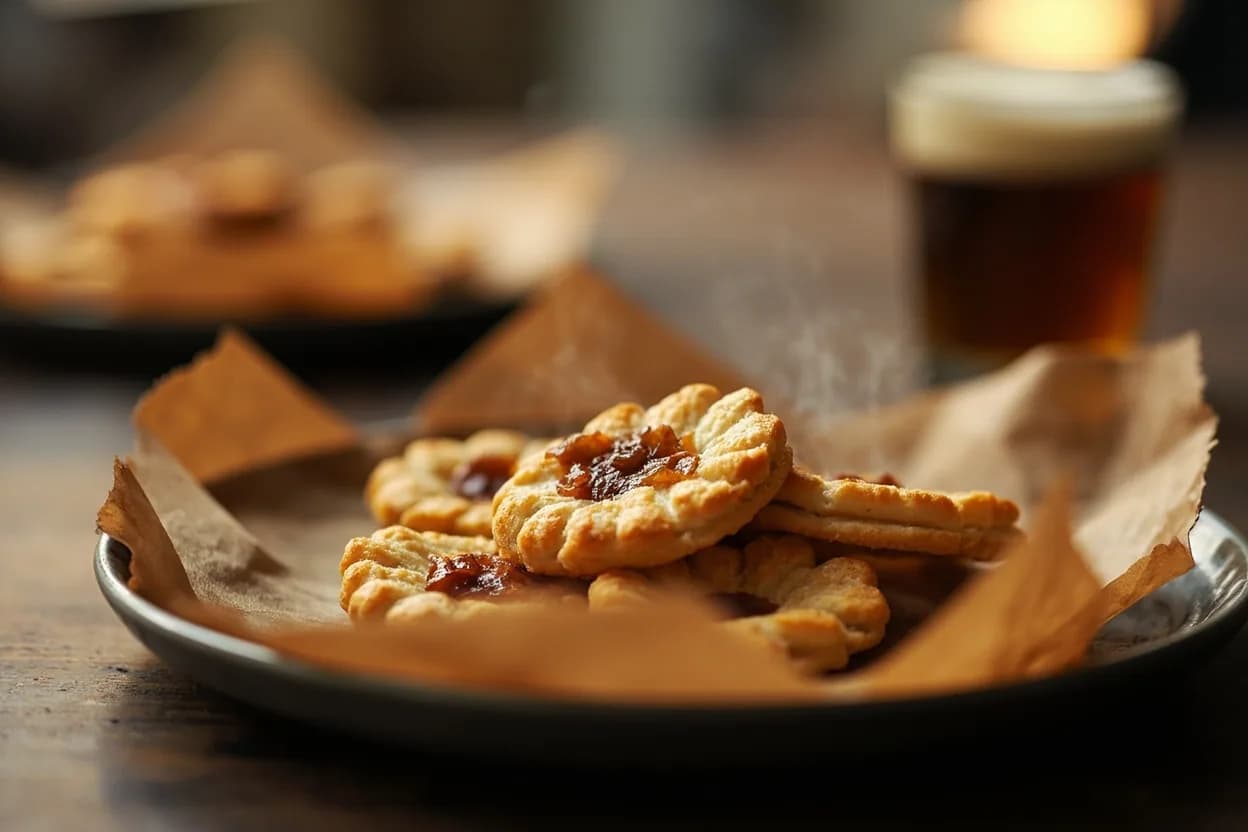
Home to its own distinct yeasted, caramelized-sugar waffle (denser and sweeter than the crisp Brussels waffle) and to the syrupy spice-cake couque de Dinant tradition nearby.
Related cuisines
- French
Walloon cooking shares French sauce technique (béchamel, cream reductions) and courses structure, but Belgium leans on beer rather than wine as a braising liquid and lacks France's regional wine-appellation identity in cooking.
Flemish cooking shares a Germanic base and some dishes (stoofvlees parallels Dutch stoofpot), but Belgium's beer culture, frites-and-sauce culture, and chocolate industry are far more developed and central to national identity.
- German
Both share beer as a serious craft and hearty braised-meat cooking, but German brewing is dominated by the Reinheitsgebot's barley-hops-water-yeast purity standard, while Belgian brewing embraces spontaneous fermentation, fruit lambics, and spiced abbey ales outside that framework.
- British
Frites and fish battered similarly cross into British fish-and-chip culture, but Belgian frites are twice-fried in beef fat and served with a serious mayonnaise-based sauce culture rather than vinegar alone.
Canonical recipes
The dishes that define Belgian, documented in the Canon.
References
- 1.The Beer Bible — Jeff Alworth (Workman Publishing, 2015)
- 2.On Food and Cooking: The Science and Lore of the Kitchen — Harold McGee (Scribner, 2004)
- 3.The Oxford Companion to Sugar and Sweets — Darra Goldstein, ed. (Oxford University Press, 2015)
- 4.Lambic Land: Explorations of the Spontaneous Fermentation World — Jef van den Steen (translated ed.)
Confidence: medium
Notes
Lambic: beer fermented by whatever is in the air
Most beer in the world, including Belgium's own Trappist and abbey ales, is fermented with a cultivated yeast strain pitched deliberately into the wort. Lambic, brewed only in and around the Zenne valley near Brussels (particularly Payottenland), is instead cooled overnight in a shallow open vessel called a koelschip and left to pick up whatever wild yeasts and bacteria live in that valley's air — a genuinely unusual, terroir-dependent process that cannot be reliably reproduced outside the region. The resulting beer is sour and funky, aged in oak for one to three years, and blended (young and old vintages together) to make gueuze, or refermented with cherries (kriek) or raspberries (framboise). Because the microbial population is local and unrepeatable, lambic is one of the few beer styles that functions closer to a wine appellation than an industrial recipe.
Witloof's accidental discovery
Belgian endive (witloof, 'white leaf' in Dutch) was not bred deliberately but found by accident. Brussels-area grower Frans Breziers is credited with the story that, during the upheaval of the 1830 Belgian revolution, he abandoned some chicory roots in a dark cellar; when he returned, the roots had sprouted pale, tightly furled, faintly bitter leaves rather than the bitter green foliage chicory produces in sunlight. Forcing chicory roots in total darkness — which prevents chlorophyll formation and mellows the bitterness — became a deliberate horticultural technique by the 1870s and made Belgium the origin point of a vegetable now grown industrially worldwide, still frequently sold and known internationally simply as 'Belgian endive.'
Why the praline needed 1912, not just chocolate
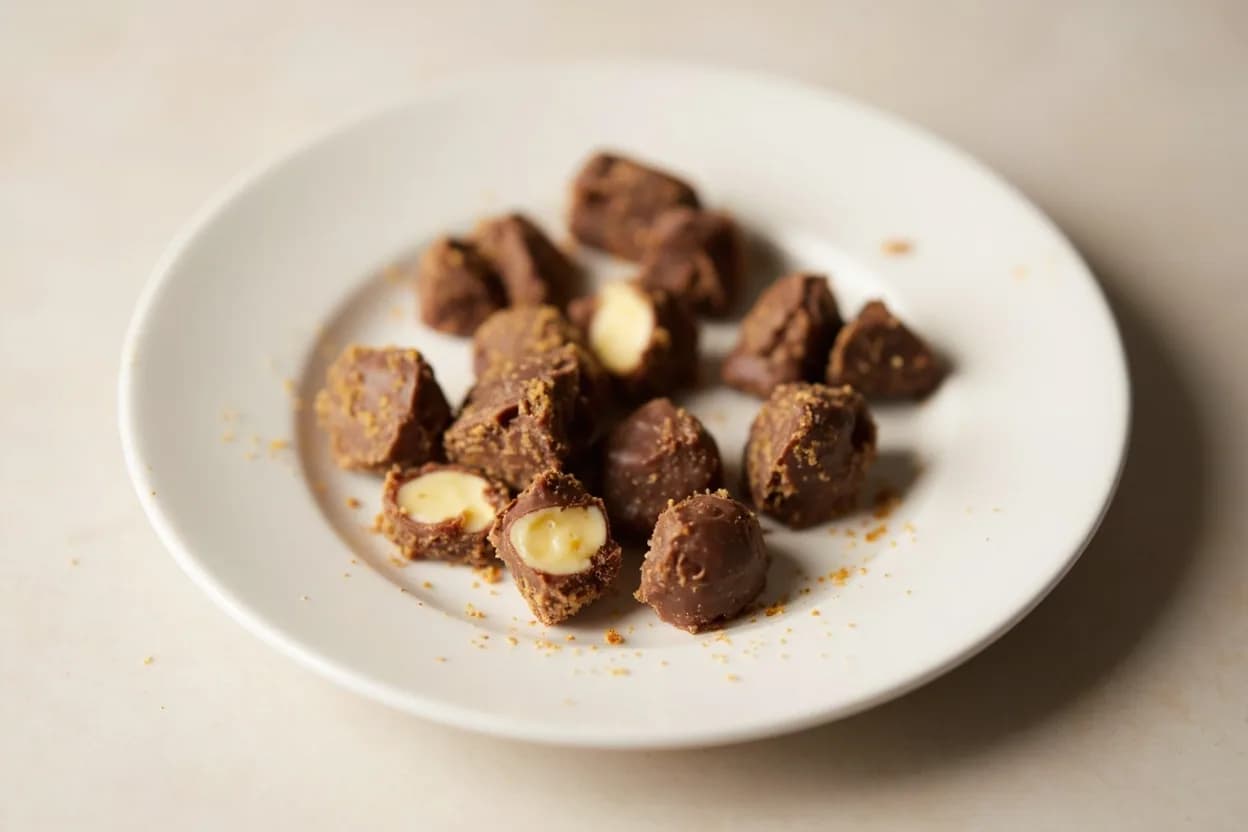
Belgium's reputation for chocolate is older than its reputation for the praline specifically. Cocoa reached Europe through 17th-century Habsburg-Spanish trade, and Belgian chocolate houses were established well before 1900, but the filled, shell-and-ganache chocolate now called a Belgian praline is a specific and datable invention: Brussels chocolatier Jean Neuhaus II created it in 1912, replacing solid eaten-plain chocolate bars with a hard chocolate shell hiding a soft, flavored filling. His family shop also gets credit for introducing the ballotin — the folded presentation box — shortly after, solving the practical problem of transporting a chocolate that was, for the first time, too delicate and filled to simply wrap and carry loose.