South America
Ecuadorian
Also: Ecuadorian Cuisine, Cocina Ecuatoriana
A cuisine split across three ecologies — Pacific-coast ceviche brightened with tomato and popcorn, Andean highland potato and guinea pig, and Amazonian cassava and river fish — unified by a shared love of plantain, corn, and lime-and-onion curtido.
Ecuadorian cuisine is the food tradition of a small, ecologically tripartite country — Pacific coast (Costa), Andean highlands (Sierra), and Amazon basin (Oriente) — each with its own staple crop and protein emphasis, unified by shared use of corn, plantain, potato, and a lime-onion curtido condiment (encurtido) that tops soups and mains nationwide. It reflects both a long Indigenous Andean and coastal heritage and the layering of Spanish livestock and rice cookery and, on the coast, African plantain and coconut technique.
The flavour base
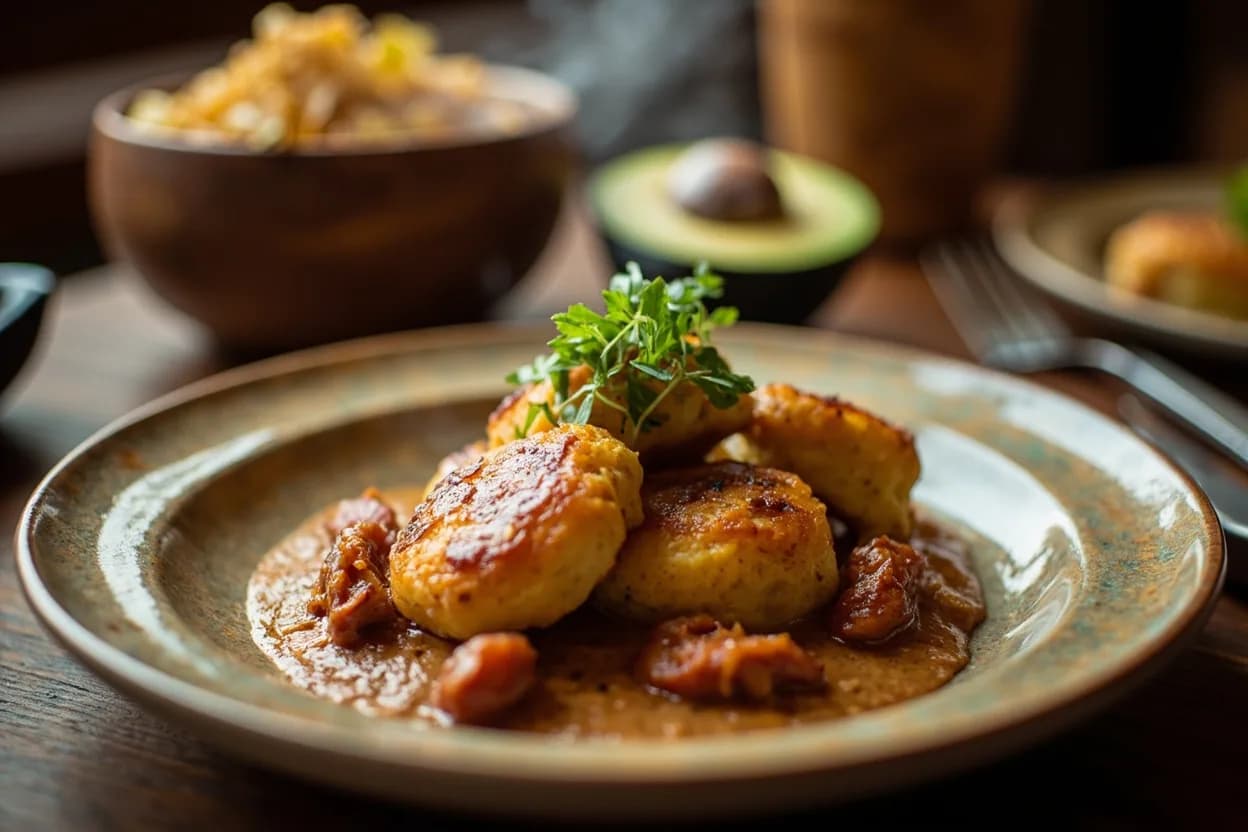
Lime and red onion curtido (encurtido) as a near-universal table topping; achiote (annatto) oil for color in highland stews; peanut sauce as a thickener in dishes like llapingachos' accompaniment and some Amazonian preparations; cilantro and culantro as fresh herbs; naranjilla (a tart Andean fruit) juice in seco de pollo; tomato paste brightening coastal ceviche broths.
Pantry staples
Key ingredients
Signature techniques
Signature dishes
At the table
Breakfast on the coast often includes bolón de verde (mashed green plantain balls with cheese or chicharrón); in the highlands, a hot drink like colada morada (on holidays) or simply coffee with bread. The midday almuerzo is the main meal nationwide, typically soup followed by a rice-and-protein plato fuerte, sold as a fixed set menu in nearly every restaurant. Ceviche functions as a lunch or light-meal dish on the coast rather than a starter. Cuy asado and fanesca (a multi-grain, multi-fish Lenten soup eaten specifically during Holy Week) mark ceremonial and seasonal occasions.
History & context
Long before Inca expansion reached the region in the 15th century, Andean societies in what is now highland Ecuador — including cultures ancestral to today's Kichwa peoples — cultivated potato, quinoa, and maize and domesticated the guinea pig, while coastal cultures such as the Valdivia (one of the earliest known pottery-using societies in the Americas, c. 3500–1800 BCE) fished and farmed along the Pacific lowlands, and Amazonian peoples built a cassava-and-plantain foodway around river systems. Inca rule (from roughly 1463 until the Spanish conquest) briefly unified the highlands administratively without erasing local foodways. Spanish colonization from the 1530s introduced cattle, pigs, wheat, rice, and citrus, and imported enslaved Africans to coastal plantations, whose descendants in Esmeraldas province still carry a distinct Afro-Ecuadorian coastal cuisine built on coconut, plantain, and seafood. Ecuador's 19th-century independence (1830, after the dissolution of Gran Colombia) left the tripartite Costa-Sierra-Oriente food geography largely intact, reinforced by the country's difficult inter-regional terrain, which historically limited exchange between coast and highlands more than in neighboring Peru or Colombia. Banana and cacao export booms through the 20th century built the coastal economy, while the highlands remained centered on potato and dairy agriculture; both regions' foodways have become increasingly visible together only as national transport and media have connected them over the past several decades.
Regional variations
- Costa (Pacific lowlands)
Seafood, rice, and plantain dominate; Guayaquil is the ceviche and encebollado capital, and Esmeraldas carries a distinct Afro-Ecuadorian coconut-and-seafood tradition.
- Sierra (Andean highlands)
Potato, corn, and dairy dominate; Quito, Cuenca, and Ambato each claim signature versions of hornado, llapingachos, and cuy asado, often sold together at market stalls.
- Oriente (Amazon basin)
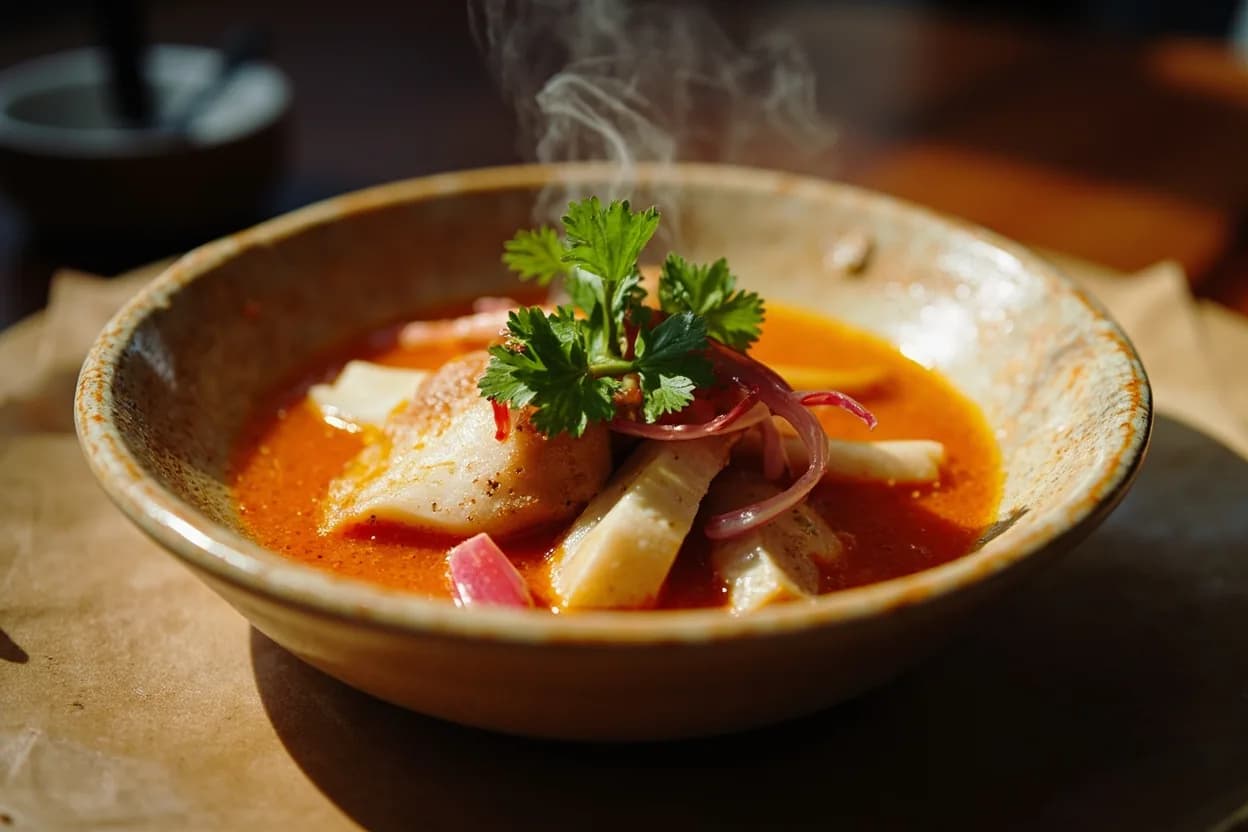
Cassava, plantain, river fish (such as tilapia and native species), and hunted or farmed game define an Indigenous Kichwa- and Shuar-influenced foodway distinct from the other two regions, often cooked wrapped in bijao or plantain leaf (maito).
- Galápagos
Small resident and tourism-driven food culture layered onto imported mainland staples, with local seafood such as langosta (spiny lobster) prominent.
Related cuisines
Shares potato diversity, guinea pig as festival protein, and Andean crops like oca and quinoa across the continuous highland spine linking the two countries.
Both coasts share ceviche as the defining dish, though Ecuador's tomato-forward, shrimp-heavy version differs markedly from Peru's clean citrus-cured tiradito style.
Shares plantain-forward Pacific coastal cooking and Andean potato traditions across the shared border region of Nariño and Carchi/Imbabura.
Canonical recipes
The dishes that define Ecuadorian, documented in the Canon.
References
- 1.Gran Cocina Latina: The Food of Latin America — Maricel Presilla (W.W. Norton, 2012)
- 2.The Book of Latin American Cooking — Elisabeth Lambert Ortiz (Alfred A. Knopf, 1979)
- 3.Lost Crops of the Incas — National Research Council (National Academies Press, 1989)
- 4.The Cambridge World History of Food — Kenneth F. Kiple and Kriemhild Conée Ornelas, eds. (Cambridge University Press, 2000)
Confidence: medium
Notes
Ceviche, Ecuadorian style
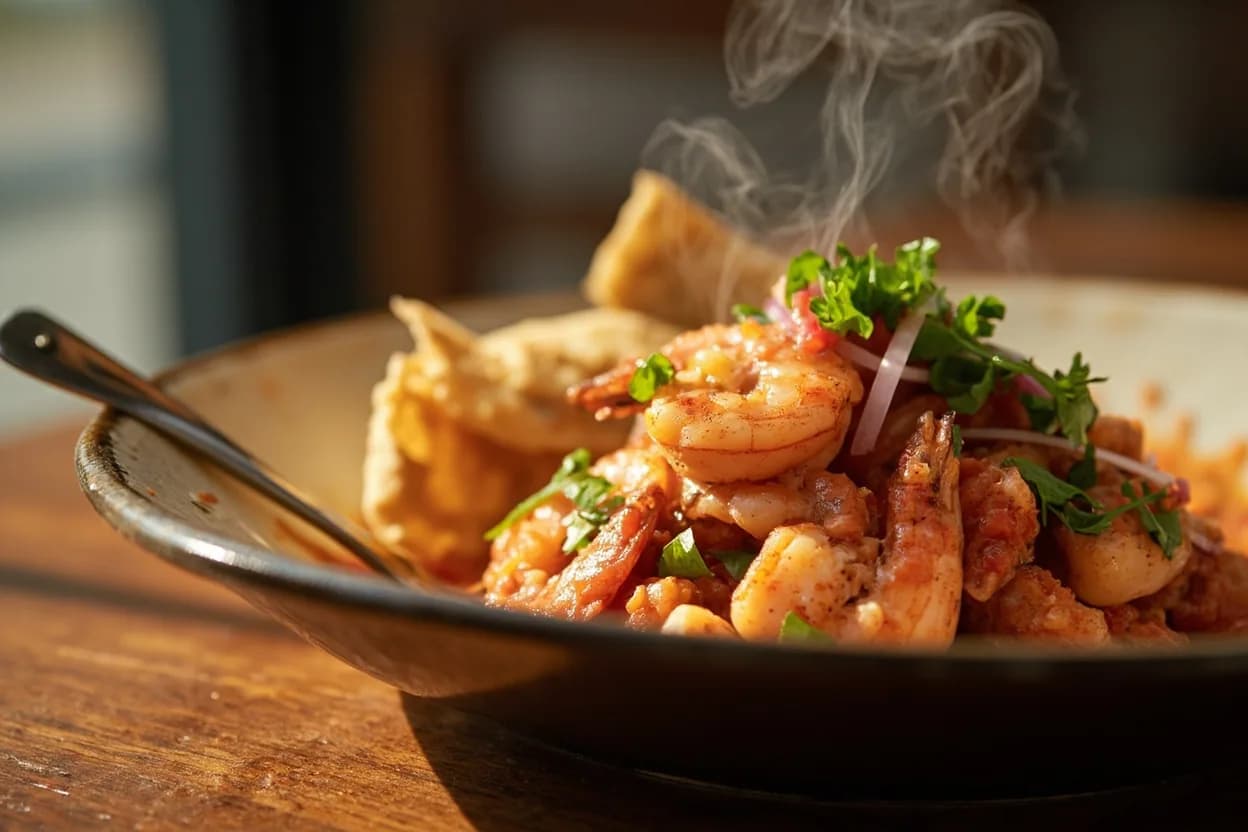
Ecuadorian ceviche differs sharply from its Peruvian cousin: shrimp (camarones) is more common than white fish, the marinade typically includes tomato and tomato paste alongside lime, giving the broth a pink, soupy character closer to a cold seafood cocktail than Peru's clean tiradito-style plate, and it is customarily served with canchita (toasted salted corn kernels, closer to dried corn nuts than popcorn) and patacones or plain popcorn on the side for textural contrast and to soak up the broth.
Three ecologies, one country
Ecuador's food geography is organized around three distinct regions packed into a small country: the Costa (Pacific coastal lowlands) built on plantain, seafood, and rice; the Sierra (Andean highlands) built on potato, corn, and guinea pig at altitudes from 2,000 to over 3,000 meters; and the Oriente (Amazon basin) built on cassava, plantain, and river fish, with hunted game historically supplementing Indigenous Kichwa, Shuar, and other Amazonian diets. A single national dish rarely spans all three; instead, Ecuadorian identity is often expressed as fluency across all three tables.
Guinea pig and the Andean feast
As in Peru and Bolivia, cuy (guinea pig) is the Ecuadorian highlands' prestige protein, roasted whole (cuy asado) over open coals or in a clay oven and served at festivals, markets, and family celebrations rather than as everyday food — a shared Andean heritage stretching back thousands of years before Inca expansion reached present-day Ecuador in the 15th century.