Central Europe / Alpine-Adriatic
Slovenian
Also: Slovenian Cuisine, Slovenska kuhinja, Slovene cooking
A four-way crossroads cuisine — Alpine potica and kranjska klobasa sausage in the north, Italian-leaning Karst pršut on the coast, and Pannonian bean stews like jota and bujta repa further east.
Slovenian cooking sits at the meeting point of four larger culinary traditions — Alpine/Austrian, Mediterranean/Italian via the Karst and coast, Pannonian/Hungarian via the eastern lowlands, and Balkan via the south — and does not resolve into one national flavor so much as carry all four as distinct regional identities within a small country. Its most genuinely national dish, potica, is defined less by one recipe than by a technique — a yeasted dough rolled thin, spread with a filling, and coiled into a spiral loaf — that supports dozens of regional and family fillings. Meals lean on pork, dairy, buckwheat, and root vegetables, prepared with restraint rather than heavy spicing.
The flavour base
Pork fat and butter as the primary fats depending on region, garlic and onion as the aromatic base, caraway and marjoram in Alpine dishes, paprika in the Pannonian east, olive oil and Mediterranean herbs on the Karst and coast. Souring comes from fermented turnip or cabbage (repa, kislo zelje) and vinegar rather than citrus. Buckwheat and pumpkin-seed oil are two genuinely distinctive Slovenian flavor notes not shared with most neighbors.
Pantry staples
Key ingredients
Signature techniques
Signature dishes
At the table
Lunch (kosilo) is traditionally the day's main meal, often opening with a soup, though modern urban schedules have pushed the largest meal toward evening. Bread or a starch (potato, buckwheat žganci, dumplings) accompanies nearly every meal. Potica is the ceremonial centerpiece at Christmas, Easter, and weddings specifically, cut and served in thin spiral slices rather than plated as an ordinary course. Coastal meals follow a more Mediterranean structure, with cured pršut and olives as openers before a fish or pasta course.
History & context
Slovene lands were under Habsburg Austrian rule for over six centuries into the 20th century, which is why Alpine dishes (potica, štruklji, dumplings) and Austrian technique dominate the north; the Karst plateau and coastal strip, by contrast, spent long periods under Venetian and later Italian administration (into the 1950s in parts of Istria), leaving pršut-curing and olive-oil cookery closely tied to Friulian and Istrian Italian practice. The Pannonian east (Prekmurje) was instead under Hungarian rule until 1919, which is why Prekmurska gibanica and paprika-forward dishes there resemble Hungarian cooking more than Alpine Slovenia does. Slovenia existed within interwar Yugoslavia and then socialist Yugoslavia (1945–1991), a period that standardized some dishes nationally — potica became a symbol of Slovene identity partly in reaction to a shared Yugoslav food culture — while collectivized farming reshaped rural production. Since independence in 1991 and EU accession in 2004, several regional products, including Kranjska klobasa sausage and Kraški pršut, have obtained EU protected-designation status, formalizing distinctions that go back centuries. Slovenia's small size and comparative wealth have also let a modern fine-dining scene, built substantially on the same regional pantry, develop unusually fast since the 2010s.
Regional variations
- Gorenjska / Alpine north
Home of potica, štruklji, and dumpling cookery closest to Austrian technique; dairy and buckwheat dominate over paprika.
- Karst & the coast (Primorska)
Mediterranean and Italian-leaning — Kraški pršut, olive oil, and fish replace lard and pork as the base; closer to Friulian cooking than to inland Slovenia.
- Prekmurje (Pannonian east)
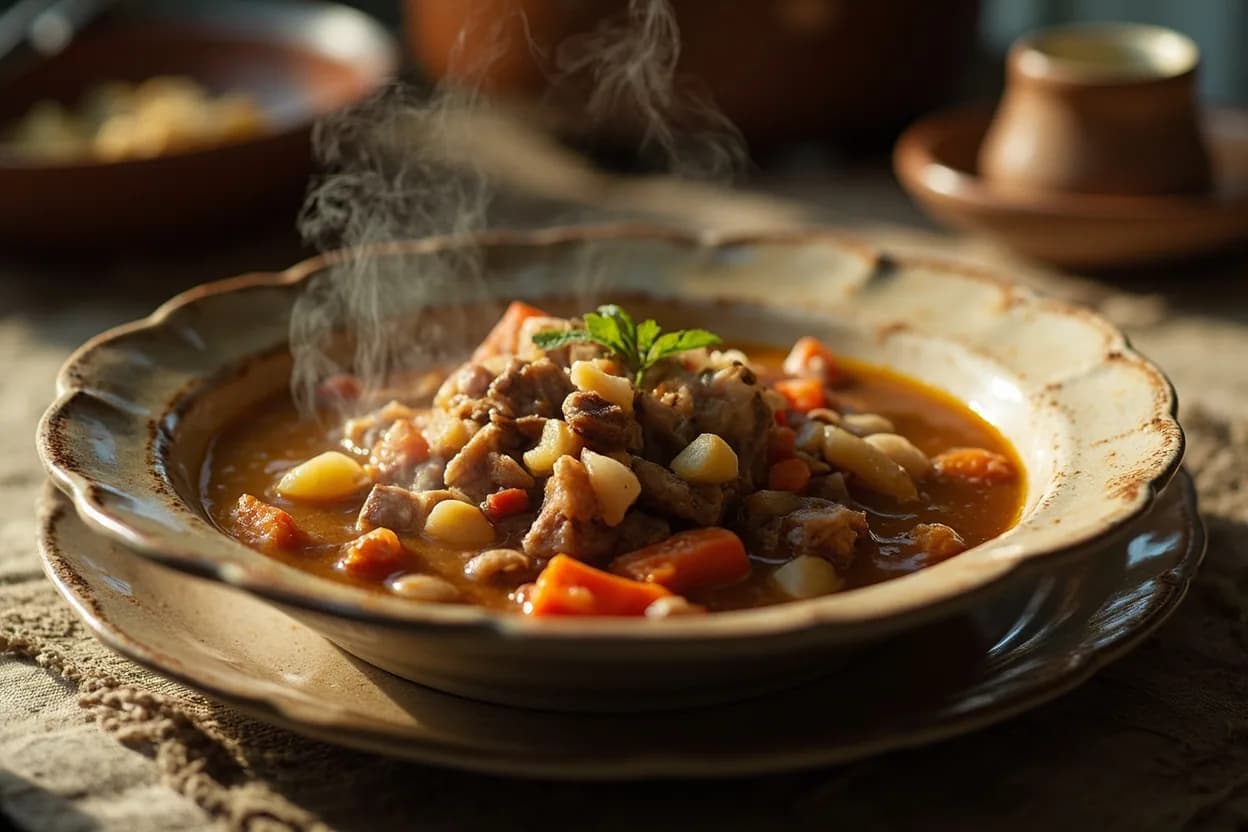
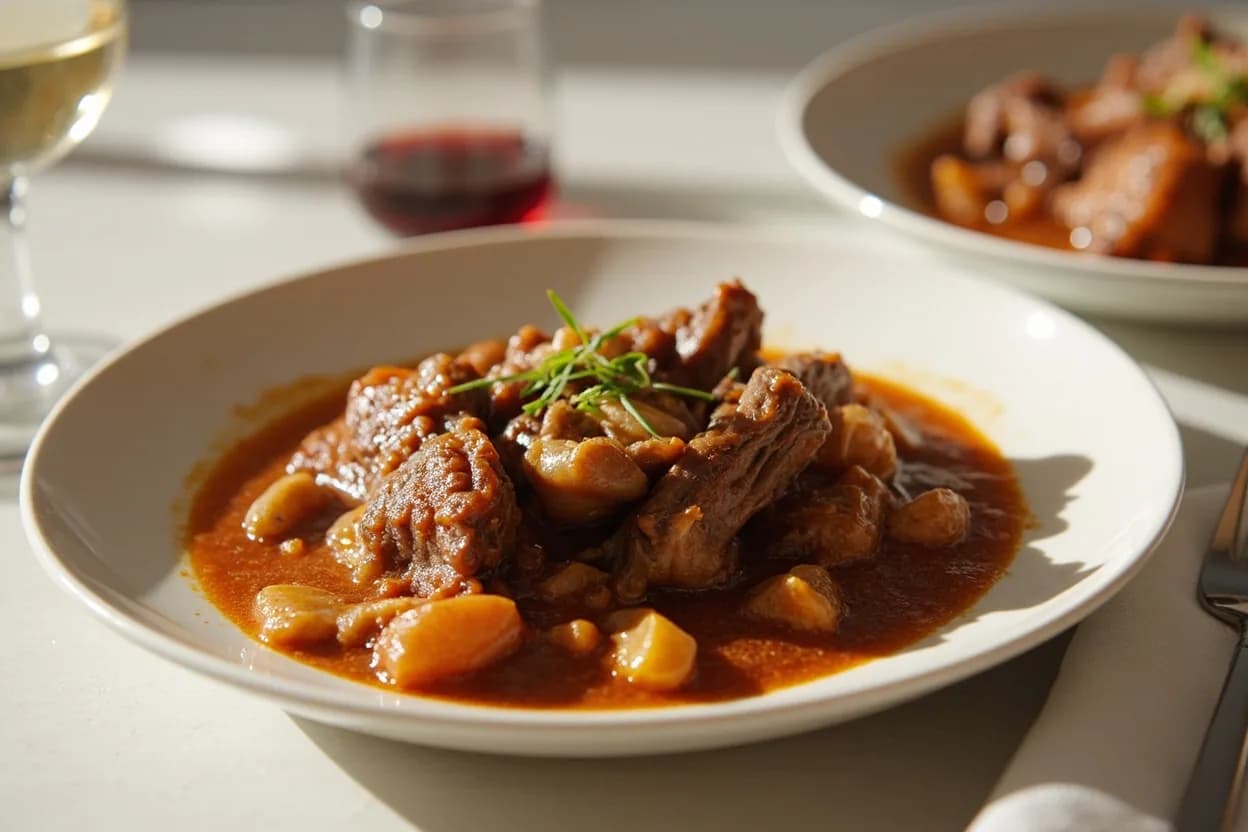
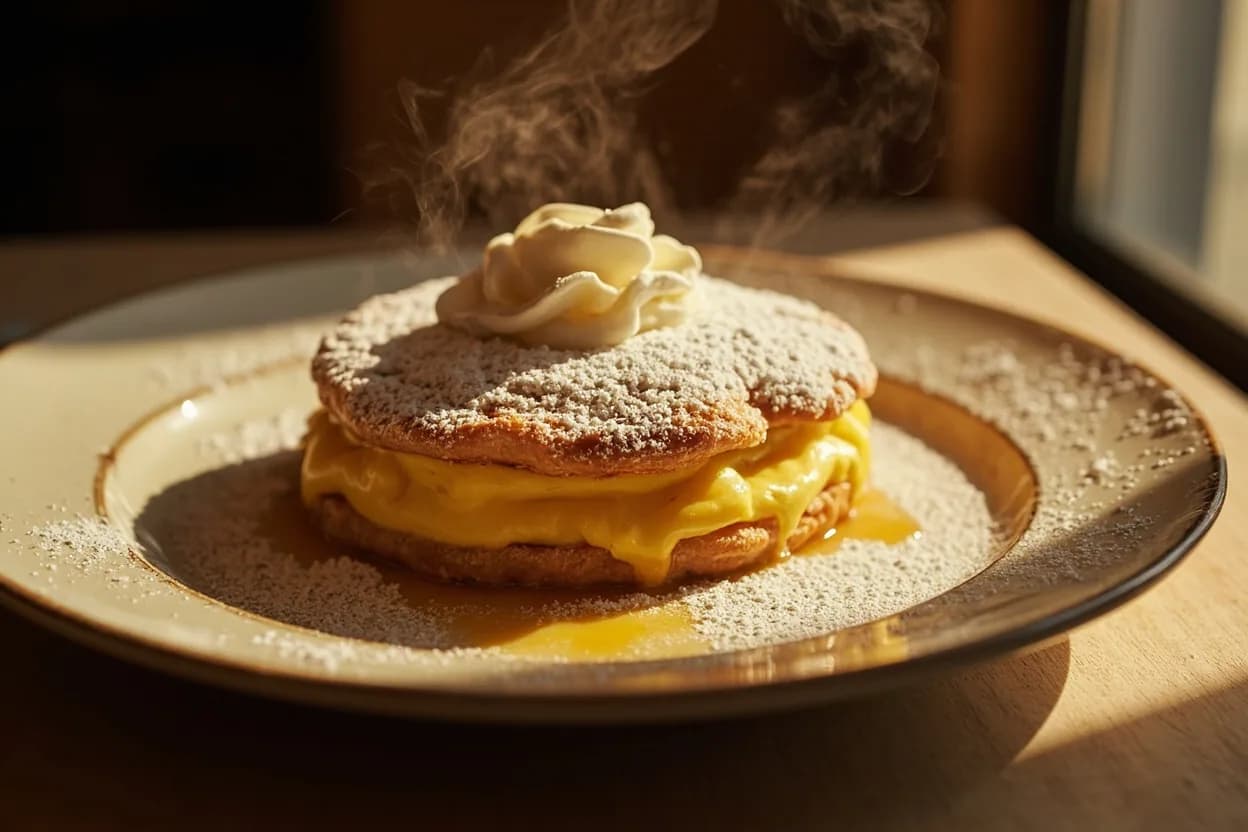
Hungarian-influenced — paprika, layered gibanica pastry, and bujta repa (turnip and pork stew) reflect the region's long span under Hungarian rather than Habsburg Austrian rule.
- Dolenjska & the south
Closer to the Balkan pantry — bograč-style stews and more black pepper and paprika than the Alpine north.
Related cuisines
- Austrian
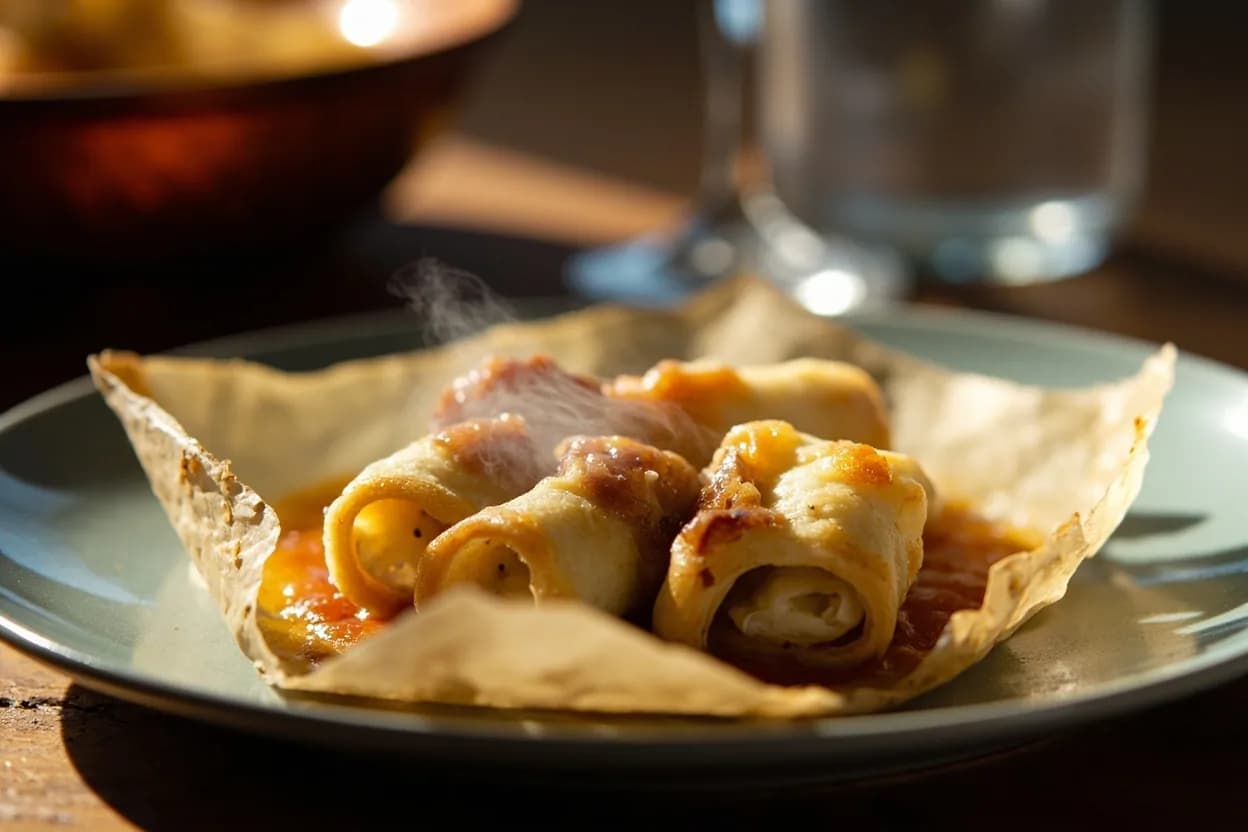
Shares potica's dough technique with Austrian strudel and Guglhupf-style cakes, and štruklji closely parallels Austrian Strudel/Knödel cooking, though Slovenian versions favor buckwheat and cottage-cheese fillings less common in Austria.
Prekmurje's paprika stews and gibanica pastry track Hungarian technique directly, reflecting centuries under Hungarian rather than Austrian administration; the rest of Slovenia uses far less paprika than Hungary does.
- Italian (Friulian)
Kraški pršut curing and Karst olive-oil cooking are functionally continuous with neighboring Friuli-Venezia Giulia, sharing curing method and terrain rather than diverging along national lines.
Canonical recipes
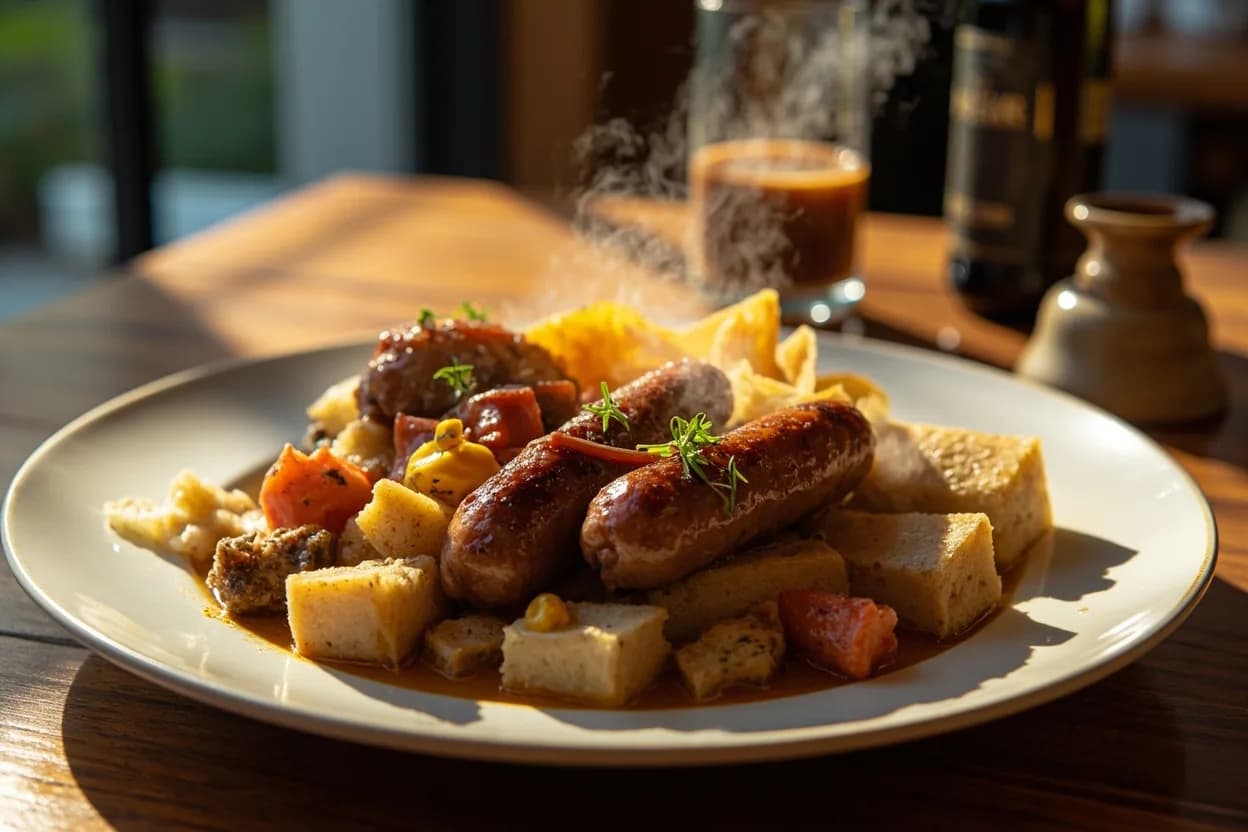
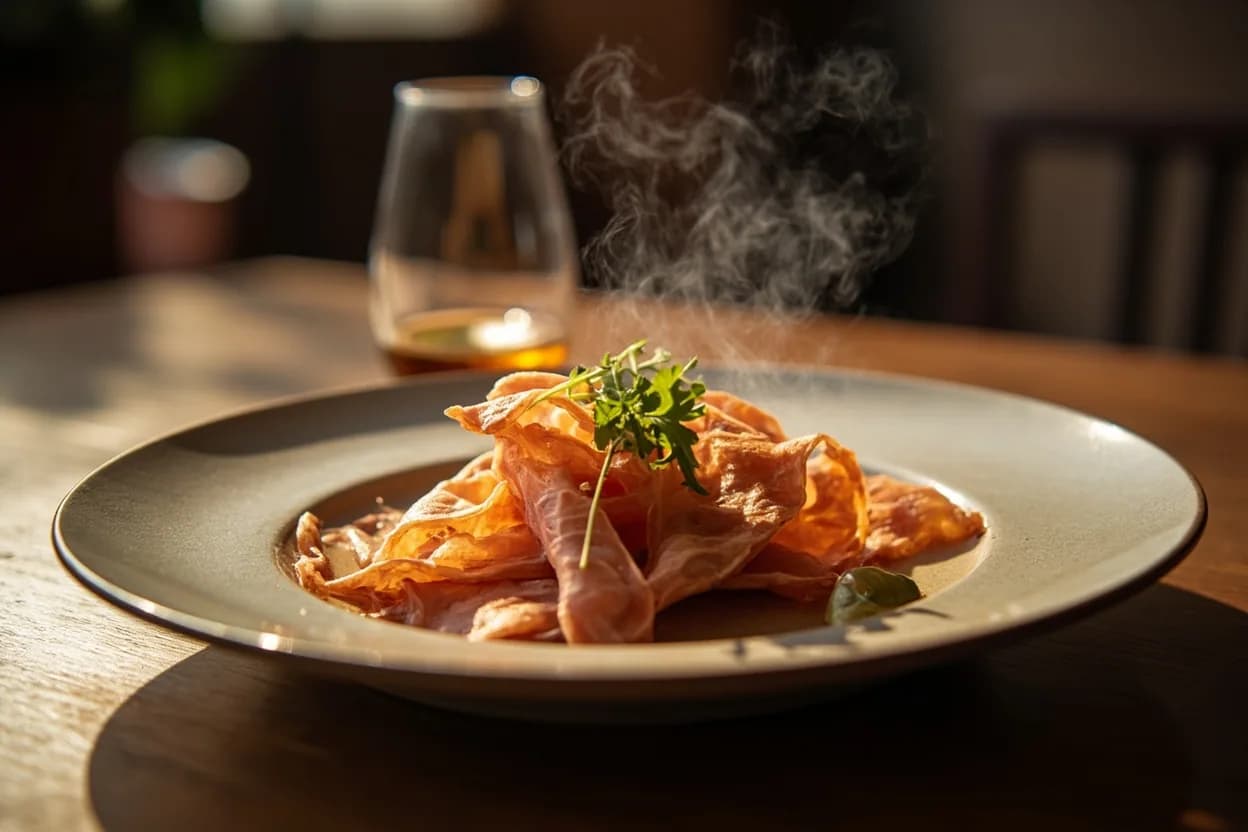
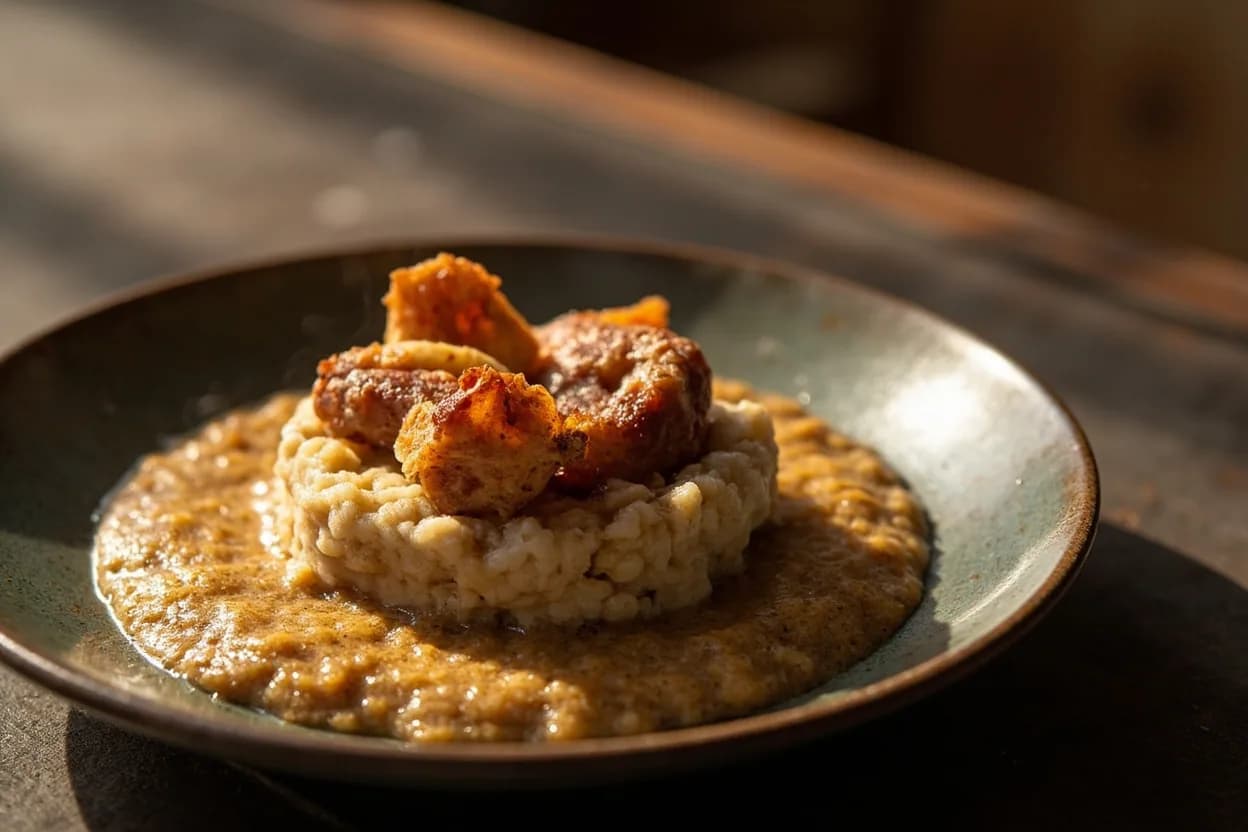
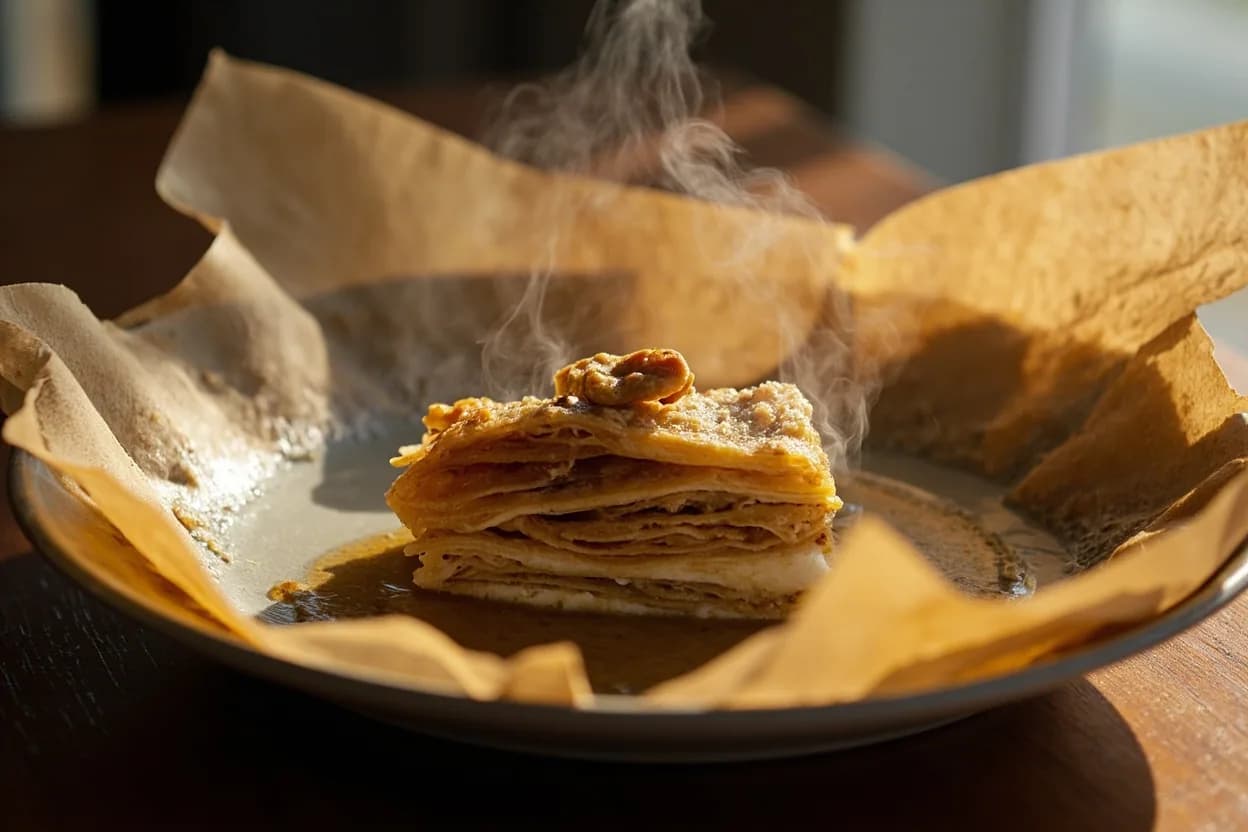
The dishes that define Slovenian, documented in the Canon.
References
- 1.The Oxford Companion to Food — Alan Davidson, ed. (Oxford University Press, 1999)
- 2.Cuisine and Empire: Cooking in World History — Rachel Laudan (University of California Press, 2013)
- 3.The Cambridge World History of Food — Kenneth F. Kiple and Kriemhild Coneè Ornelas, eds. (Cambridge University Press, 2000)
- 4.The Melting Pot: Balkan Food and Cookery — Maria Kaneva-Johnson (Prospect Books, 1995)
Confidence: medium
Notes
Potica is a technique family, not one cake
Potica is defined by a method, not a single filling: a rich yeasted dough rolled out thin, spread edge to edge with a filling, and rolled or coiled into a spiral before baking in a distinctive fluted potica tin. Regional and family versions vary enormously — walnut is the best known, but tarragon, poppy seed, cottage cheese (skuta), honey, and even cracklings all appear as traditional fillings in different parts of the country. Because it is baked for Christmas, Easter, weddings, and other life-cycle occasions rather than as an everyday food, potica functions in Slovenia closer to a ritual object than a recipe — its correct cutting, in thin spiral slices that show the filling's coil, is itself part of the tradition. Slovenia has pushed for potica's recognition as a specifically Slovene culinary symbol in recent decades, including tourism and cultural-heritage campaigns, precisely because the spiral-rolled-cake technique itself is shared with several Central European neighbors — Austrian and Croatian versions exist too — even though Slovenes treat it as their most identity-bearing dish.
Kranjska klobasa and the naming dispute with Austria
Kranjska klobasa — a coarse, lightly smoked fresh pork sausage named for the historical Carniola region — became the subject of a genuine trademark dispute after Slovenia sought EU Protected Geographical Indication status for the name in the 2010s. Austria objected, arguing that its own long-established 'Krainer Wurst' or 'Käsekrainer' sausages used the same regional name (Krain being the German name for Carniola) and that Austrian producers had made sausages under that name for generations too. The dispute delayed Slovenia's registration and required negotiation over how the two countries could use overlapping historical place names for a shared sausage tradition — a rare case where a food-naming conflict became an actual EU trade matter rather than just a cultural argument. Slovenia's Kranjska klobasa ultimately did register PGI status, but the episode is a clean illustration of how European geographical food names can trace back to old imperial administrative regions, like Carniola/Krain, that no longer map onto a single modern country, leaving more than one nation with a legitimate historical claim to the same name.
Why buckwheat, not wheat, is the Alpine Slovene staple
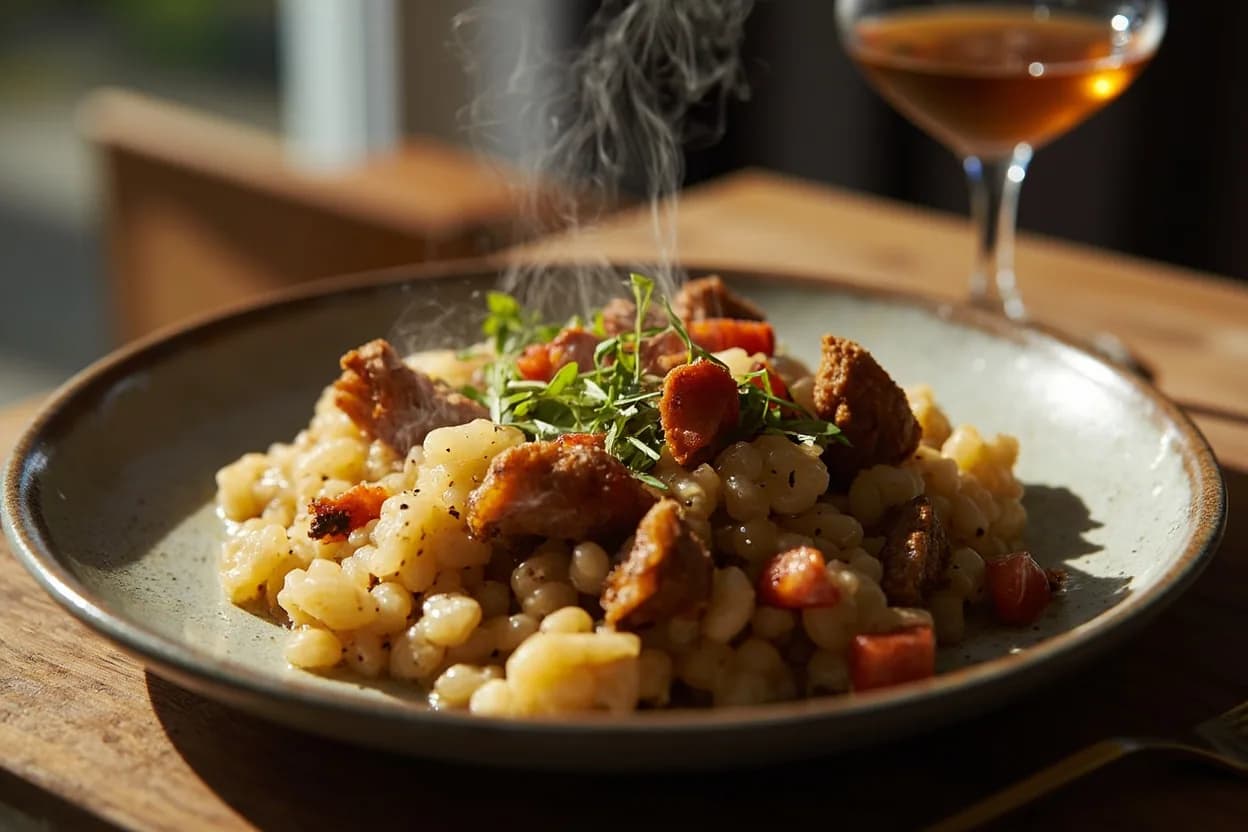
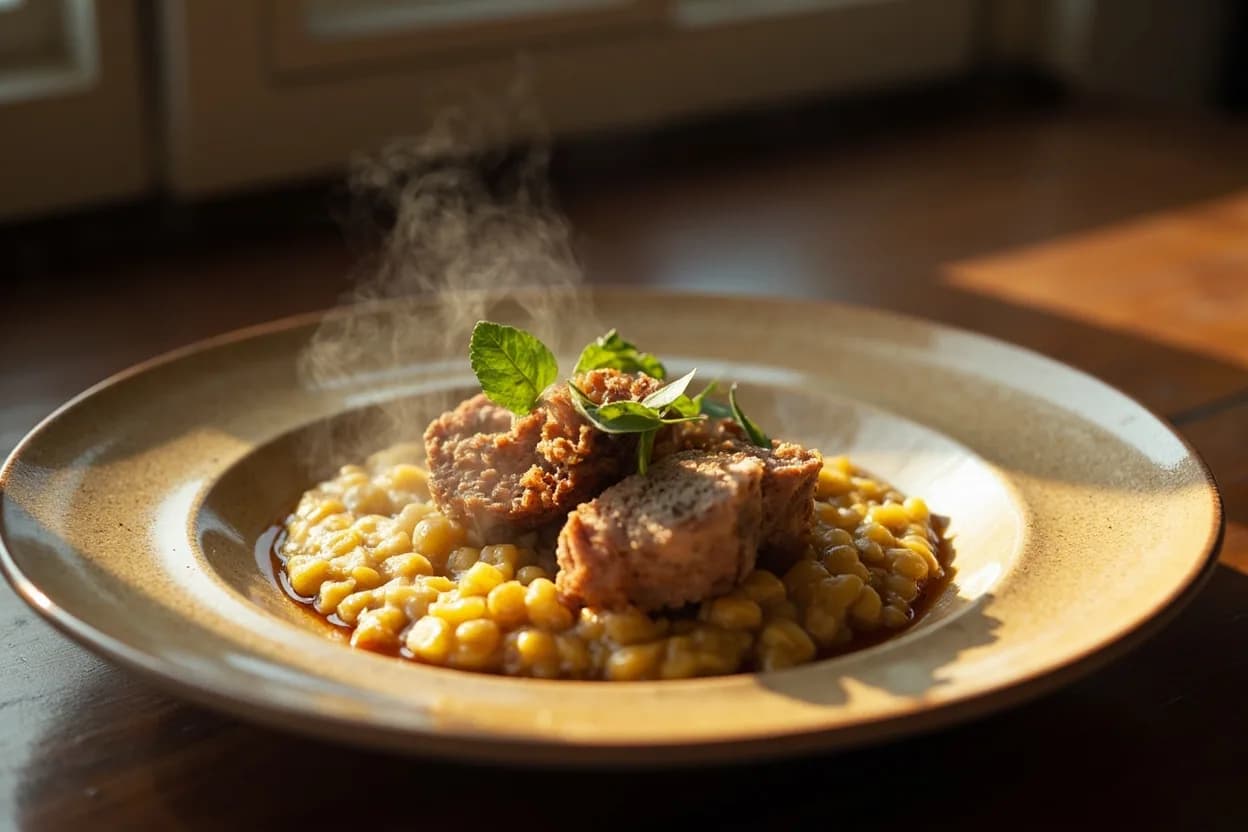
Buckwheat is not a cereal grass but a relative of rhubarb and sorrel, and it thrives on the poor, acidic, high-altitude soils of the Slovenian Alps where wheat performs badly — which is why it, rather than wheat, became the historic staple starch across the Gorenjska and Koroška highlands. Žganci is the classic result: buckwheat groats are boiled, then repeatedly broken and stirred with a wooden spoon or fork into a coarse, crumbly mass rather than a smooth porridge, and finished with a well of melted pork fat or cracklings poured into the center. The dish was historically the everyday meal of mountain farming households, eaten plain with milk or with a stew spooned over it, and only in recent decades has it moved from a marker of rural poverty to a dish deliberately kept alive on menus as heritage cooking. The same technique also produces cornmeal-based žganci in warmer lowland areas, showing the method adapting to whichever starch grew locally rather than being tied to one grain.