South America
Bolivian
Also: Bolivian Cuisine, Cocina Boliviana
A high-altiplano cuisine of baked salteña pastries brimming with juicy stew, silpancho's stacked rice-potato-and-breaded-meat plate, and chuño freeze-dried potato — spanning altitudes from 4,000-meter Aymara plateau to warm eastern lowland llanos.
Bolivian cuisine is the food tradition of a landlocked, altitude-extreme country spanning the high Andean Altiplano, temperate inter-Andean valleys, and warm eastern lowlands, unified by potato in its fresh and freeze-dried (chuño, tunta) forms, quinoa, and llama and beef protein, and expressed most visibly in a strong urban street-food culture of salteñas and silpancho layered onto an older Aymara- and Quechua-rooted highland foodway.
The flavour base
Llajwa (a chopped tomato-and-locoto-chili salsa) as the near-universal table condiment; ají amarillo and locoto chilies for heat; quinoa and chuño for starchy body; huacatay and quirquiña (herbs) for aromatic lift in soups; a gelatin-thickened savory stew base (jigote) inside salteñas.
Pantry staples
Key ingredients
Signature techniques
Signature dishes
At the table
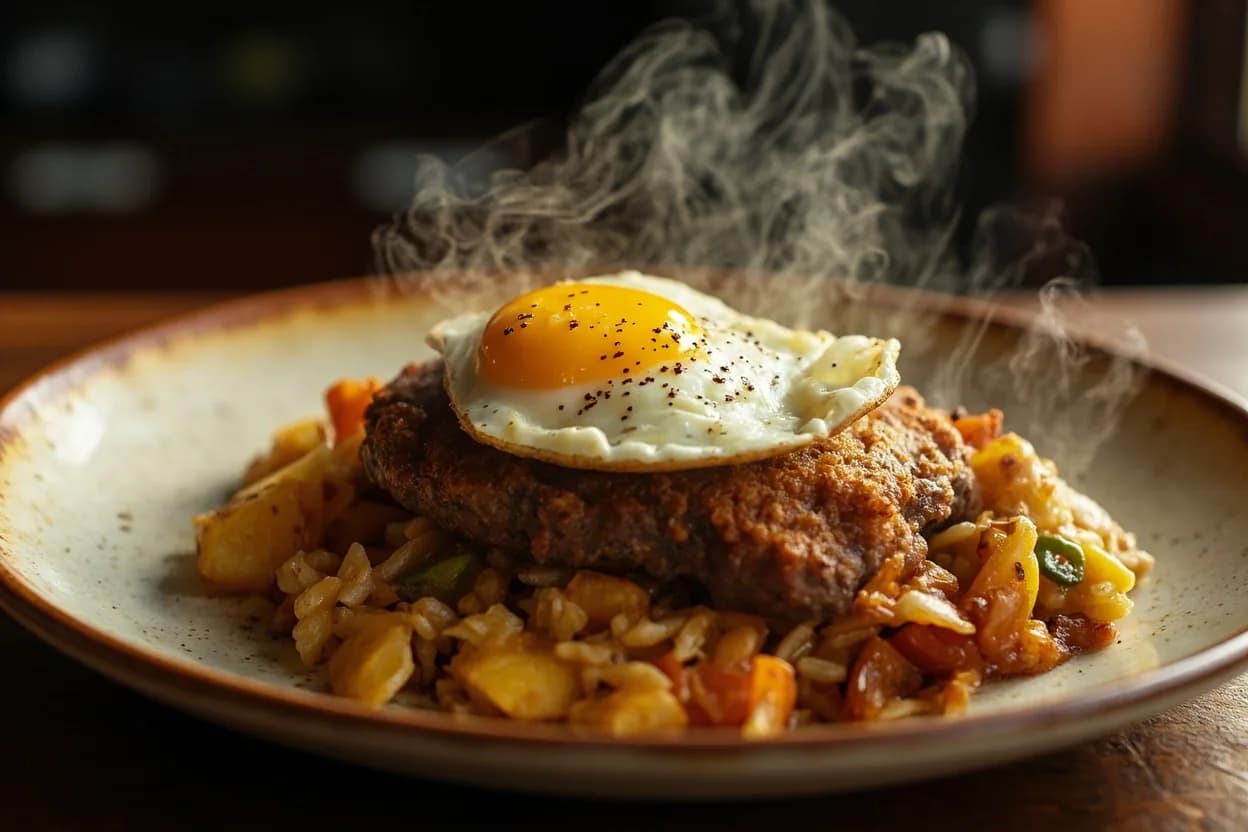
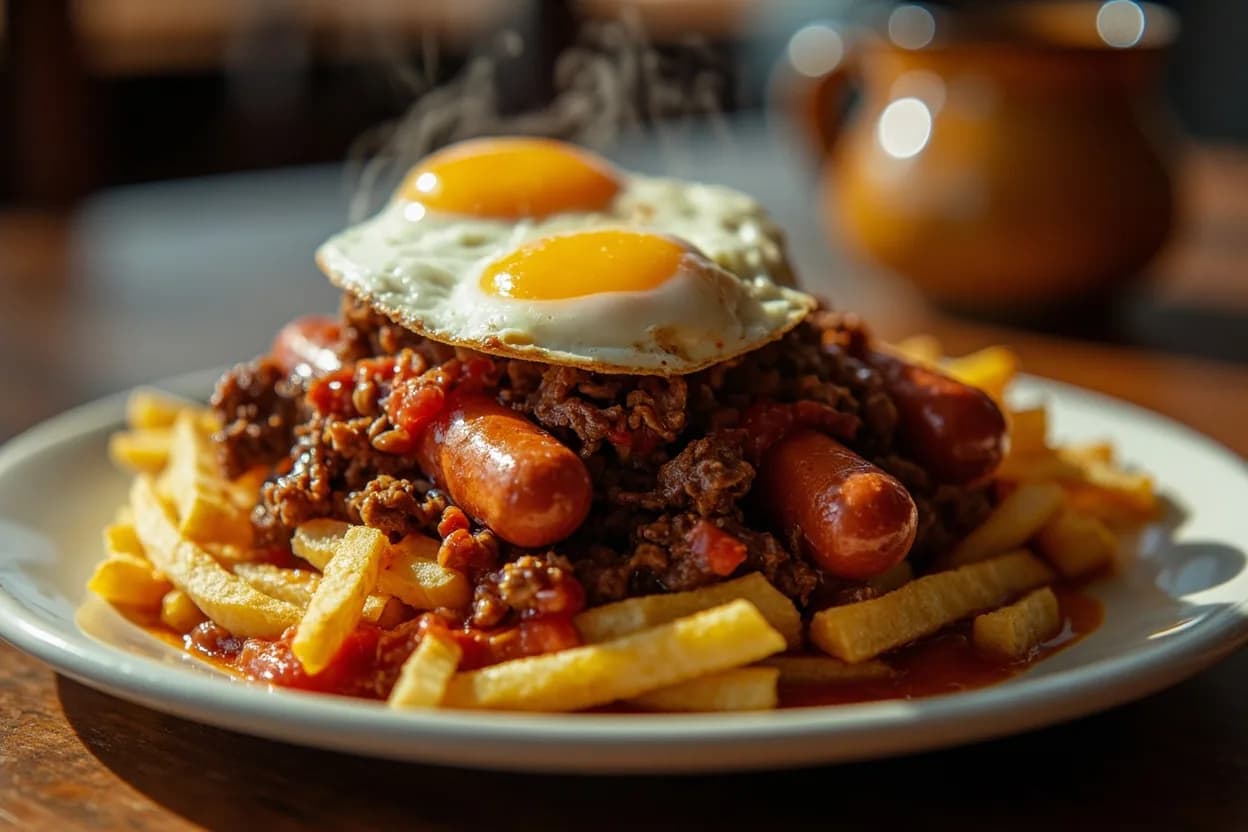
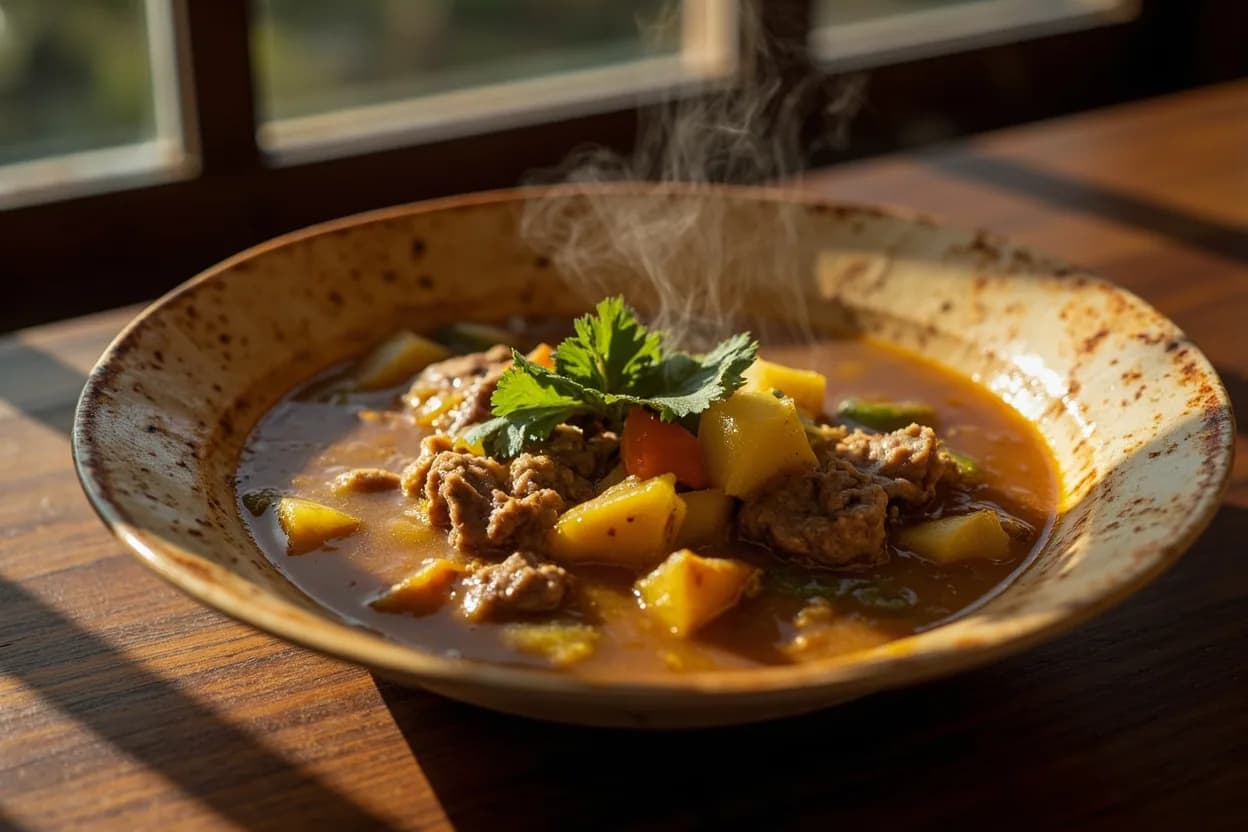
Salteñas are a mid-morning street-food institution, eaten standing between breakfast and lunch. Lunch (almuerzo) is the main meal, typically soup followed by a substantial second course such as silpancho or pique a lo macho. Api (a thick, spiced purple-corn drink) with pastel (a sugar-dusted fried pastry) is a common breakfast or late-afternoon snack, especially in La Paz. Chairo, a hearty potato-and-chuño soup, anchors cold-climate Altiplano eating.
History & context
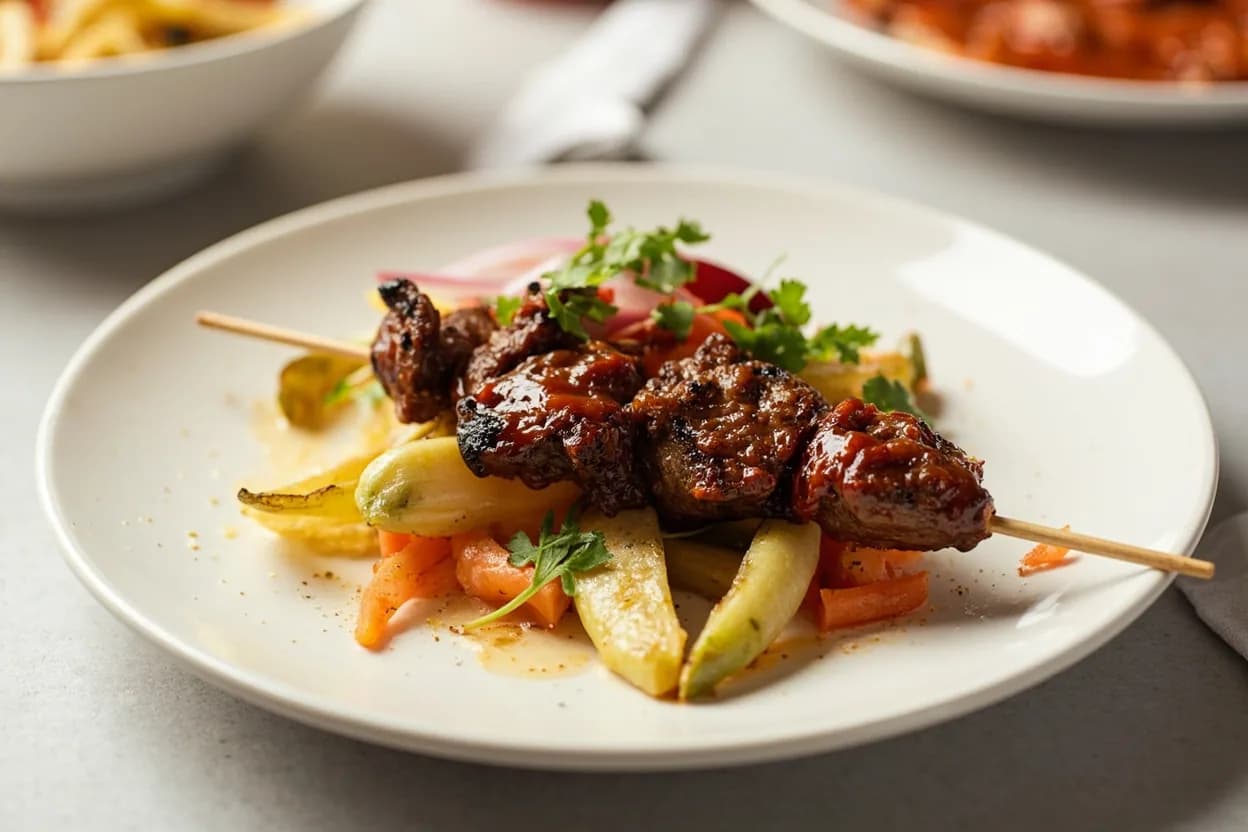
The Bolivian Altiplano was home to Tiwanaku civilization (flourishing roughly 500–1000 CE) and later Aymara kingdoms before Inca incorporation in the 15th century, and this high-plateau world independently developed chuño and tunta freeze-drying, quinoa and cañahua cultivation, and llama and alpaca pastoralism as adaptations to extreme altitude — a food system continuous with, but distinct from, the Peruvian Sierra across Lake Titicaca. Spanish colonization from the 1530s built its wealth on the silver of Potosí (from 1545, briefly among the largest cities in the world), importing wheat, cattle, and pigs while relying on Indigenous forced labor (the mita system) that reshaped Andean society profoundly; the colonial-era cross of Spanish and Andean ingredients produced dishes like salteñas and silpancho. Bolivia's 1825 independence and 19th–20th-century territorial losses (including its Pacific coastline to Chile in the War of the Pacific, 1879–1884) left the country landlocked but did not disrupt its layered Altiplano-valley-lowland food geography. 20th-century internal migration and the growth of Santa Cruz as an economic center in the country's eastern lowlands brought a rice-and-cassava lowland cuisine into closer contact with the older highland Andean repertoire, while La Paz's street-food culture — salteñas, anticuchos, api con pastel — remains one of the most visible expressions of Bolivian urban eating today.
Regional variations
- Altiplano (La Paz, Oruro, Potosí)
Highest and coldest zone; chuño, tunta, quinoa, and llama dominate, alongside a strong Aymara street-food culture in La Paz.
- Valles (Cochabamba, Chuquisaca, Tarija)
Temperate mid-altitude valleys with the most varied produce; Cochabamba is considered Bolivia's culinary capital and the home of silpancho and pique a lo macho.
- Llanos (Santa Cruz and the eastern lowlands)
Warmer, rice-and-cassava-based cuisine closer to neighboring Brazilian and Paraguayan lowland cooking, with majadito and locro as regional staples.
Related cuisines
Shares the Altiplano across Lake Titicaca, chuño and tunta freeze-drying, quinoa, and guinea pig as festival protein; La Paz and Puno are effectively one Andean food region divided by a border.
Northern Chile's Aymara and Atacameño communities share quinoa, llama, and Altiplano staples with Bolivia across the shared high-plateau border, a legacy of pre-colonial trade routes.
Bolivia's eastern lowlands and southern valleys share beef-grilling culture and some produce with northern Argentina, particularly in the Tarija wine-growing region near the Argentine border.
Canonical recipes
The dishes that define Bolivian, documented in the Canon.
References
- 1.Gran Cocina Latina: The Food of Latin America — Maricel Presilla (W.W. Norton, 2012)
- 2.The Book of Latin American Cooking — Elisabeth Lambert Ortiz (Alfred A. Knopf, 1979)
- 3.Lost Crops of the Incas — National Research Council (National Academies Press, 1989)
- 4.The Cambridge World History of Food — Kenneth F. Kiple and Kriemhild Conée Ornelas, eds. (Cambridge University Press, 2000)
Confidence: medium
Notes
Salteñas: an engineering problem in pastry
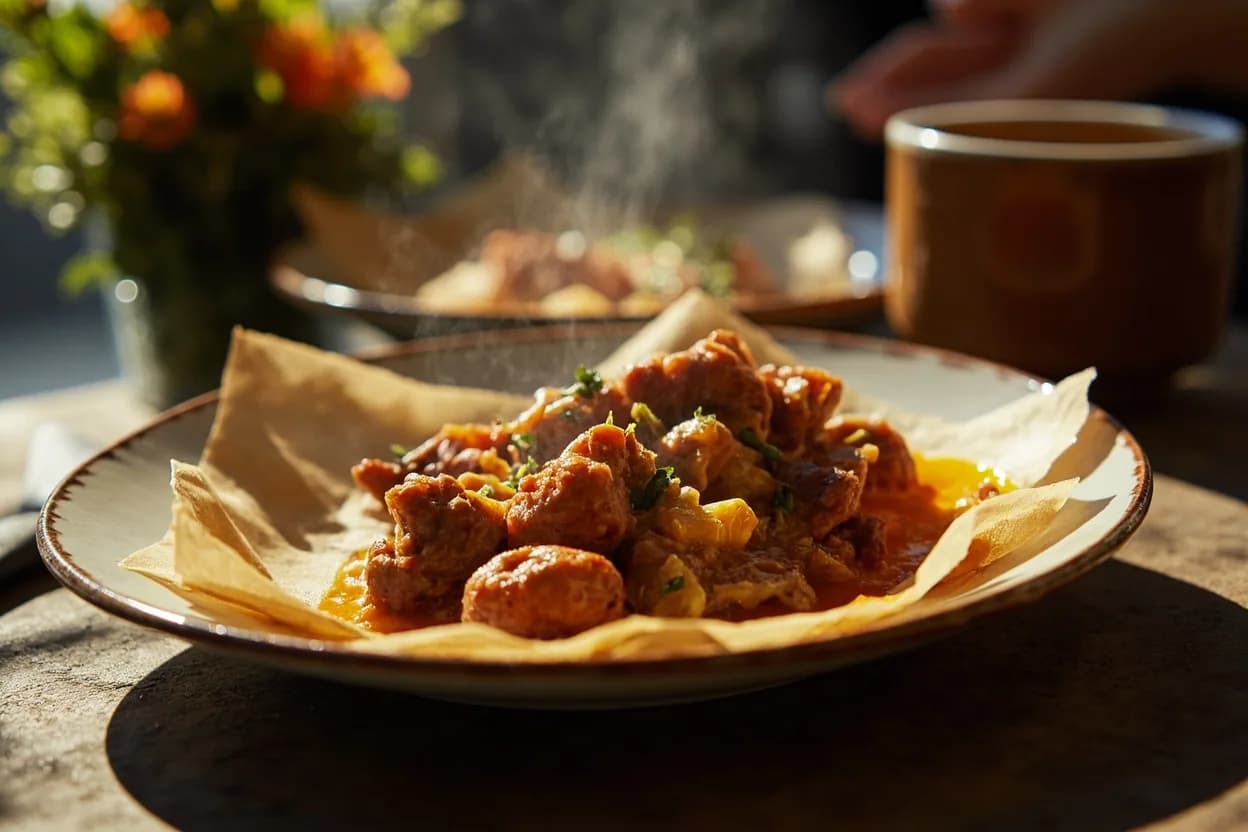
The salteña — a baked empanada filled with a juicy, gelatin-thickened stew of meat, potato, peas, olives, and a hard-boiled egg — is famous for the technical challenge of eating it without spilling its broth, traditionally consumed standing up, mid-morning, as a between-breakfast-and-lunch snack sold from dedicated salteñerías. Its name traces to Juana Manuela Gorriti, an Argentine writer from Salta who, according to popular tradition, sold the pastries in 19th-century Bolivia; the dish since became more identified with Bolivia than with its Argentine namesake city.
Chuño and altiplano food security
Chuño — potato freeze-dried through repeated overnight freezing and daytime sun exposure on the high Altiplano around Lake Titicaca — is one of the oldest food-preservation technologies in the Americas, allowing potato to be stored for years at altitude without refrigeration. Bolivia and Peru share this technique and the surrounding Aymara and Quechua culinary culture across the plateau the two countries divide, and chuño remains a staple in soups like chairo.
Three Bolivias, one table
Bolivian food geography splits between the cold, high Altiplano (La Paz, Oruro, Potosí) built on potato, quinoa, and llama; temperate valley regions (Cochabamba, Chuquisaca) known for silpancho and a milder, more varied produce base; and the warmer eastern lowlands (Santa Cruz, the llanos) built on rice, cassava, and beef in a cuisine closer to neighboring Brazilian and Paraguayan lowland cooking than to the Andean plateau.