Central Asia
Tajik
Also: Tajik Cuisine, Tajikistani Cuisine
A Persian-speaking oasis cuisine of plov, obi non bread and qurutob — closer to Iranian and Afghan cooking in vocabulary and dairy technique than to its Turkic-nomadic steppe neighbors, shaped by mountain isolation.
Tajik cuisine is a settled, Persianate oasis-and-valley cuisine, structurally closer to Uzbek, Afghan and Iranian cooking than to the Turkic nomadic-pastoral cuisines of Kazakhstan, Turkmenistan and Mongolia — Tajiks are the region's major Persian-speaking, historically Iranian-descended population rather than a Turkic one. Its base is rice (osh/plov), wheat bread baked in a tandoor-like oven (obi non), dried fermented yogurt balls (qurut) rehydrated into sauces, and irrigated fruit and vegetables; meat is present but is not the organizing principle of the diet the way it is on the steppe. Tajikistan's mountainous terrain (the Pamirs cover much of the country) also produces a distinct highland variant leaning on hardier grains and dried food, alongside the lowland Fergana-adjacent plov cuisine of the north.
The flavour base
Cumin, coriander seed and dried barberries season plov much as in Uzbek cooking, but Tajik cuisine leans further into fermented dairy as a savory souring agent — qurut (dried salted yogurt) is soaked and mixed into sauces or crumbled over bread rather than only eaten as a snack. Fresh herbs (dill, cilantro, mint) and raw onion appear more heavily in Tajik cold dishes than in some neighboring cuisines. Dried fruit (apricot, raisin) and fresh fruit both season savory dishes, following the wider Persianate sweet-savory logic.
Pantry staples
Key ingredients
Signature techniques
Signature dishes
At the table
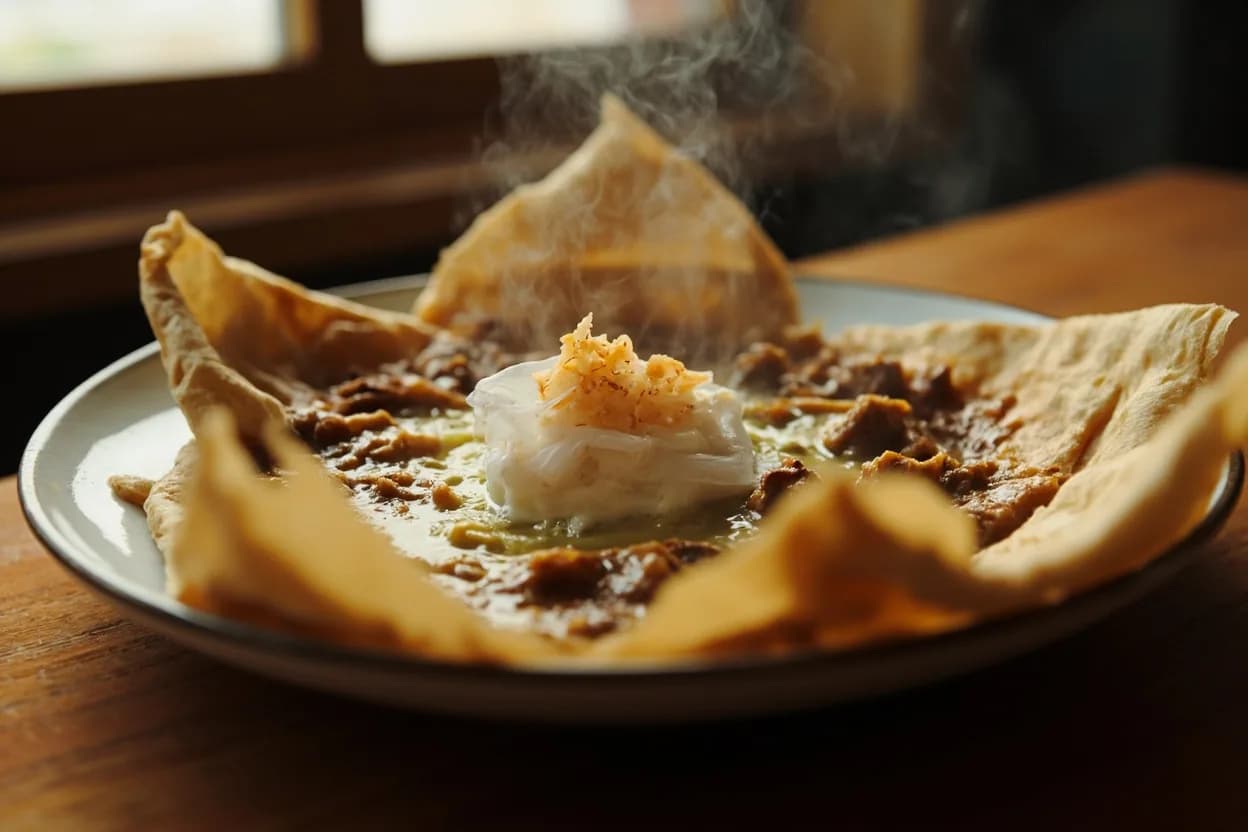
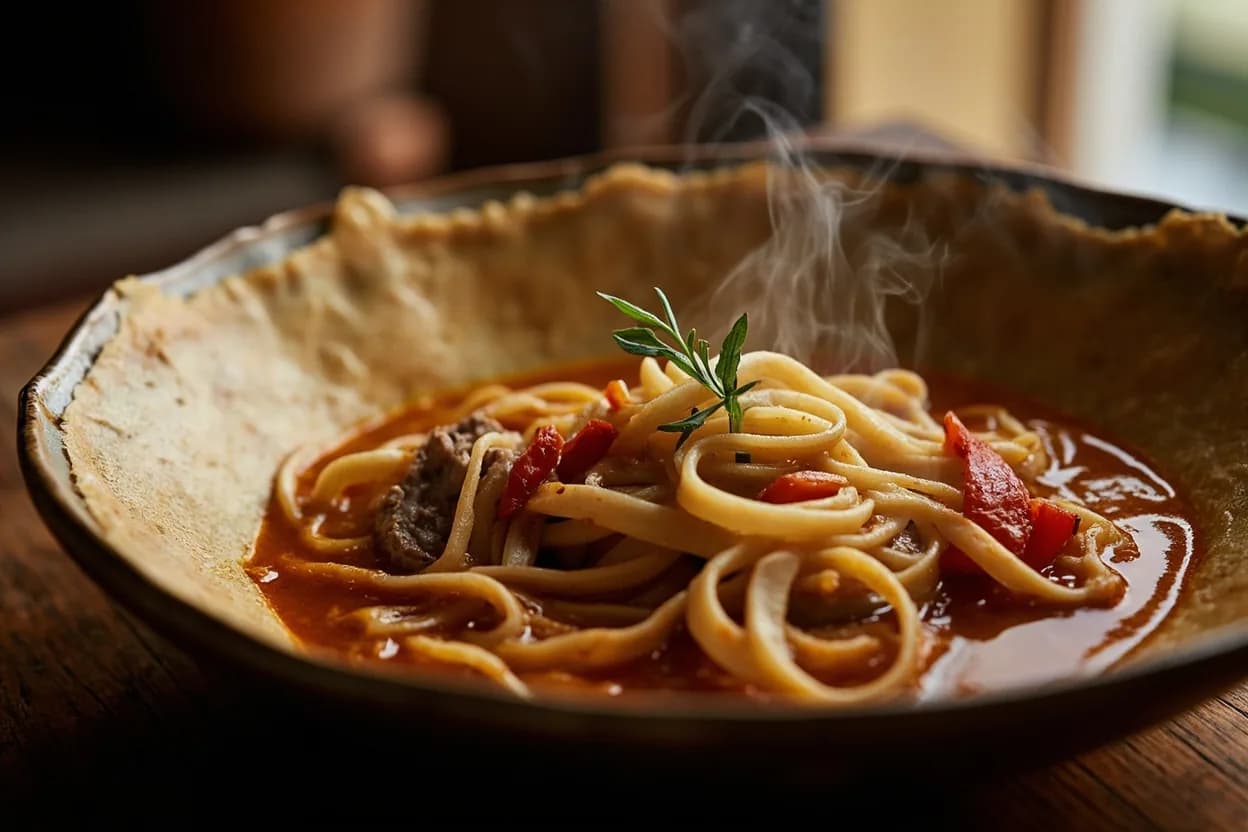
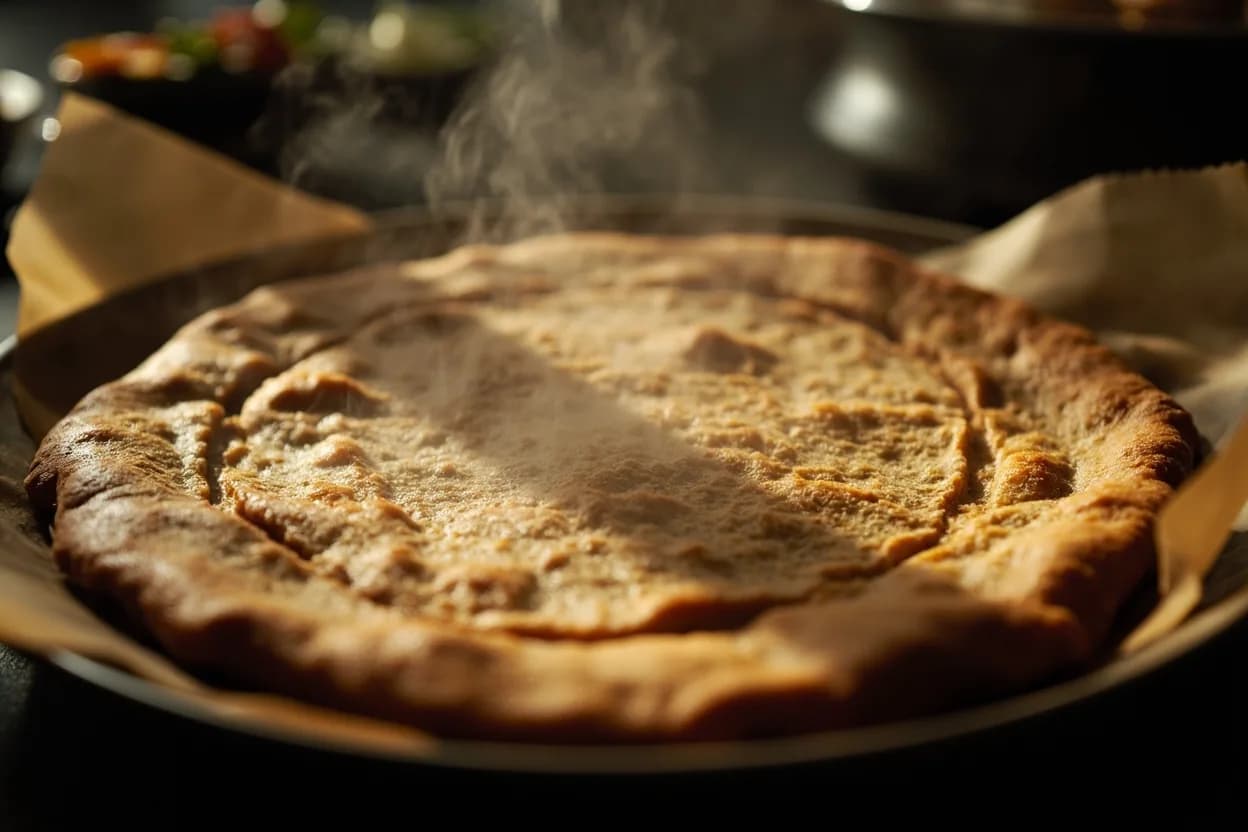
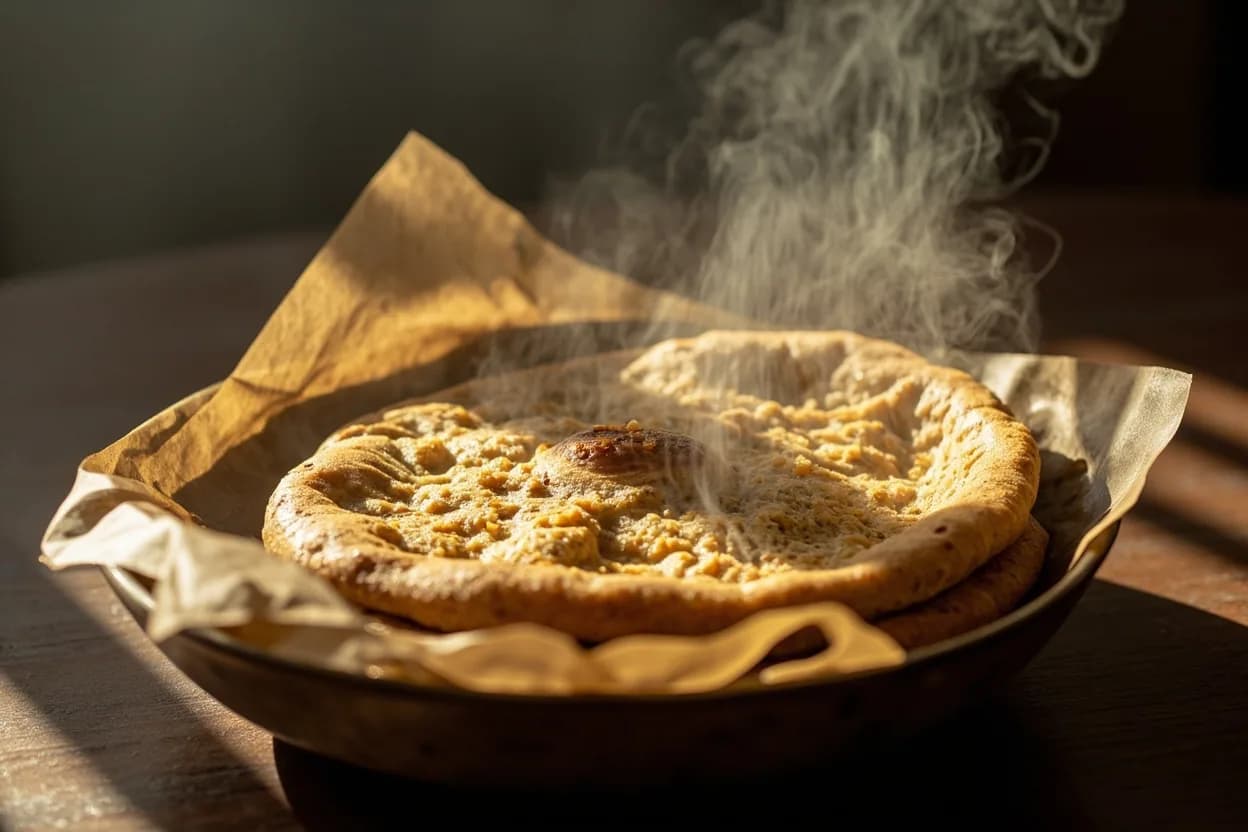
Bread (non, particularly obi non — a dense, patterned round loaf) is treated with the same near-sacred respect found across the Persianate region and anchors the table; it is torn by hand, never cut with a knife, and never wasted. Meals move from tea and bread through a soup (shurbo, mastava) toward a rice or noodle main course, with plov again the centerpiece dish for weddings, Nowruz (Persian new year, widely celebrated) and other major gatherings, cooked communally in a large qozon. Qurutob — stale flatbread soaked in a yogurt-and-qurut sauce and topped with onion and oil, eaten by hand from a single communal plate — is treated as something close to an everyday national dish in a way plov, shared across the region, is not exclusively.
History & context
Tajiks trace linguistically and culturally to Persian-speaking populations of Transoxiana and the wider Samanid-era (9th-10th century) Persianate world, which is why Tajik cuisine's vocabulary (osh, non, sambusa, shurbo) overlaps almost entirely with Persian and Dari terms even where the surrounding Turkic states use similar words for historically shared reasons. The Timurid and later Bukhara Emirate periods kept Tajik populations largely within a shared Central Asian urban culture centered on Bukhara and Samarkand — both now inside Uzbekistan — a border drawn only in the 1920s Soviet national-delimitation process that separated Tajikistan from those historically Tajik cultural centers and is still a live source of grievance. Soviet rule from the 1920s brought collectivized agriculture, new irrigation for cotton monoculture in the Vakhsh and Fergana valleys, and imported Russian and other Soviet-nationality foods into urban areas, while Pamiri highland communities in Gorno-Badakhshan retained a more isolated diet shaped by short growing seasons and limited transport. The 1992-1997 civil war that followed independence caused severe food insecurity and disrupted agriculture and trade for years, a disruption still cited by economists as slowing Tajikistan's post-Soviet recovery relative to its neighbors, and out-migration of Tajik labor to Russia since has both drained rural food-producing communities and brought remittance income that reshaped what ordinary households can afford to cook.
Regional variations
- Sughd Province / Fergana Valley (north)
Culturally and culinarily closest to Uzbek Fergana cooking, with the richest, most Uzbek-style plov tradition in the country.
- Gorno-Badakhshan / the Pamirs (east)
Isolated, high-altitude Pamiri communities rely more on dried food, dairy, and hardier grains suited to a short growing season; historically poorer access to rice and imported spice.
- Dushanbe and the central lowlands
The most Sovietized and cosmopolitan regional style, with the widest availability of vegetables, imported goods and Russian-influenced dishes.
- Khatlon (south, Vakhsh valley)
Heavy Soviet-era cotton monoculture reshaped this region's agriculture most of anywhere in the country, historically limiting food-crop diversity relative to its irrigation potential.
Related cuisines
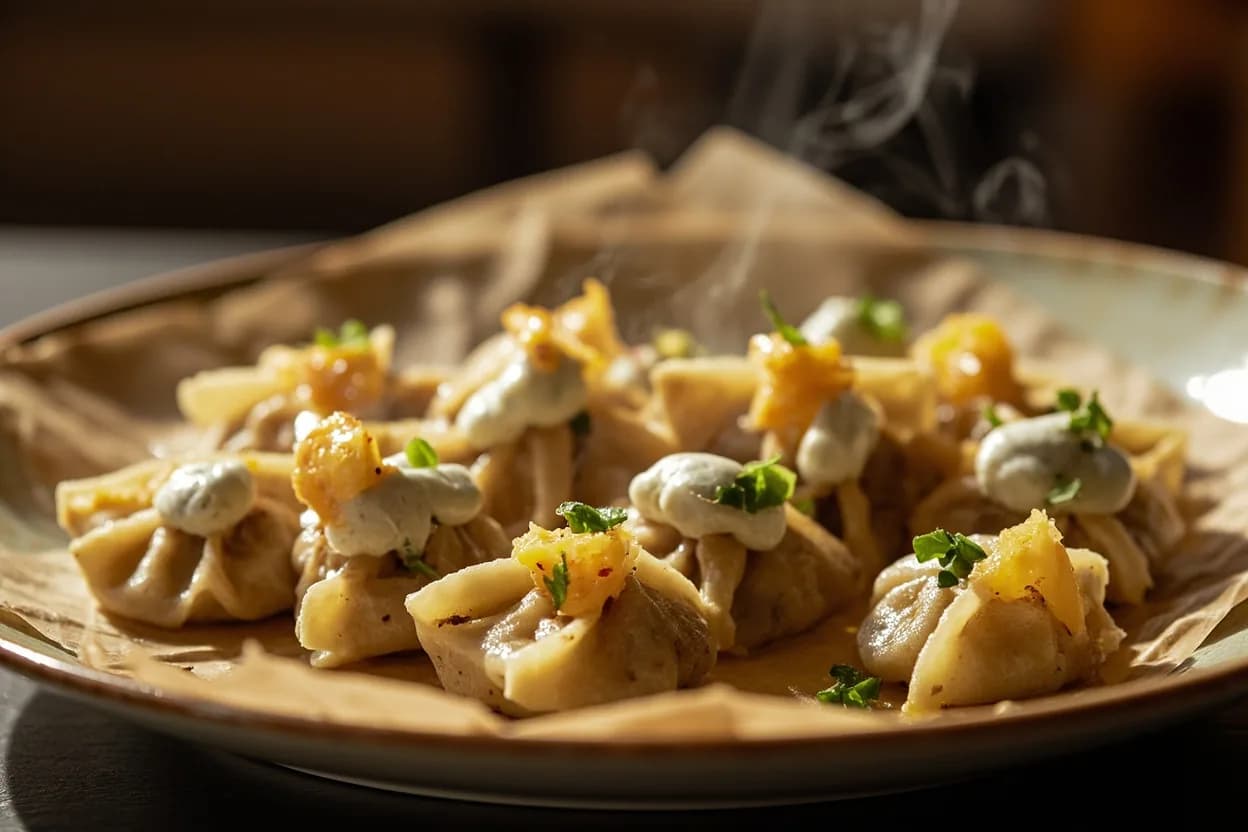
Shares plov, non, manti/mantu, samsa/sambusa and much vocabulary almost completely, reflecting a shared Persianate Silk Road culture split by a 1920s Soviet border rather than by any older culinary divide.
Shares Persian/Dari culinary vocabulary, qurut-based sauces and plov, with Afghan cuisine generally using more dried fruit and a wider range of rice pilafs (qabuli-style) reflecting closer historical contact with the Indian subcontinent.
- Iranian/Persian
Supplies Tajik cuisine's core vocabulary and the sweet-savory logic of dried fruit in rice and stews, though Iranian cuisine uses far more fresh herbs by volume and a distinct tahdig rice technique Tajik cooking does not use.
Canonical recipes
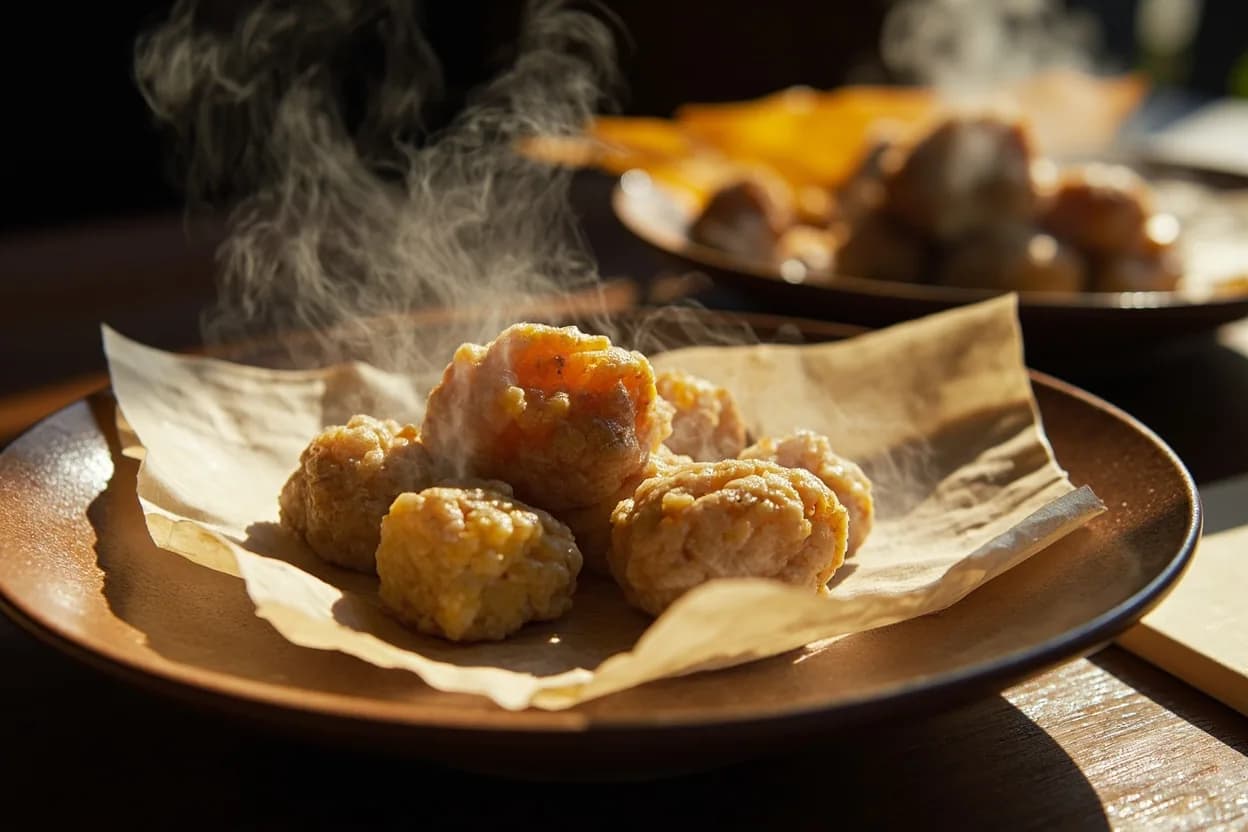
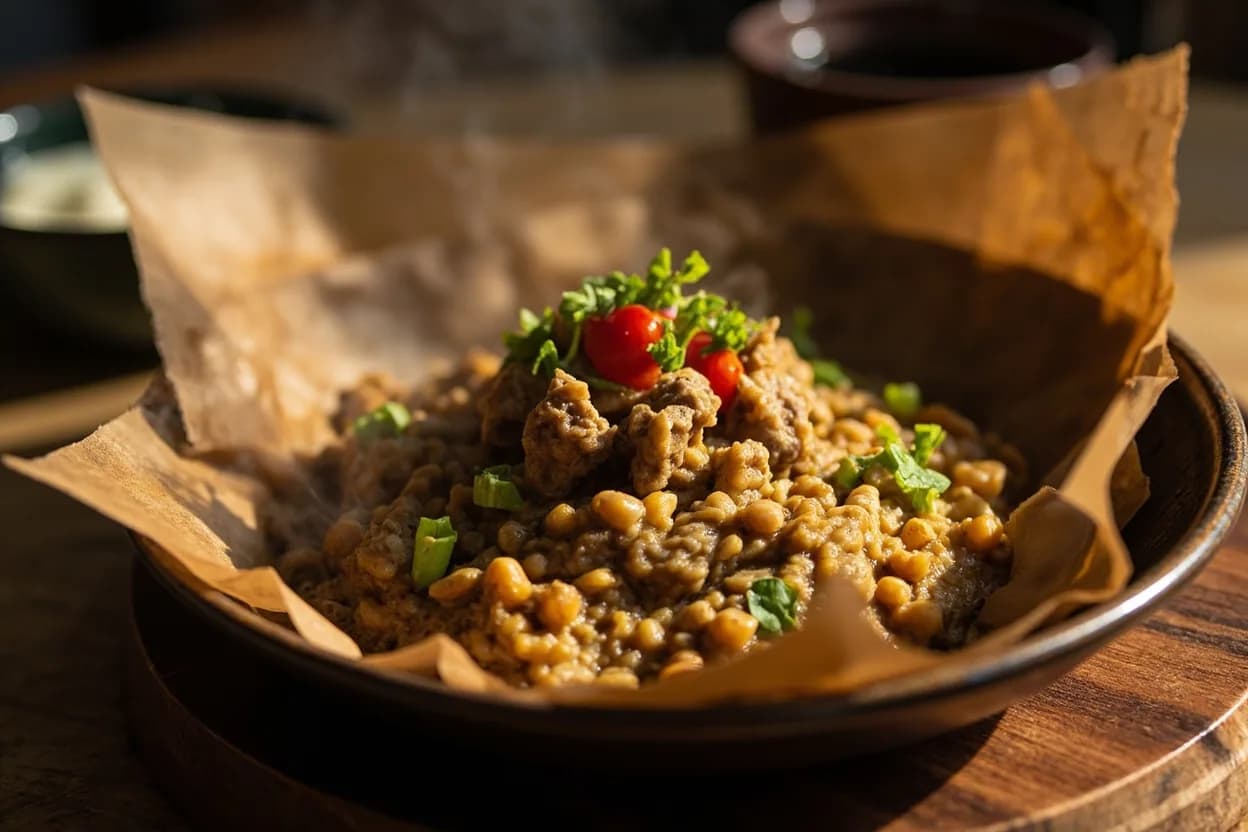
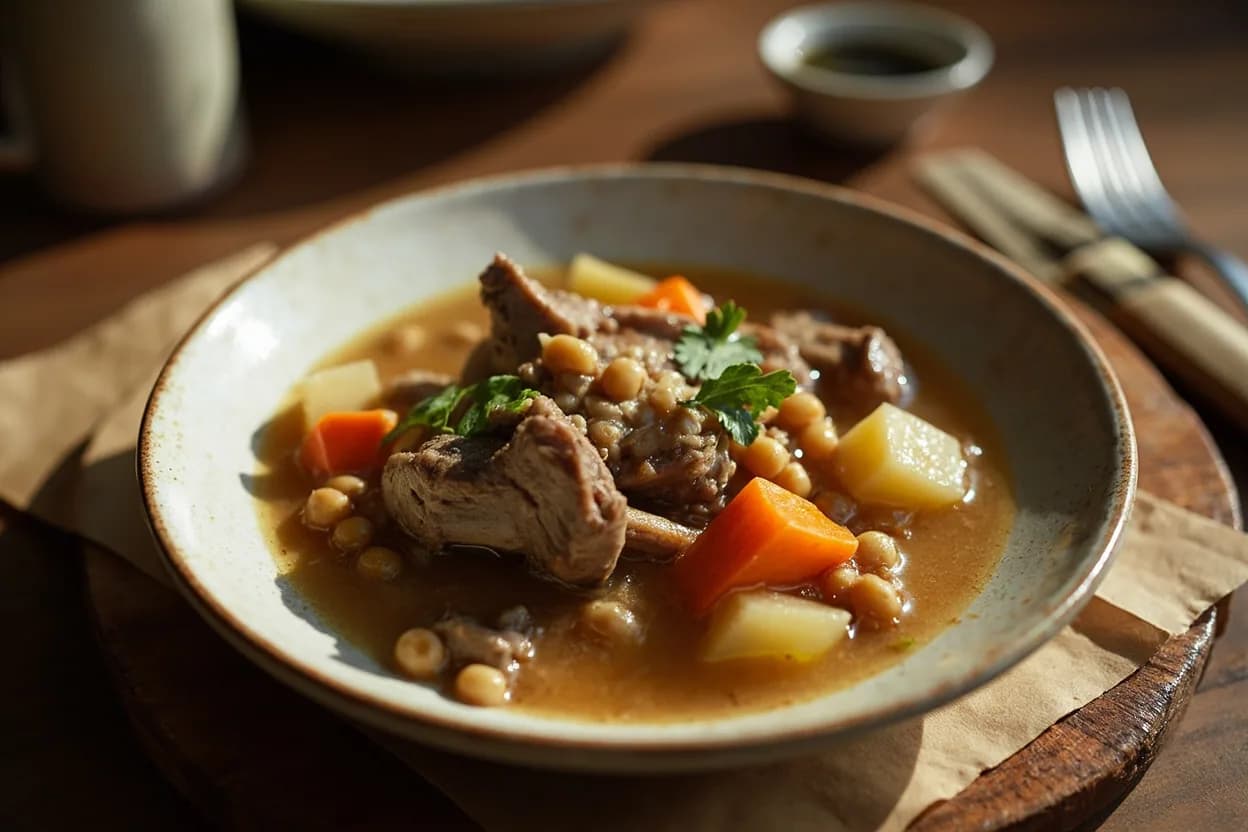
The dishes that define Tajik, documented in the Canon.
References
- 1.Silk Road Cooking: A Vegetarian Journey — Najmieh Batmanglij (Mage Publishers, 2004)
- 2.Flatbreads & Flavors: A Baker's Atlas — Jeffrey Alford and Naomi Duguid (William Morrow, 1995)
- 3.The Heritage of Central Asia: From Antiquity to the Turkish Expansion — Richard N. Frye (Markus Wiener Publishers, 1996)
Confidence: medium
Notes
Qurutob is arguably a better claim to a Tajik 'national dish' than plov
Because plov is shared, contested and claimed by essentially every Central Asian nation, some Tajik food writers and Tajiks themselves point instead to qurutob — stale flatbread torn into a bowl, soaked in a sauce of rehydrated qurut (dried salted yogurt) whisked with water and topped with fried or raw onion and oil — as culturally distinctive in a way plov is not. It is eaten by hand from a single shared plate, a practice with genuine everyday and hospitality significance, and its central ingredient, qurut, reflects the same dried-dairy preservation logic found across the wider Turkic-Persian steppe-and-oasis food world, adapted here into a bread dish rather than a snack. Whether it functions as a 'national dish' in any official sense is less interesting than what it reveals: national-dish claims in this region are frequently modern branding choices layered onto older, broadly shared regional practices, and qurutob is one of the few Tajik dishes not seriously contested by a neighboring country.
The 1929 border that separated Tajikistan from Bukhara and Samarkand is still a live grievance
When Soviet planners drew the borders of the new Central Asian Soviet republics in the 1920s, they placed Bukhara and Samarkand — cities with large, historically Tajik-Persian-speaking populations and centuries of standing as the cultural and culinary capitals of the wider Tajik-Persianate world — inside the Uzbek SSR rather than the Tajik one, reportedly for administrative and Sovietized-nationality reasons rather than demographic ones. The decision is still cited by Tajik nationalists and historians as an unresolved grievance, and it means much of what is now marketed internationally as classic 'Uzbek' Silk Road cuisine — Bukharan and Samarkandi plov styles, their bread traditions, their architecture of hospitality — sits on ground that was, and in cultural-linguistic terms largely remains, Tajik. It is a clean example of why assigning single national ownership to a regional dish or culinary tradition here is frequently more a matter of 20th-century border-drawing than of any older culinary boundary.
The 1992-1997 civil war left a measurable, lasting mark on food security
Tajikistan's post-independence civil war, fought largely along regional and ideological lines between 1992 and 1997, was the bloodiest of any former Soviet republic's independence transition and caused severe disruption to agriculture, trade routes and rural labor at exactly the moment other Central Asian states were reorganizing their Soviet-era food systems. Economists and food-security researchers have since pointed to the war years as a structural reason Tajikistan remains the poorest of the five Central Asian republics and the most food-import-dependent, importing a large share of its wheat even though it is a historically bread-centered culture; the scale of labor migration to Russia that followed the war, still a defining feature of the Tajik economy today, is a direct continuation of that disruption rather than a separate later trend.