Southeast Europe / Balkans
Bulgarian
Also: Bulgarian Cuisine, Българска кухня
A yogurt-and-vegetable cuisine that gave the world Lactobacillus bulgaricus, built around banitsa's filo-and-cheese layers, lyutenitsa's roasted pepper spread, and grilled kebapche shared across the Ottoman-legacy Balkans.
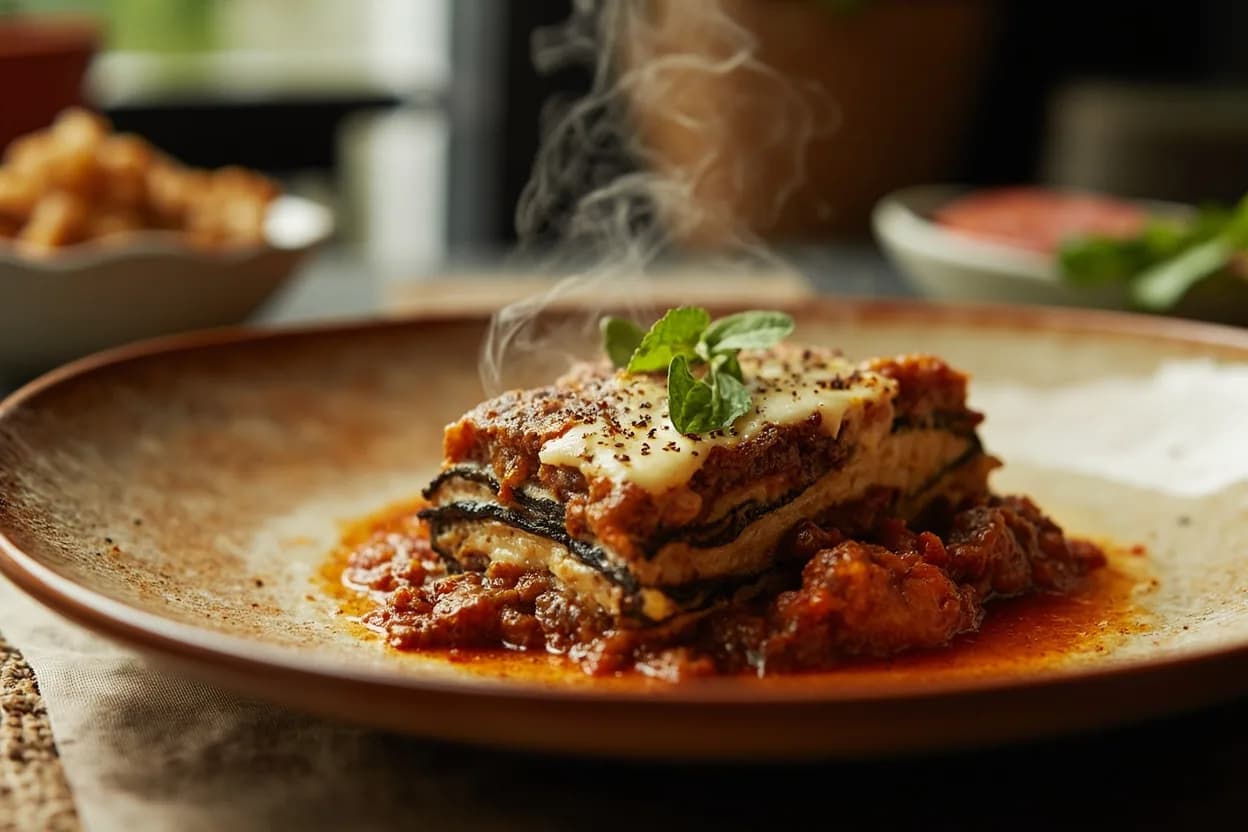
Bulgarian cooking is a vegetable- and dairy-centered Balkan cuisine whose defining feature is its yogurt (kiselo mlyako), fermented with a bacterial strain scientifically identified from Bulgarian yogurt itself and now named for the country. Many of its most recognizable dishes — moussaka, sarma-style sarmi, banitsa's cousin dishes, grilled minced meat — are shared with and disputed among neighboring Balkan cuisines rather than uniquely Bulgarian; what is more distinctively Bulgarian is the yogurt culture itself, sirene (brined white cheese), lyutenitsa, and the Rose Valley's rose-product tradition.
The flavour base
Sunflower oil as the primary cooking fat; sweet paprika, dill, parsley, and savory (chubritsa, a specific dried herb blend distinct to Bulgarian tables) as core seasonings; yogurt used both as a finishing ingredient and as a cold soup base (tarator); sirene (brined white cheese, similar in family to feta but distinctively Bulgarian in production and ubiquity) grated or crumbled over most cooked and raw vegetable dishes.
Pantry staples
Key ingredients
Signature techniques
Signature dishes
At the table
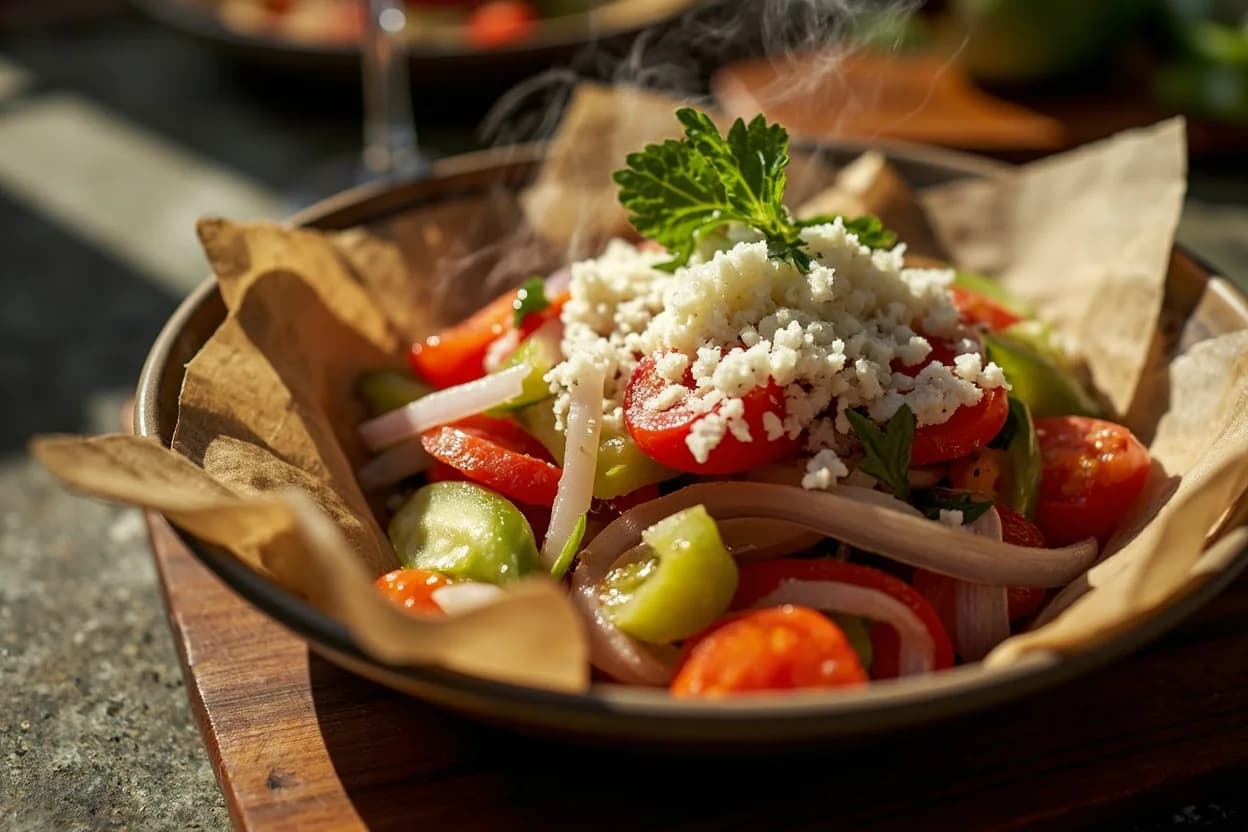
Meals typically open with a cold or room-temperature vegetable salad (most famously shopska salad) before a cooked main, bread is near-constant, and a small glass of rakia often precedes the meal rather than accompanying it. Banitsa, a layered filo-and-cheese pastry, functions as breakfast, a snack, and a holiday dish depending on how it's filled and when it's served — a version with fortune-telling notes wrapped inside is specifically served on New Year's Eve. Home preservation is a real household calendar event: autumn is when families jar lyutenitsa and other vegetable relishes in bulk for the winter, similar in spirit to the ajvar-making tradition of neighboring countries.
History & context
Thracian and later Slavic and Bulgar settlement laid the base of the region's dairy-pastoral cooking, but five centuries of Ottoman rule (14th century to 1878) are the dominant culinary layer, bringing the sarma/dolma stuffed-vegetable family, coffee, and the burek/banitsa filo-pastry line that spread across the entire former Ottoman Balkans — Bulgaria's banitsa and Turkey's börek and Serbia's burek are regional expressions of the same technique, not separate inventions. The scientific rediscovery of Bulgarian yogurt is a specific, dated event: in 1905, Bulgarian physician and microbiologist Stamen Grigorov, studying in Geneva, isolated the rod-shaped bacterium responsible for the distinctive tang and texture of Bulgarian yogurt, later named Lactobacillus bulgaricus in the country's honor — a rare case of a national food product entering the scientific record by name. The 20th century added socialist-era (1946–1989) agricultural collectivization, which industrialized dairy and vegetable production (including the state-scale cultivation of the Rose Valley's Damask roses for rose oil and rose products, some of them culinary) while paradoxically preserving home-preservation habits like jarring lyutenitsa each autumn, a practice that intensified rather than disappeared during shortages; post-1989 market opening reintroduced variety without displacing that home-jarring calendar, which remains close to universal in Bulgarian households today.
Regional variations
- Rose Valley (around Kazanlak)
Center of Damask rose cultivation for rose oil and rose products, some used in desserts and preserves; a genuinely distinct regional specialty tied to a single valley's microclimate.
- Rhodope Mountains (south)
Heavier, dairy- and pork-forward mountain cooking, including distinctive local cured meats and cheeses less common on the plains.
- Black Sea coast
More fish and seafood in the everyday diet, plus Greek and Turkish-adjacent coastal influences less present inland.
- Thrace and the southern plains
The heartland of the vegetable-growing tradition (peppers, tomatoes) that underlies shopska salad and lyutenitsa.
Related cuisines
Shares ajvar/lyutenitsa-style pepper relishes, sarma, and grilled minced meat (kebapche/ćevapi) from common Ottoman-Balkan inheritance; Bulgaria's yogurt culture and its scientific/Grigorov legacy have no Serbian equivalent, where kajmak carries that dairy prestige instead.
Shares sarma/sarmi and grilled minced meat as regional forms; Bulgaria's yogurt and sirene culture and Romania's mămăligă/borș grammar have no real overlap.
- Greek
Shares moussaka (ownership genuinely disputed) and a similar white-brined-cheese logic (sirene/feta); diverges in Bulgaria's much heavier reliance on yogurt as a daily staple rather than primarily a dessert or mezze ingredient.
- Turkish
Shares the direct Ottoman-era inheritance of börek/banitsa pastry, kebab-style grilled meat, and coffee culture; diverges in Bulgaria's Orthodox Christian ceremonial calendar (kozunak, New Year banitsa) versus Turkish Islamic dietary practice.
Canonical recipes
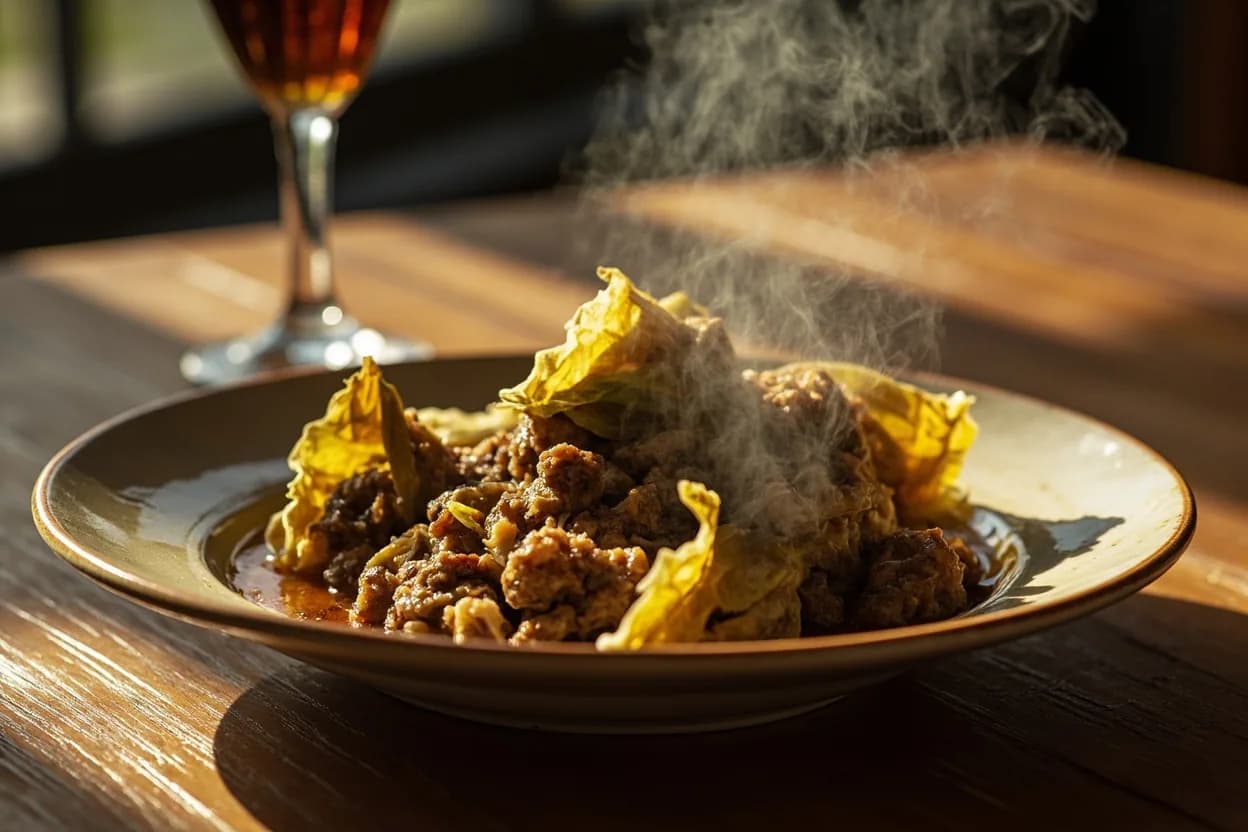
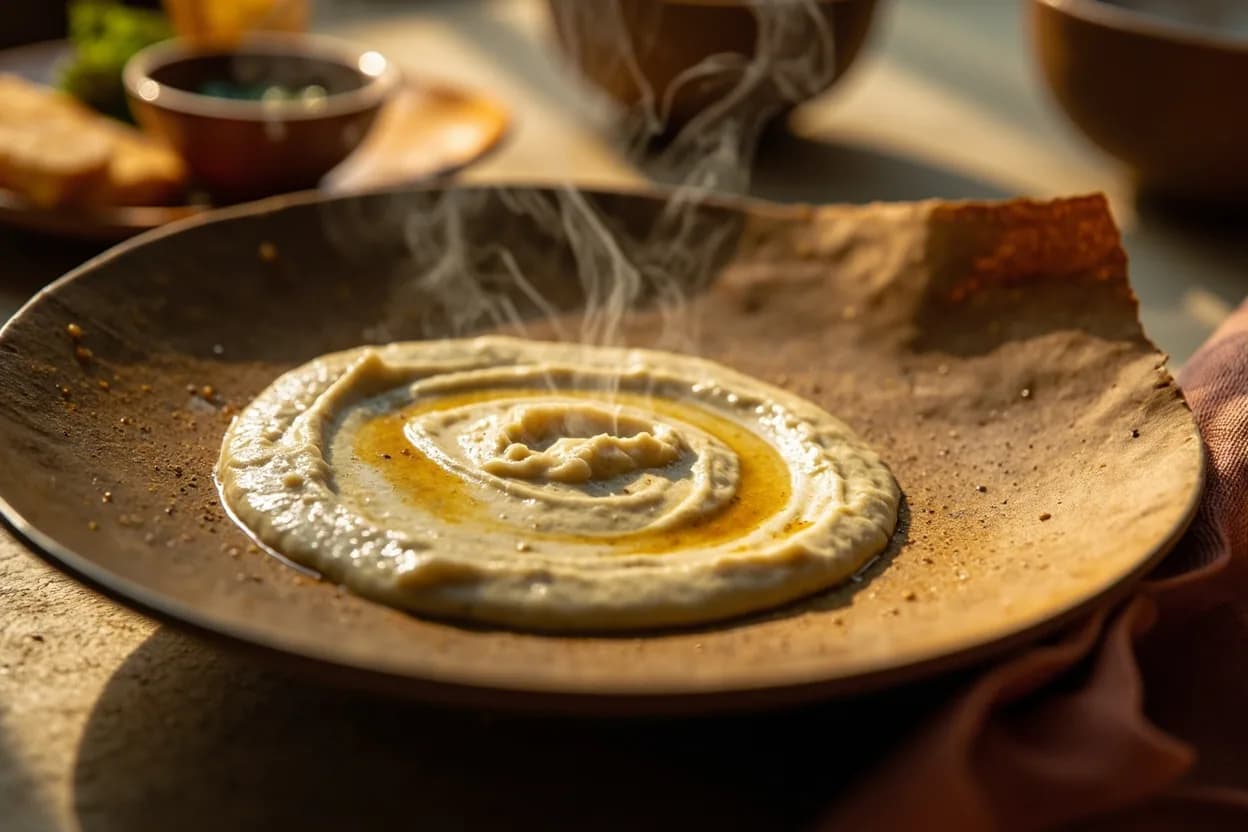
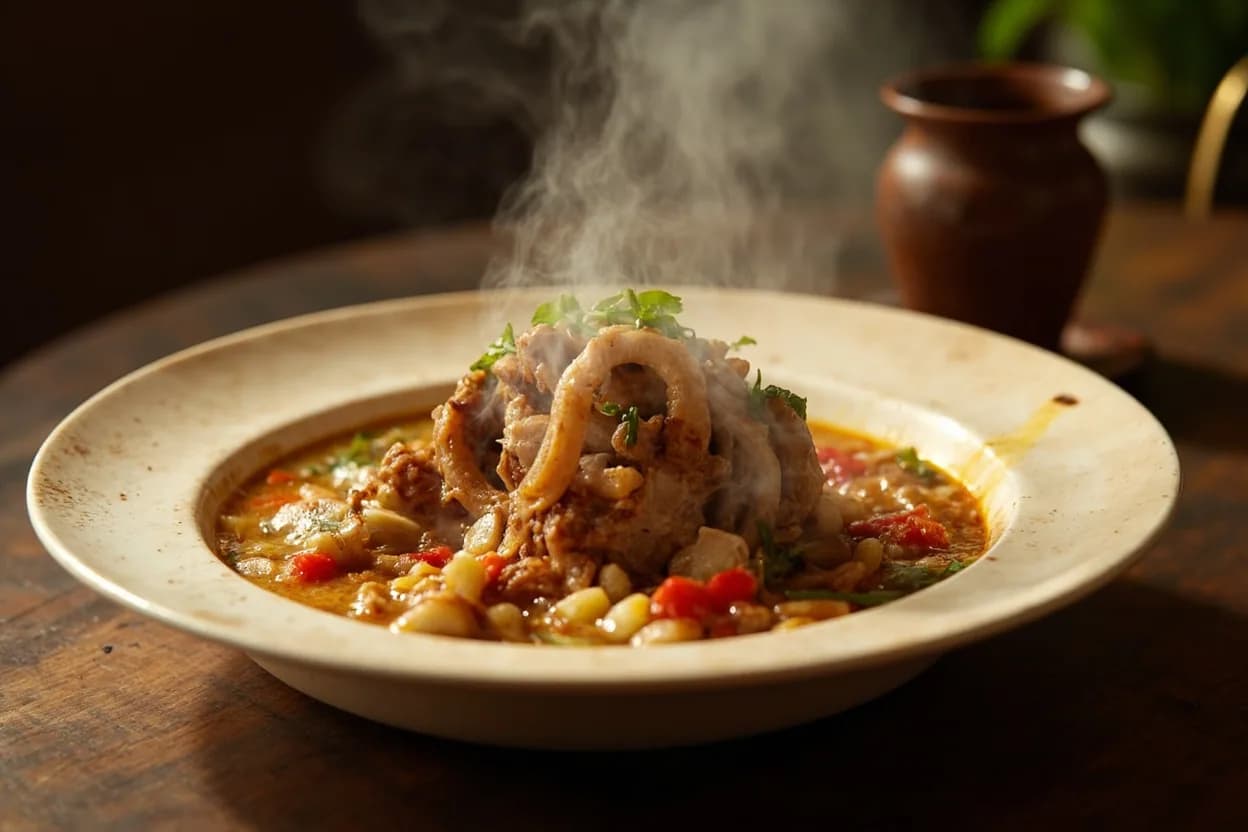
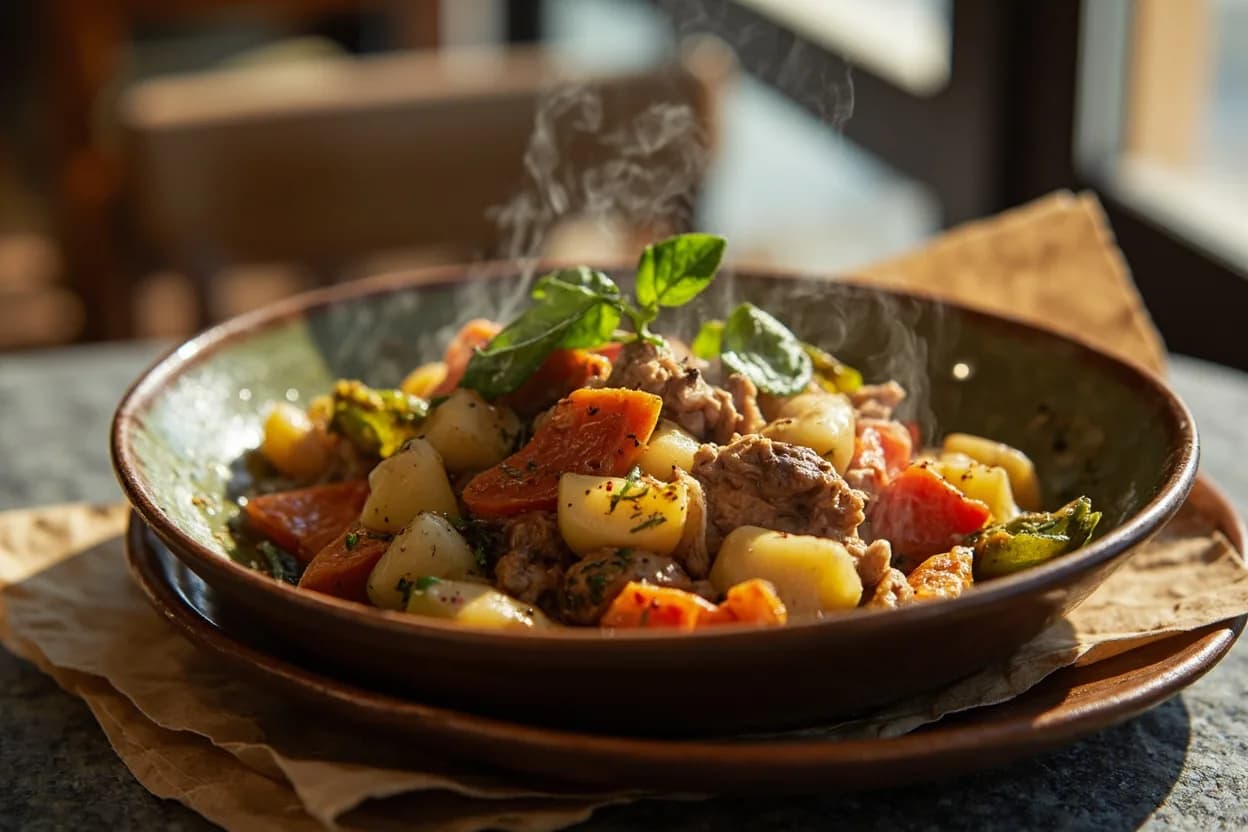
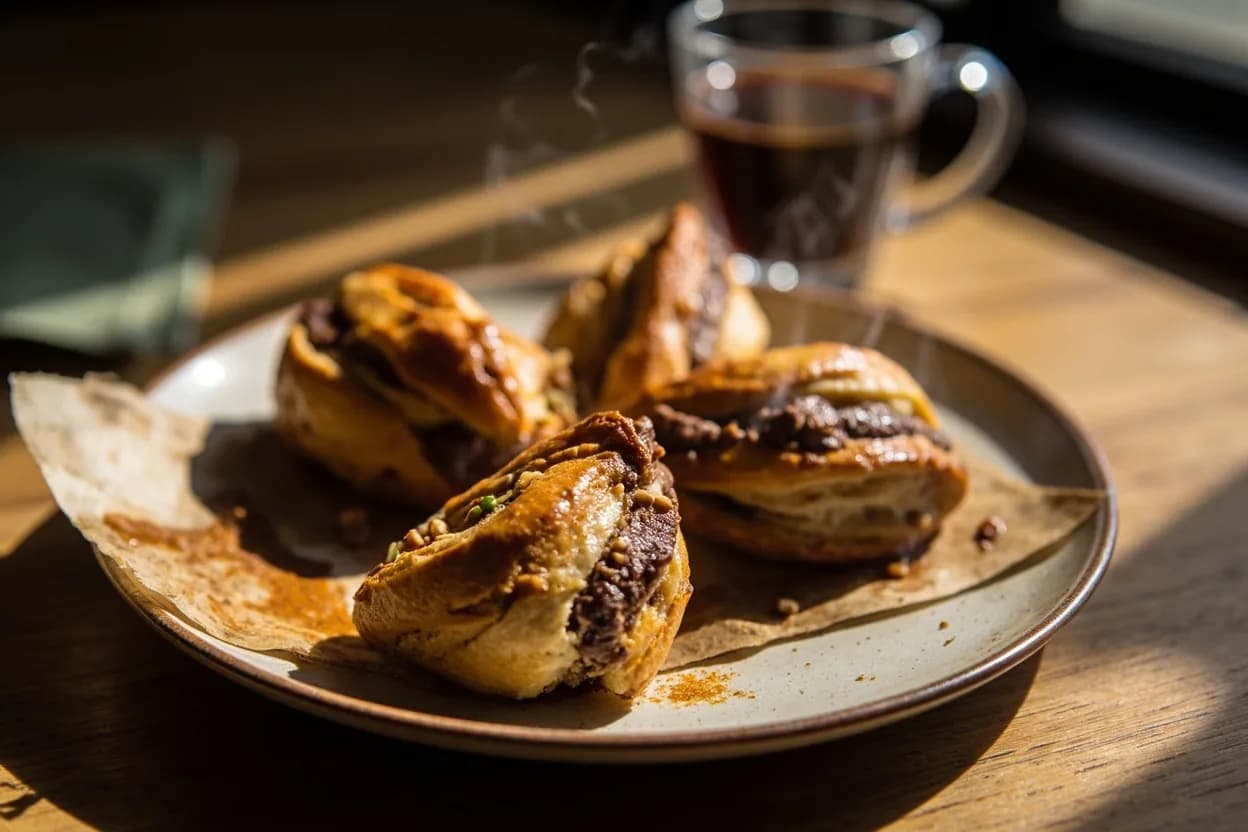
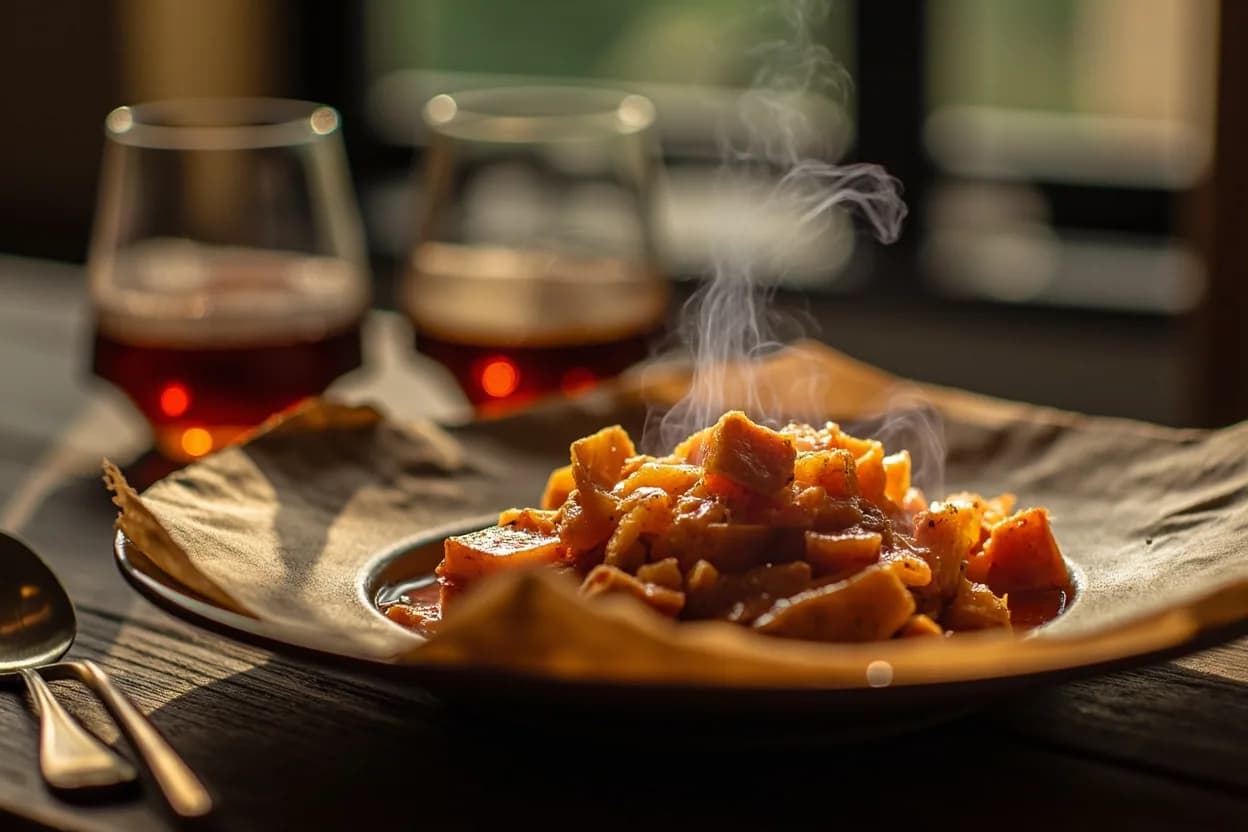
The dishes that define Bulgarian, documented in the Canon.

References
- 1.The Oxford Companion to Food — Alan Davidson (Oxford University Press, 1999)
- 2.Balkan Ghosts: A Journey Through History — Robert D. Kaplan (St. Martin's Press, 1993)
- 3.The Melting Pot: Balkan Food and Cookery — Maria Kaneva-Johnson (Prospect Books, 1995)
- 4.Bulgarian Cookery — Silva Toneva & Petar Petrov (Borina Publishing, various eds.)
Confidence: medium
Notes
Lactobacillus bulgaricus is a real, dated scientific discovery, not a marketing name
In 1905, Bulgarian physician and microbiology student Stamen Grigorov, working in Geneva, isolated the specific rod-shaped bacterium responsible for the characteristic sour tang and thick set of traditional Bulgarian yogurt. The organism was subsequently classified and named Lactobacillus bulgaricus in recognition of its origin — one of the few cases where a national dairy tradition is directly commemorated in a bacterium's scientific name. Traditional Bulgarian yogurt is fermented with a specific symbiotic pairing of this bacterium and Streptococcus thermophilus, and Bulgaria's combination of a favorable climate for these cultures and an unusually long, continuous home-fermentation tradition (many rural households still maintain a yogurt culture passed down for generations rather than buying a starter) is part of why the country's yogurt developed a distinct reputation worth isolating scientifically in the first place, rather than the discovery being incidental to where Grigorov happened to be studying.
Shopska salad is a 20th-century invention, not ancient peasant food
Despite its now near-universal status as the dish foreign visitors most associate with Bulgaria, shopska salad in its familiar form — chopped tomato, cucumber, raw onion, roasted or raw pepper, all topped with a generous layer of grated sirene — is widely understood to be a mid-20th-century creation of Bulgaria's state tourism industry (Balkantourist), designed in the 1950s–60s as an attractive, photogenic, and easily explainable dish for the growing wave of foreign visitors to Black Sea resorts, deliberately named after the Shopi ethnographic region around Sofia to give it a folk pedigree it did not organically have. The individual components — chopped raw vegetables, sirene — are of course much older and genuinely traditional; what is modern is their specific combination, ratio, and presentation as a single named national dish. This is worth stating plainly to a cook rather than repeating the folk-origin story uncritically, since the salad's actual history is itself an interesting piece of Cold War-era tourism marketing.
Autumn lyutenitsa-jarring is a household production run, not a jarred-condiment purchase
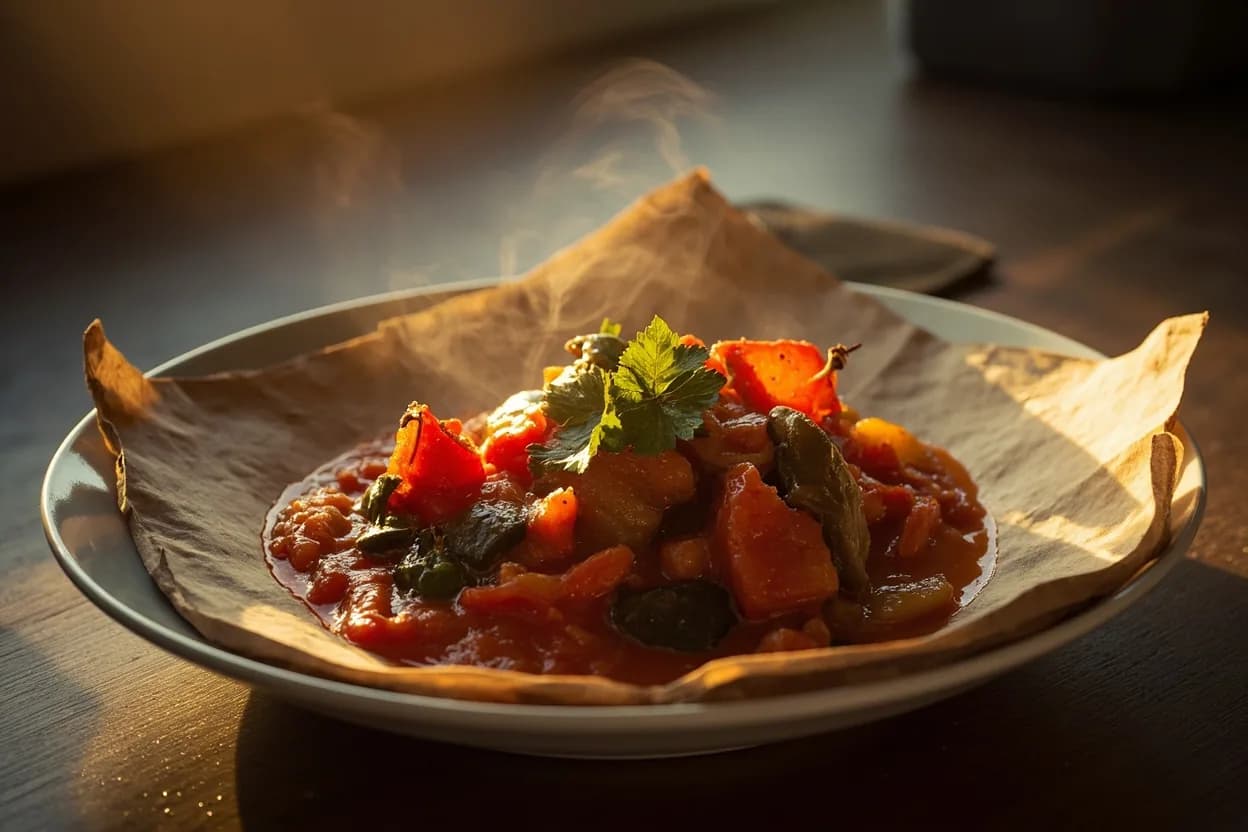
Lyutenitsa — a relish of slow-cooked roasted red peppers, tomatoes, and sometimes eggplant or carrot, reduced for hours until thick and jammy — is traditionally made at home in a single large autumn batch when peppers and tomatoes are cheapest, mirroring the ajvar-making tradition of Bulgaria's Balkan neighbors. Families roast and peel large quantities of peppers, then simmer the mixture down slowly in wide pots, stirring frequently to prevent scorching, before sealing it into jars while still hot to preserve it without refrigeration for the coming year. Commercial jarred lyutenitsa is widely sold and perfectly normal to buy, but home-made lyutenitsa carries real social weight — a jar from a family's own autumn batch, or from a grandmother's kitchen, is a genuine gift item, and recipes (proportions of pepper to tomato, whether carrot or eggplant is added, how long it is cooked down) are treated as family heirlooms passed down rather than looked up.