Southeast Europe / Adriatic
Croatian
Also: Croatian Cuisine, Hrvatska kuhinja, Dalmatian cuisine, Istrian cuisine, Slavonian cuisine
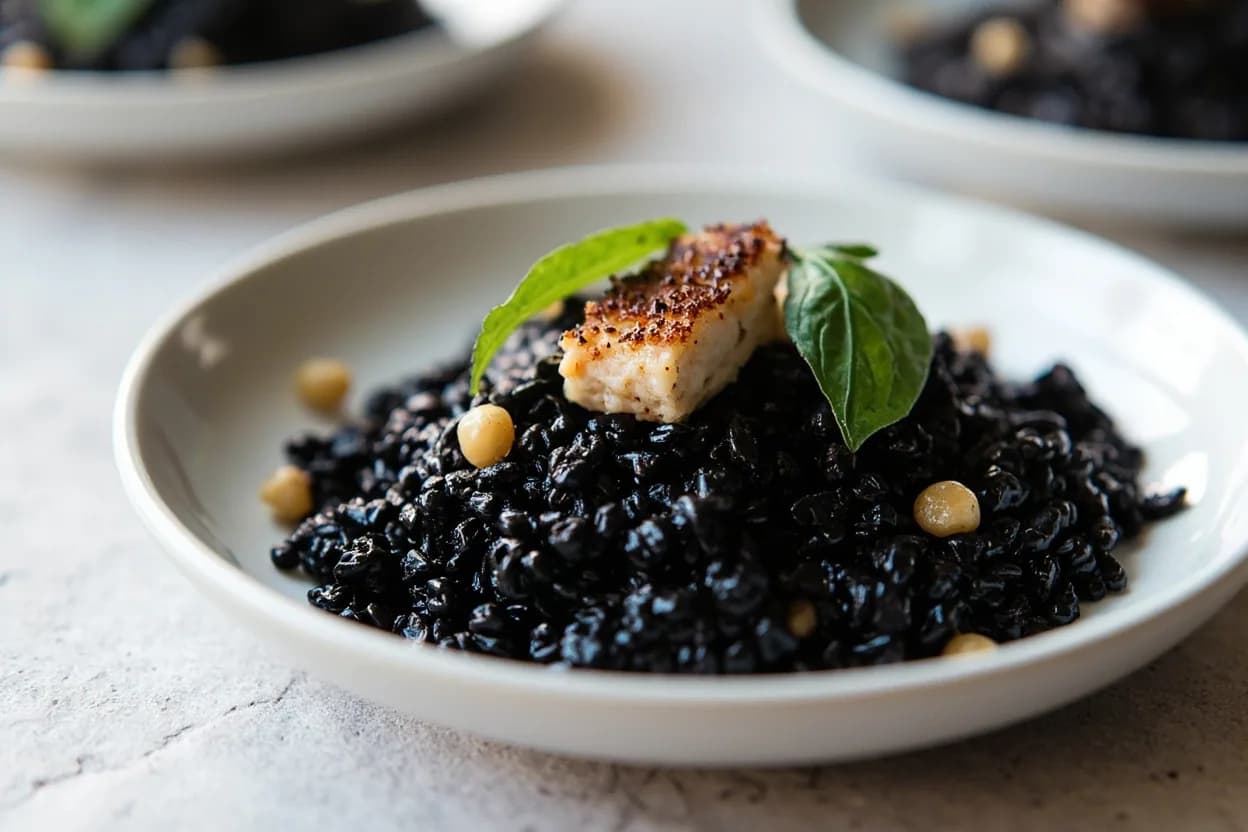
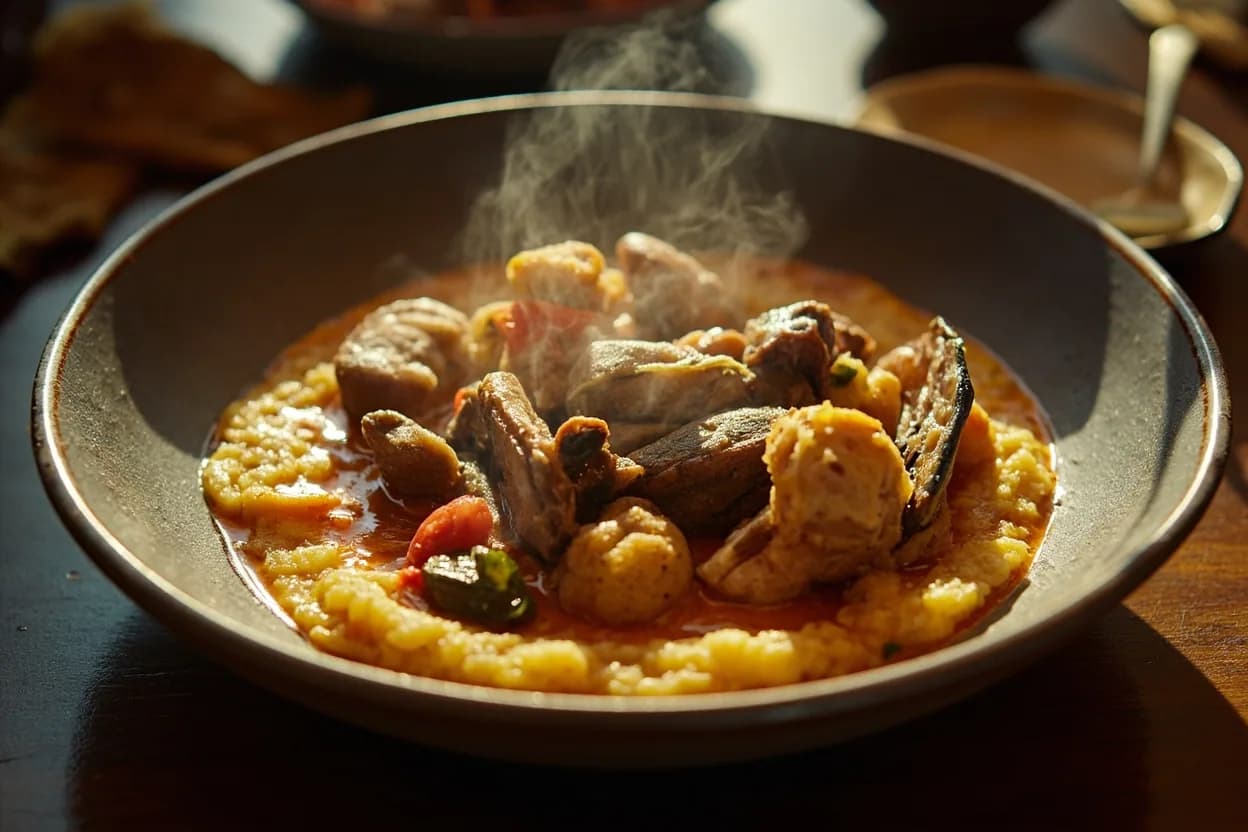
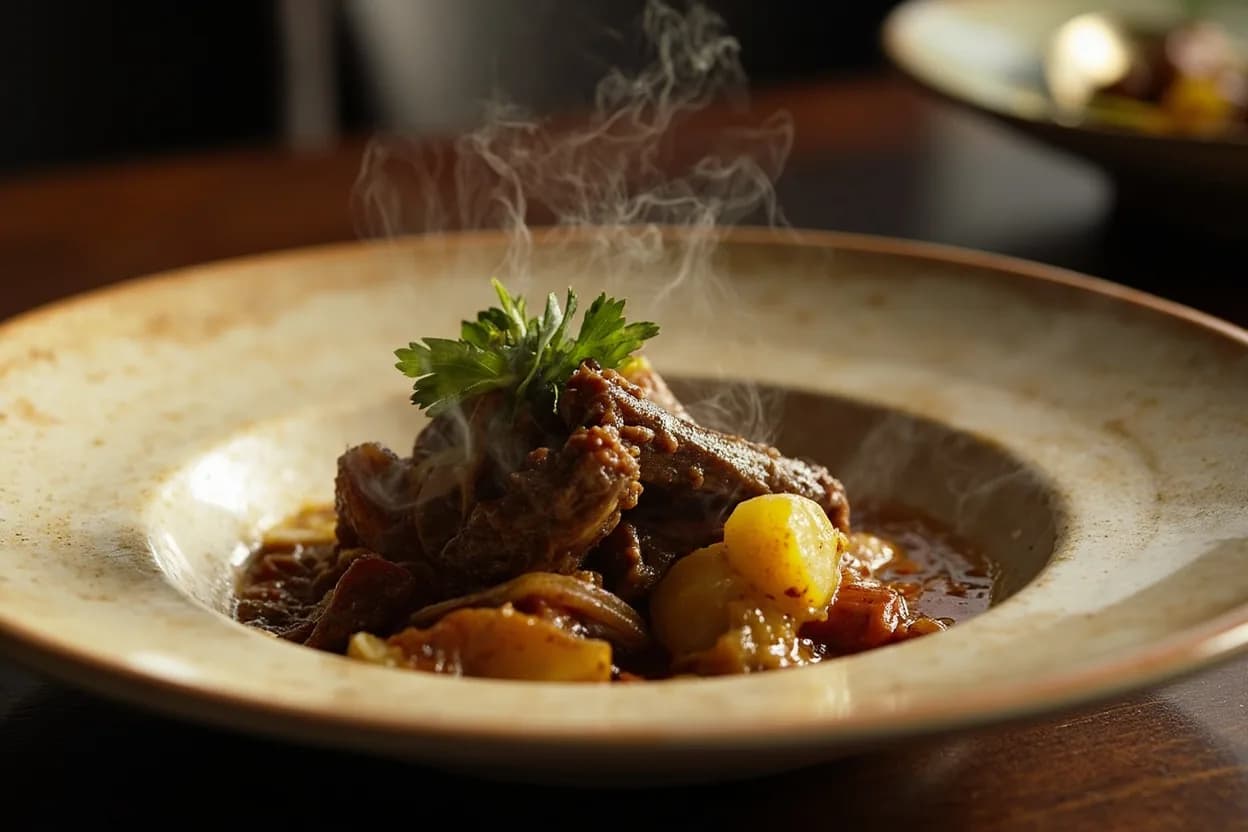
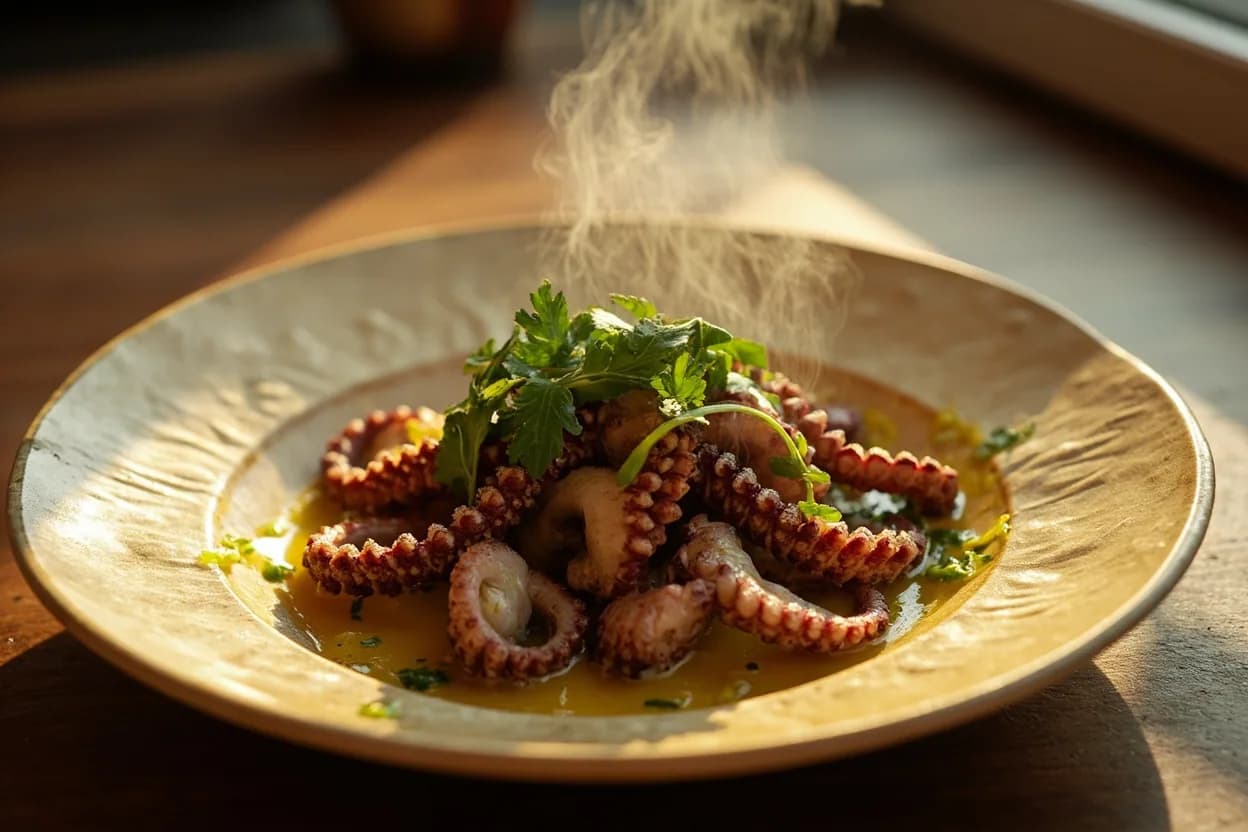
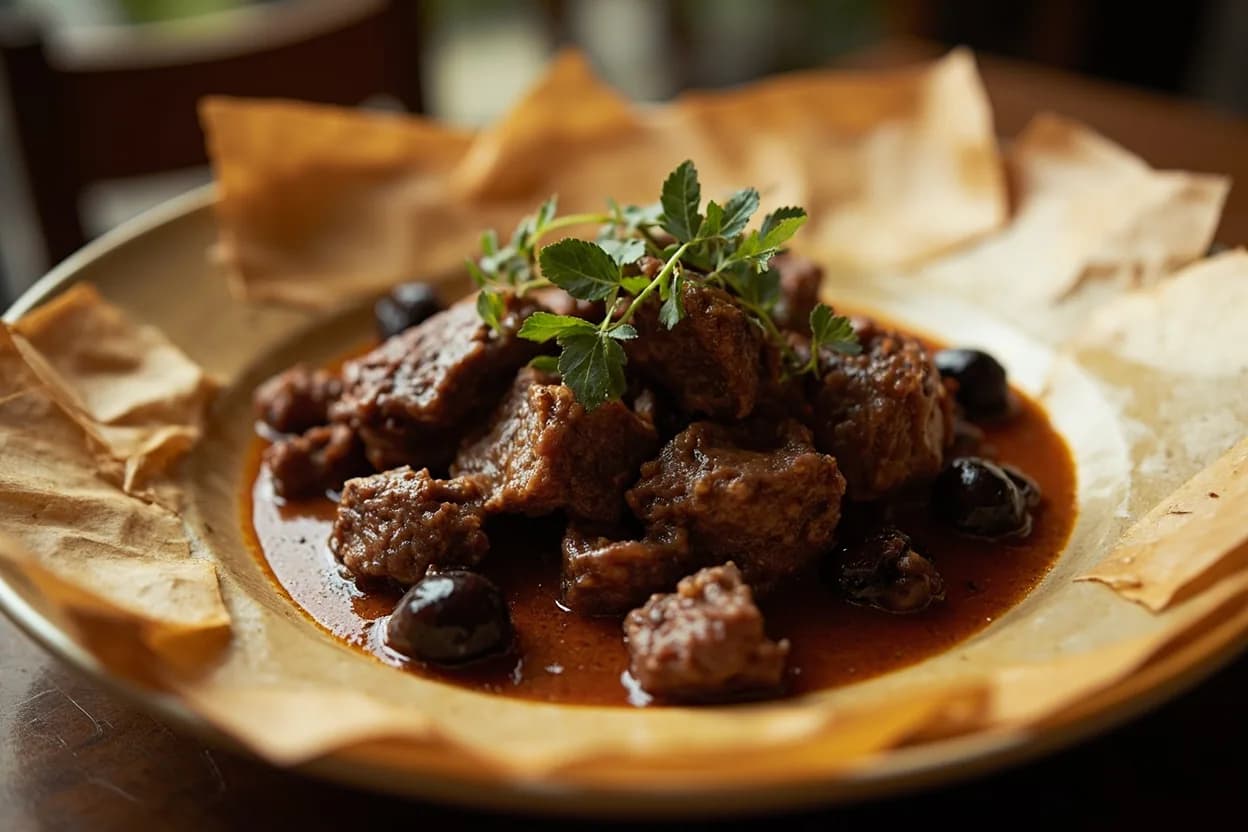
Two cuisines under one flag: Dalmatian black risotto, octopus salad, and peka-roasted lamb on the Adriatic coast against Slavonian kulen sausage, paprika stews, and lard-based continental cooking inland.
Croatian cooking is really two adjoining traditions sharing a border, not a single cuisine. Along the Adriatic coast and Istria it is Mediterranean — olive oil, seafood, wild herbs, and meat slow-cooked under a metal peka dome. Inland, in Slavonia and Zagorje, it is Central European — lard, pork, paprika, and freshwater fish paprikaš, closer to Hungarian and Austrian cooking than to anything on the coast. What connects the two is a preference for few, honest ingredients tied to a specific place, and a habit of building the week around one slow, communal centerpiece dish rather than a rotation of small plates.
The flavour base
On the coast: olive oil as the primary fat, garlic, bay leaf, parsley, and wild Mediterranean herbs (rosemary, sage, wild fennel), acidified with lemon and local wine, with cuttlefish ink and salt cod adding umami depth. Inland: lard and pork fat as the base, sweet and hot paprika, garlic, and onion as the aromatic foundation, soured with vinegar or fermented cabbage juice, and enriched with sour cream in dishes like štrukli and paprikaš.
Pantry staples
Key ingredients
Signature techniques
Signature dishes
At the table
Lunch is the largest meal, especially inland, where a slow-simmered stew or paprikaš is the anchor around which the day is organized. Bread accompanies everything and is rarely made at home in coastal towns, bought fresh daily instead. Sunday and holiday meals center on a single showpiece — a whole lamb or octopus cooked under the peka dome on the coast, or roast pork with kulen and sarma inland — set out communally rather than plated individually. Coastal meals often begin with a small fish or seafood course before the main, while inland meals move more directly from soup to the main stew.
History & context
The coast absorbed Greek and Roman foodways from antiquity, then a long Venetian rule (13th–18th century) over Dalmatia and Istria left olive oil, polenta, and risotto-style rice cookery embedded in local cuisine; Venetian trade also brought in the black cuttlefish-ink risotto and salt-cod dishes still cooked today. Inland, Ottoman control of Slavonia (16th–17th century) introduced paprika and a smoked-pork tradition later refined under the following centuries of Habsburg rule, which pulled continental Croatian cooking toward Vienna and Budapest — hence štrukli, paprikaš, and kulen sausage sharing more with Hungarian cuisine than with Dalmatia. The 19th-century phylloxera crisis and the two world wars disrupted Adriatic vineyards and fishing economies in turn. Under socialist Yugoslavia (1945–1991), coastal tourism development from the 1960s onward professionalized Dalmatian seafood cookery for a foreign audience while collectivized agriculture reshaped inland farming; home cooking on both sides, however, stayed largely conservative. Since independence in 1991 and EU accession in 2013, protected-designation status for products like Pag cheese and Slavonski kulen has formalized regional identities that were already centuries old.
Regional variations
- Dalmatia & Istria (coast)
Mediterranean in every sense — olive oil, fish, black risotto, truffle-forward Istrian cooking, and Adriatic sheep's cheese from islands like Pag; closer in spirit to Italian coastal cooking than to inland Croatia.
- Slavonia
Central European and paprika-driven — kulen sausage, freshwater fish paprikaš, and pork dominate, sharing more technique and flavor with Hungarian cooking than with the Adriatic coast.
- Zagorje & Zagreb region
Austrian-leaning home cooking — štrukli (cottage-cheese pastry, both baked and boiled), turkey with mlinci noodles, and a lighter hand with paprika than Slavonia.
Related cuisines
- Italian
Shares Venetian-era coastal technique (risotto, olive oil, salt cod) directly with Istria and Dalmatia, but Croatian coastal cooking uses more wild herbs and cuttlefish ink and less dairy than northern Italian cooking.
Slavonian paprika stews, lard-based cooking, and sour-cream enrichment closely track Hungarian technique, though Croatian versions lean more on smoked pork (kulen) than Hungarian paprikás typically does.
Shares sarma, ćevapi-style grilled meat, and rakija distillation as a genuinely pan-regional Balkan grill-and-preserve tradition, with no clean claim of origin on either side — the dishes differ mainly in local seasoning and side dishes, not core method.
Canonical recipes
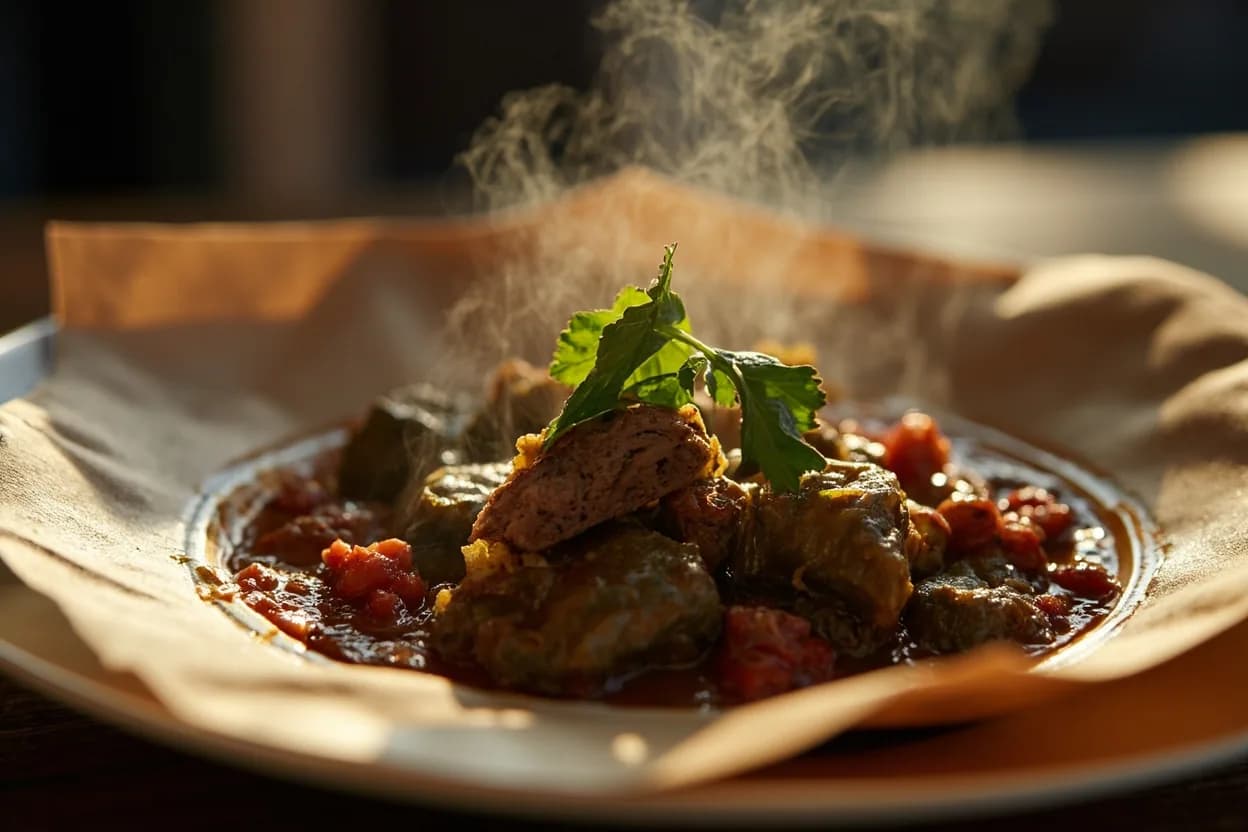
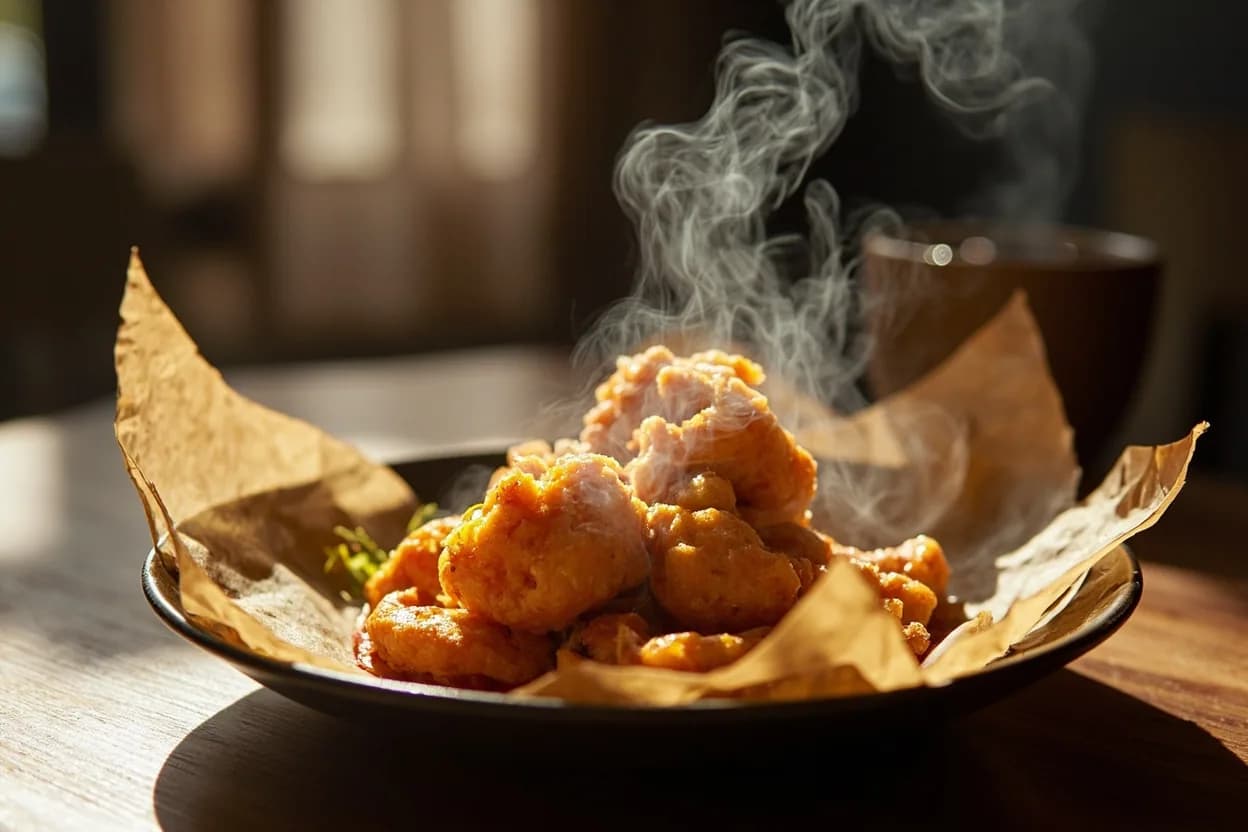
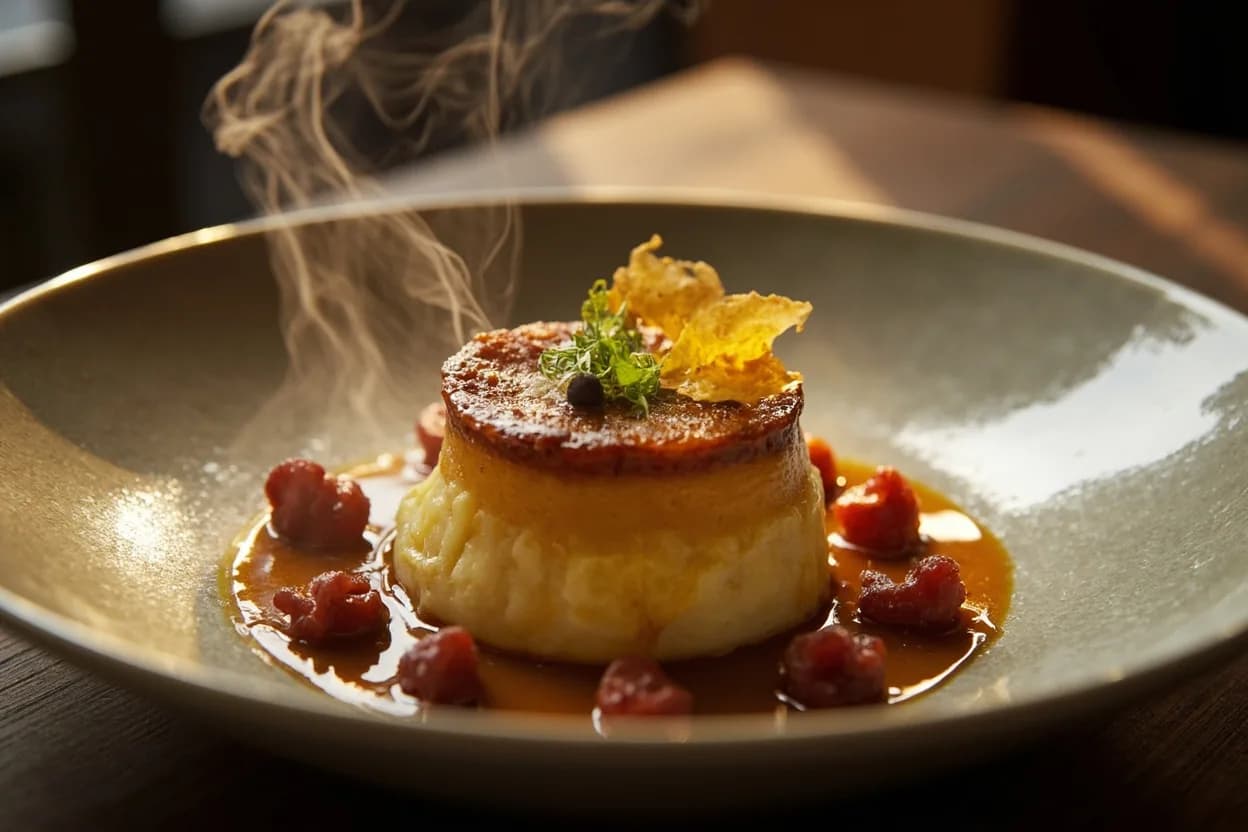
The dishes that define Croatian, documented in the Canon.
References
- 1.The Melting Pot: Balkan Food and Cookery — Maria Kaneva-Johnson (Prospect Books, 1995)
- 2.The Oxford Companion to Food — Alan Davidson, ed. (Oxford University Press, 1999)
- 3.Cuisine and Empire: Cooking in World History — Rachel Laudan (University of California Press, 2013)
- 4.The Cambridge World History of Food — Kenneth F. Kiple and Kriemhild Coneè Ornelas, eds. (Cambridge University Press, 2000)
Confidence: medium
Notes
The peka is a technique, not a dish
Peka refers to the iron or copper dome placed over meat, potatoes, and vegetables and then covered in hot embers, not to any single recipe. The bell traps steam and radiant heat, so the food effectively braises and roasts at once over one to three hours, producing meat that falls apart while the exposed potatoes underneath char slightly at the edges. Traditionally the coals were the household hearth's embers, and preparing a peka meal was an all-afternoon, whole-family undertaking, usually reserved for Sundays or guests rather than weeknights — coastal restaurants today require advance orders for exactly this reason, since the embers must be built up and the dish assembled hours before serving, not cooked to rush. The same vessel and method work equally on octopus, lamb, veal, or a whole fish, which is why Croatian coastal menus list 'peka' as a cooking method the diner chooses a protein for, rather than as a fixed dish name the way a foreign visitor might expect.
Why kulen carries EU protected-name status
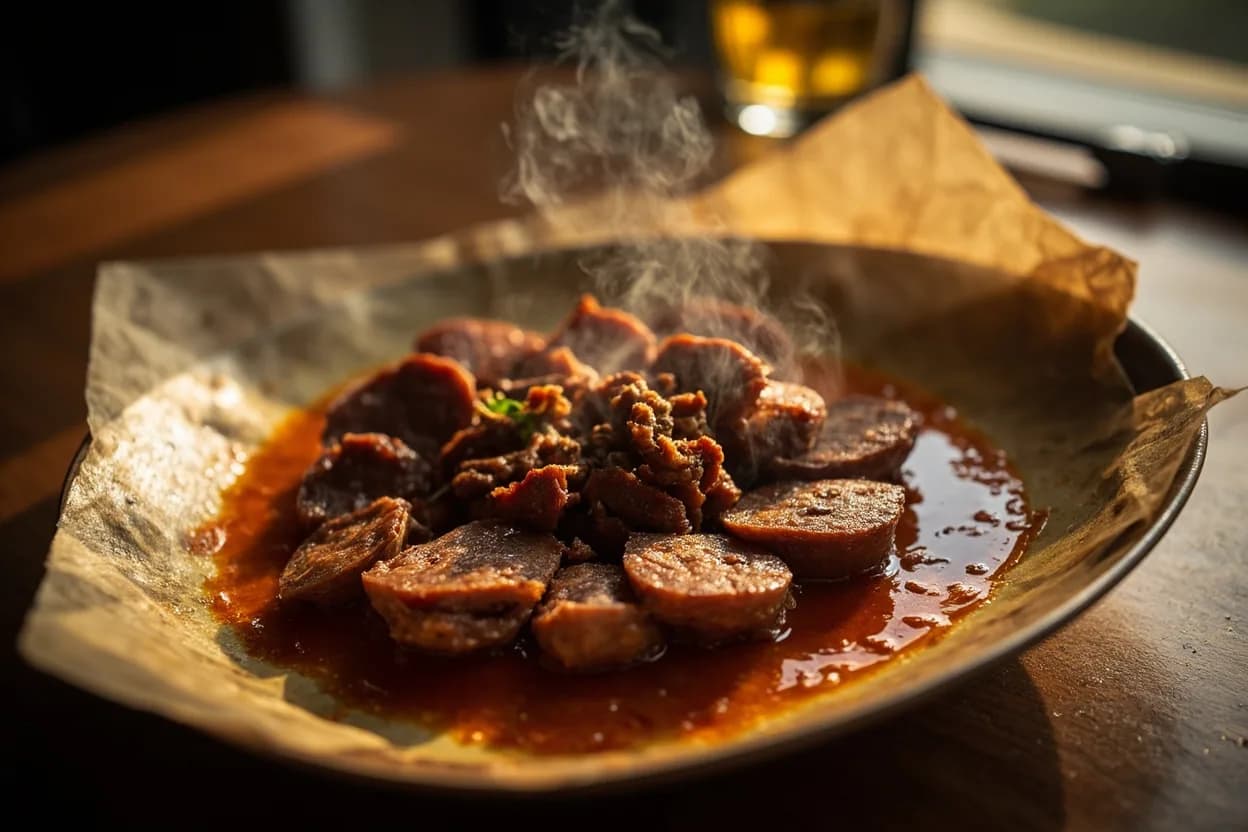
Slavonian kulen (also spelled kulin) is a coarse pork sausage stuffed into a whole pig's cecum rather than a narrow casing, seasoned heavily with local sweet paprika and garlic, then cold-smoked over beechwood and air-dried for months. Its wide diameter and slow cure give it a softer, more spreadable texture than most European dry sausages, and the paprika dose is high enough that the finished sausage reads distinctly red rather than brown. Because the specific pig breed, the paprika variety, and the Slavonian climate all genuinely affect the outcome, both Croatia and neighboring Serbia (which makes a related sausage, kulen or kulin) have pursued protected-designation recognition, and Croatian Slavonski kulen already holds EU Protected Geographical Indication status. The designation is a reminder that a shared regional product can still have a legally defensible local variant, even where the broader Balkan sausage-and-paprika tradition itself is not any one country's invention.
Sarma is Balkan-wide, not Croatian
Cabbage leaves wrapped around spiced minced meat and rice, slow-simmered for hours, appear under the name sarma (or a close cognate) across Croatia, Serbia, Bosnia, Bulgaria, North Macedonia, and Turkey, with real variants standard through the former Ottoman lands more broadly — the word itself is Turkish, meaning 'wrapped' or 'rolled.' No country has a defensible claim to having invented it; it is better understood as an Ottoman-era technique for stretching a small amount of meat across a large, filling dish using fermented cabbage as both wrapper and flavoring agent, which then localized everywhere it spread. The Croatian version typically uses whole fermented cabbage leaves (from heads pickled in barrels each autumn) rather than fresh cabbage, is simmered with smoked pork ribs or bacon for depth, and is a fixture of the Christmas and New Year table rather than an everyday dish — but the same can be said, with small variations, of sarma across most of its neighbors.