Caribbean
Cuban
Also: Cuban Cuisine, Cocina Cubana, Comida Criolla Cubana
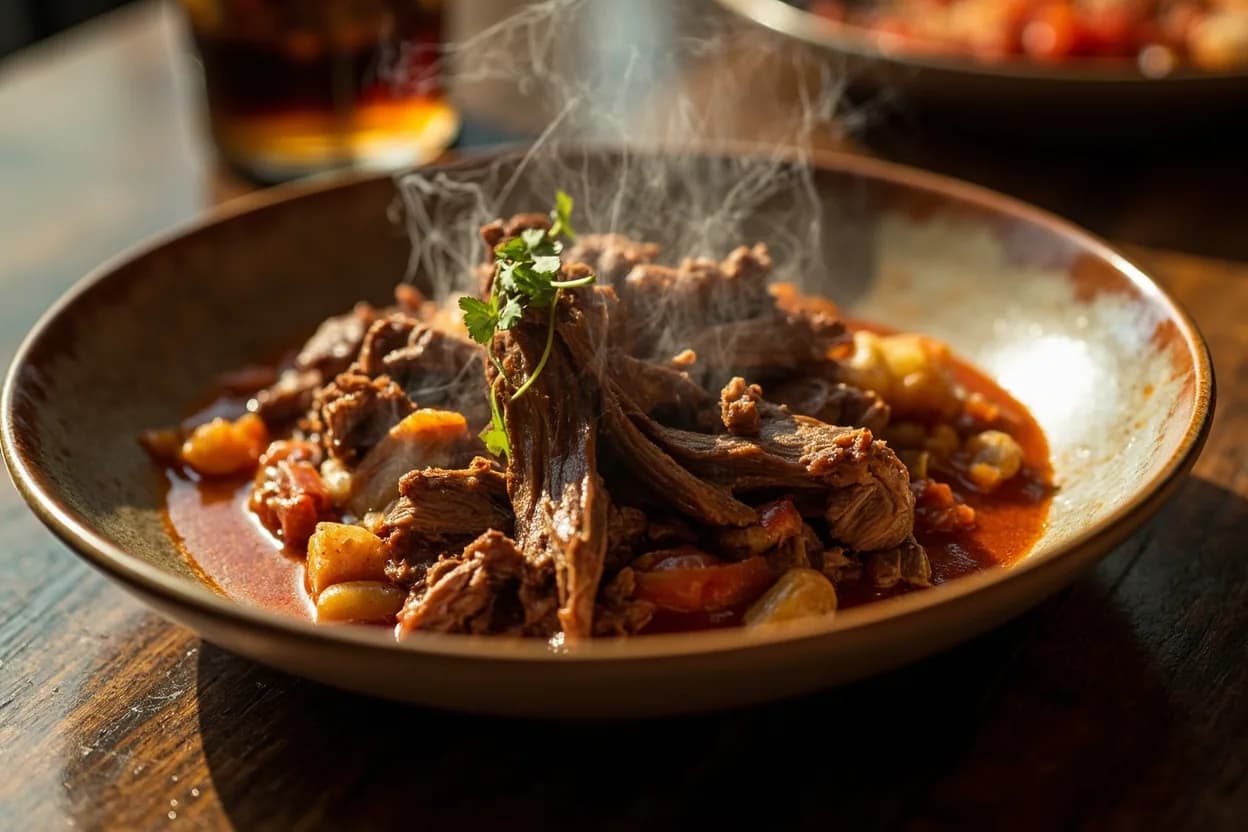
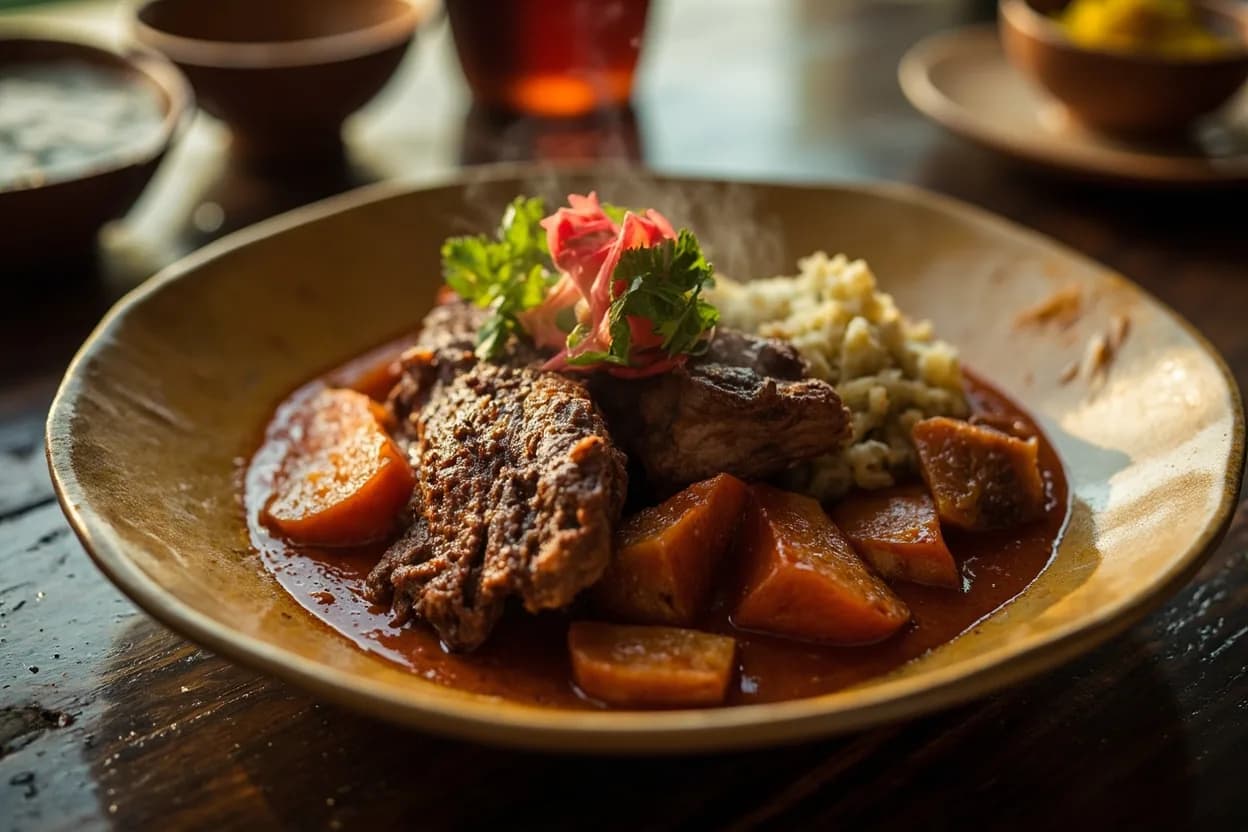
A Creole crossroads cuisine — Spanish sofrito, African root vegetables and slow-cooked pork, Taíno cassava, and Chinese-Cuban barrio flavors folded into ropa vieja, moros y cristianos, and the crackling-skinned lechón asado of a Sunday feast.
Cuban cuisine is a Creole tradition built on four converging streams — Taíno cassava and root-vegetable cookery, Spanish colonial livestock and rice, West and Central African technique and religious foodways, and a 19th-century Chinese immigrant layer — unified by the sofrito base and the mojo criollo marinade. It is a cuisine of economy and stretch: rice and beans form the structural core of most meals, pork is treated as the prestige protein and cooked whole for celebration, and decades of trade embargo and rationing have made resourceful substitution as much a part of the tradition as any single dish.
The flavour base
Sofrito of garlic, onion, green bell pepper, and tomato as the aromatic base of nearly every stew; mojo criollo — sour (Seville) orange juice, garlic, and cumin — as the definitive marinade and finishing sauce; comino (cumin), dried oregano, and bay leaf as the core dried-spice trio; culantro alongside cilantro in some households. Sofrito is built low and slow rather than seared hard, and acid (sour orange, vinegar, lime) is added at the end to keep its brightness.
Pantry staples
Key ingredients
Signature techniques
Signature dishes
At the table
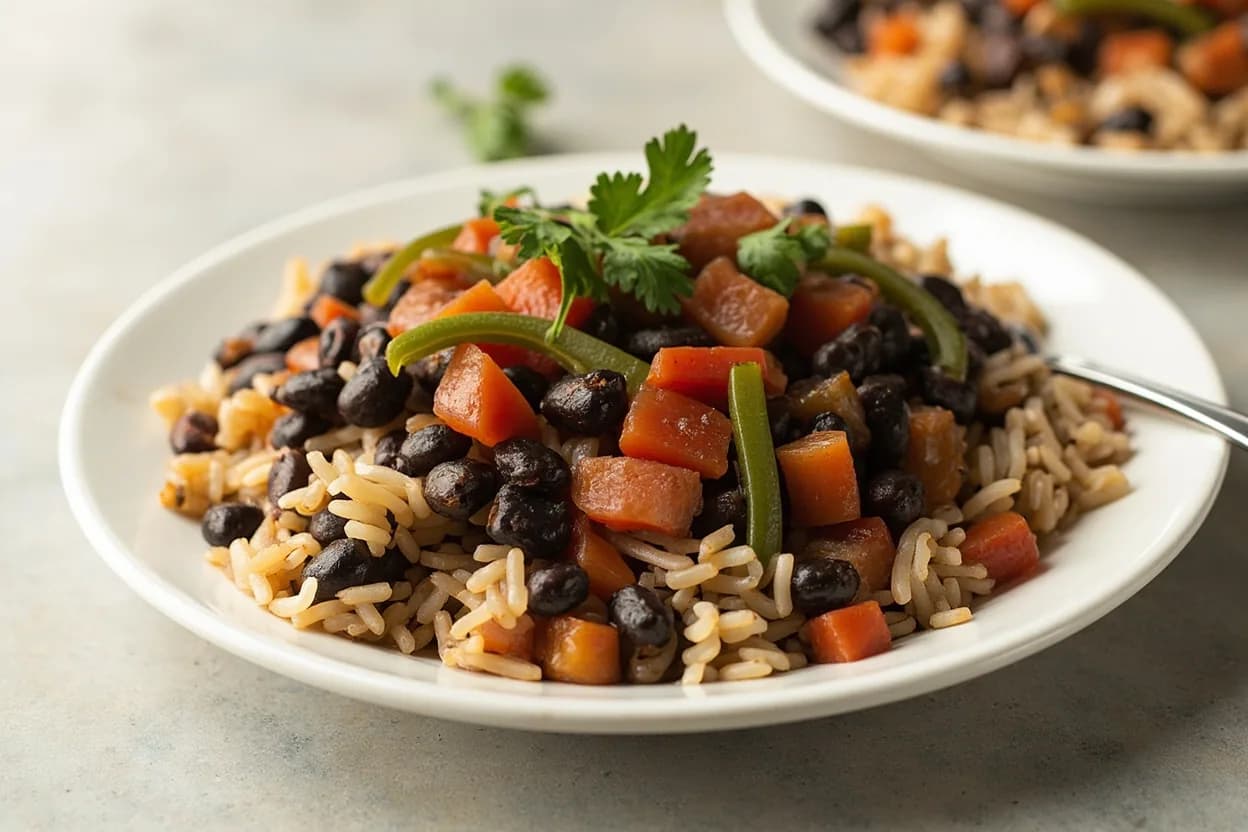
Historically the biggest meal (almuerzo) fell at midday to fuel agricultural labor, though modern urban life has shifted the heaviest meal to evening (comida). Rice, beans, a braised or roasted protein, and viandas (starchy roots — yuca, malanga, plantain) structure almost every plate. Havana tends to cook beans and rice separately and combine them (moros y cristianos); the east (Oriente) more often cooks them together from the start (congrí). Café cubano — thick, sweet, pressure-brewed espresso — punctuates the day at a street-corner ventanita. Sunday gathers extended family around a whole roast pig (lechón asado), often cooked in a caja china box, as the week's ceremonial meal.
History & context
Cuban food begins with the Taíno, who left cassava (yuca) and casabe bread, corn, and sofrito-adjacent chili use before their near-total demographic collapse under Spanish colonization. Spain, arriving from 1492, brought pigs, cattle, rice, wheat, olive oil, citrus, and the sugar cane that would define the island's economy and its brutal transatlantic slave trade. Enslaved West and Central Africans (largely Yoruba and Kongo peoples) contributed okra, plantain cookery, root-vegetable technique, and the Santería religious foodways still woven through Cuban home cooking. From 1847, indentured Chinese laborers arrived to supplement plantation labor, settling Havana's Barrio Chino and folding wok technique into the Creole kitchen. The 1959 Revolution and the subsequent US trade embargo (1960 onward) reoriented food supply toward Soviet trade, and the 1991 collapse of that trade triggered the Período Especial, a decade of rationing and improvisation. Meanwhile the Cuban diaspora — concentrated in Miami after 1959 and the 1980 Mariel boatlift — commercialized and preserved much of the pre-Revolutionary repertoire, from the café cubano ventanita to the medianoche sandwich, making Miami as important to the cuisine's continuity as Havana itself.
Regional variations
- Havana
Beans and rice cooked separately then combined (moros y cristianos); stronger Spanish-Chinese blend from the historic Barrio Chino; street-corner ventanita coffee culture.
- Oriente / Santiago de Cuba
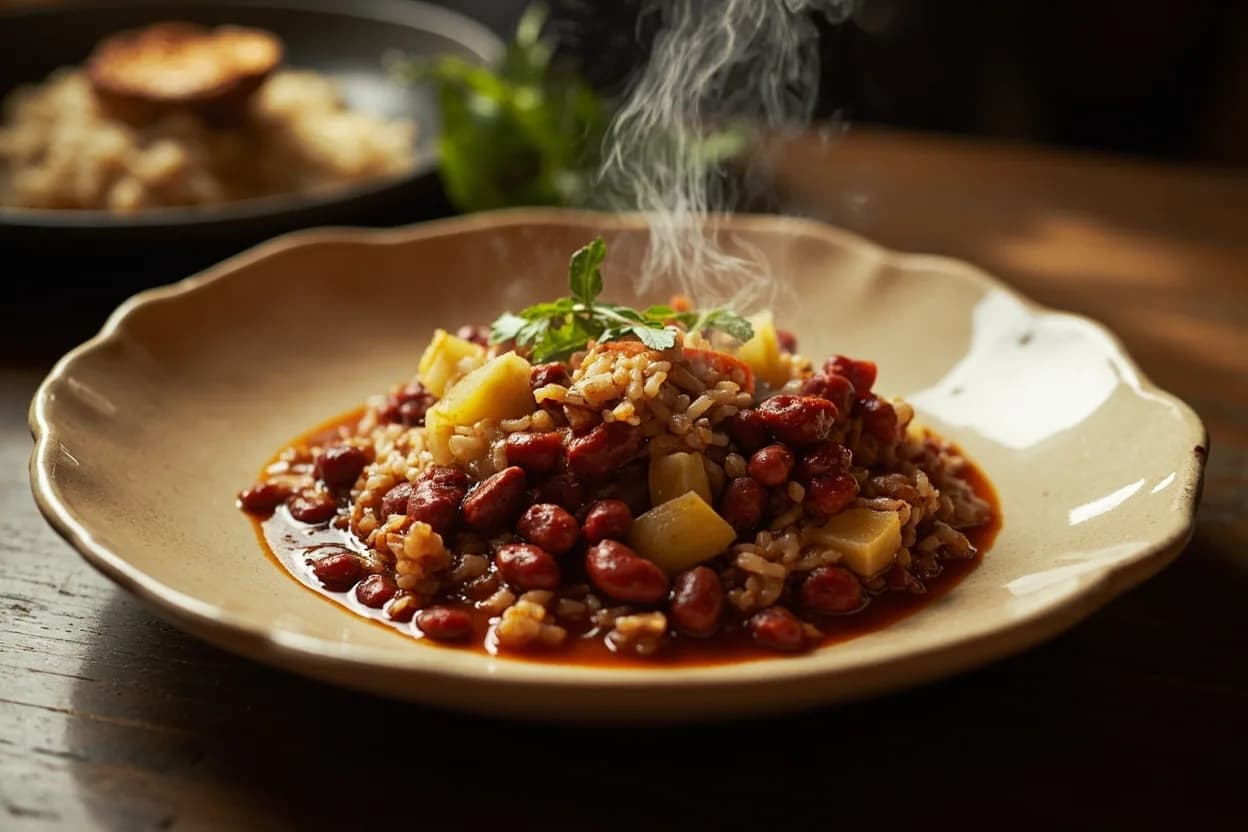
Beans and rice cooked together from the start (congrí); more pronounced African influence and coconut use, with flavor affinities to Haitian and Dominican cooking.
- Miami diaspora
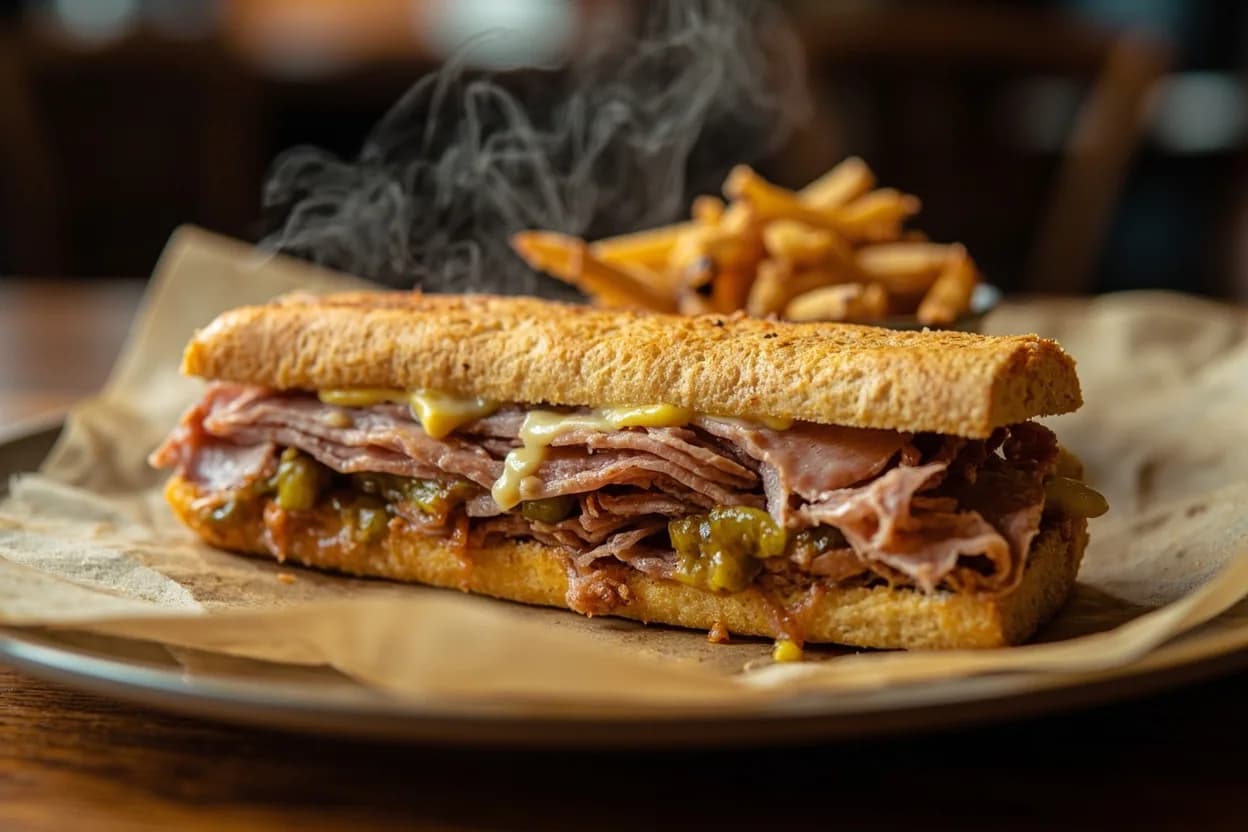
Post-1959 exile community standardized and commercialized the medianoche and Cuban sandwich, café cubano ritual, and the Ocho anniversary restaurant scene, preserving much of the pre-Revolutionary repertoire.
- Pinar del Río
Tobacco-growing western province with simpler, rural, vianda-heavy home cooking and less restaurant-driven refinement than Havana.
Related cuisines
Shares the sofrito and mojo criollo base and the rice-and-beans structural core, diverging in pasteles (banana-leaf-wrapped masa) versus Cuban tamales and in the greater use of sazón/achiote for color.
Close Caribbean cousin sharing yuca, plantain, and rice-and-beans staples; la bandera's stewed meat plus rice and habichuelas parallels Cuban moros y cristianos closely.
- Spanish
Andalusian colonial roots supply rice technique, pork, olive oil, and citrus; Cuban cooking simplifies and Creolizes Spanish stews and sofrito rather than reproducing them directly.
- West African / Yoruba
Enslaved West and Central Africans shaped okra cookery, plantain technique, and the Santería religious foodways (offerings, ritual dishes) still practiced in Cuban households today.
Canonical recipes
The dishes that define Cuban, documented in the Canon.
References
- 1.The Cuban Table — Ana Sofía Peláez & Ellen Silverman (Ten Speed Press, 2014)
- 2.Gran Cocina Latina: The Food of Latin America — Maricel Presilla (W.W. Norton, 2012)
- 3.A Taste of Old Cuba — Mary Urrutia Randelman with Joan Schwartz (HarperCollins, 1992)
- 4.Cuban Counterpoint: Tobacco and Sugar — Fernando Ortiz (Duke University Press, 1995 English ed.; orig. 1940)
- 5.Three Guys From Miami Cook Cuban — Glenn Lindgren, Raul Musibay & Jorge Castillo (Gibbs Smith, 2003)
Confidence: high
Notes
Fernando Ortiz's ajiaco: the national metaphor
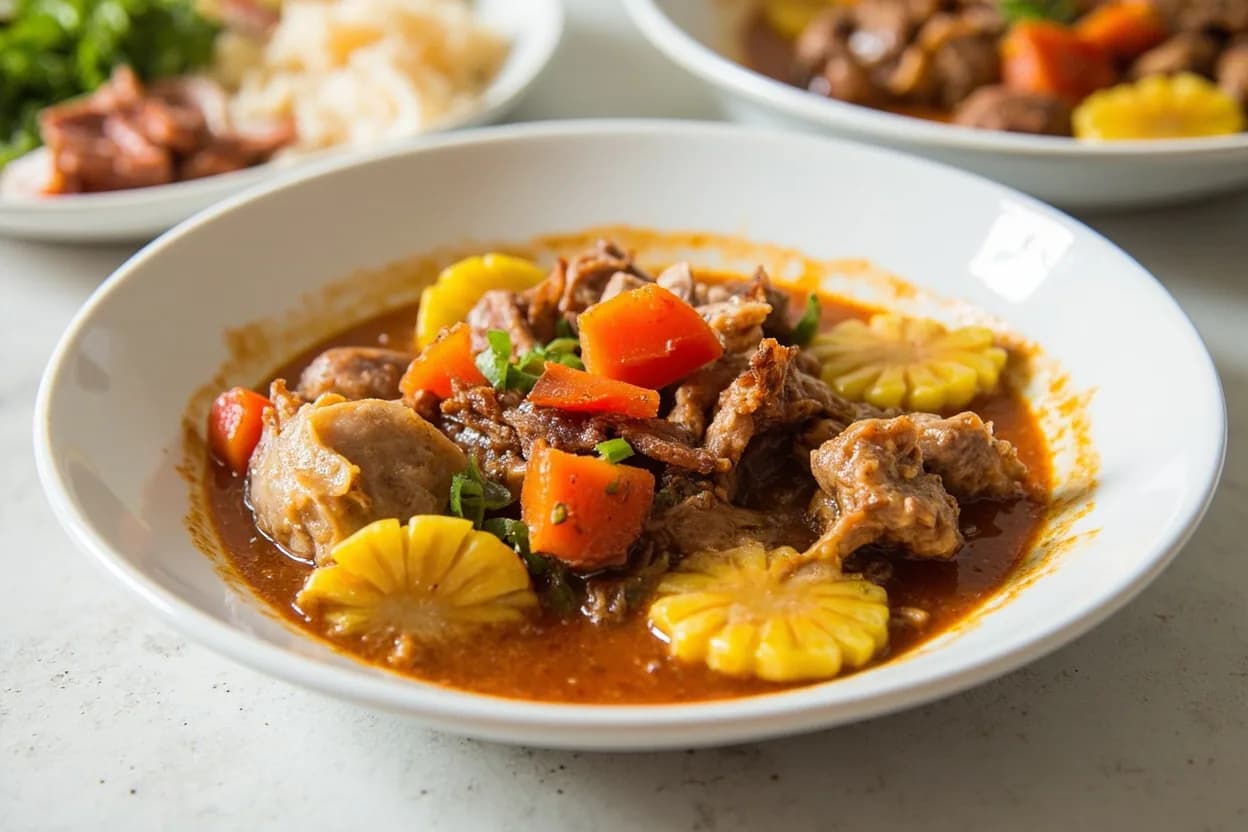
In Cuban Counterpoint: Tobacco and Sugar (1940), the anthropologist Fernando Ortiz described Cuban culture itself as an ajiaco — the island's own root-vegetable-and-meat stew — arguing that Taíno, Spanish, African, Chinese, and other arrivals did not simply layer atop one another but dissolved and re-formed into something genuinely new, a process he called transculturación. The metaphor stuck: ajiaco criollo remains both a literal dish and the standard shorthand for how Cuban food, music, and identity were made.
The Special Period and the invention economy
When Soviet subsidies collapsed in 1991, Cuba entered the Período Especial, a decade of severe shortages rationed through the libreta de abastecimiento (ration book). Home cooks improvised now-legendary substitutions — pizza sauced with ketchup or tomato paste stretched with water, a 'beefsteak' made from marinated grapefruit rind, sugar-water 'coffee' — that live on in Cuban food memory as proof of resourcefulness under embargo and isolation, even as the underlying diet grew leaner and more starch-dependent.
El Barrio Chino and Cuban-Chinese fusion
Beginning in 1847, contracted Chinese laborers arrived in Cuba to work sugar plantations after the slave trade came under increasing international pressure; many later settled in Havana, building what became Latin America's largest Chinatown. Cantonese wok technique and soy sauce merged with Cuban sofrito and rice culture into hybrid dishes — arroz frito, chow fan-style fried rice with plantain, chop-suey-adjacent stir-fries served in fondas — that predate today's fusion cooking by more than a century, even though most of the barrio's ethnic-Chinese population emigrated after 1959.