Northern Europe
Irish
Also: Irish Cuisine, Irish Cooking, Traditional Irish Fare
A dairy-and-potato cuisine shaped by famine and revival — soda bread leavened without yeast, slow-simmered stews of mutton and root vegetables, and a modern artisan movement that reclaimed a tradition nearly erased by the Great Famine.
Irish cuisine is the vernacular cooking of a temperate, grass-rich island — a tradition built on dairy (butter, cream, buttermilk), oats, and the potato, cooked simply and communally in one-pot stews and quick, unyeasted breads. Shaped by centuries of tenant farming and by the trauma of the Great Famine, it favors resourcefulness and few, high-quality ingredients over elaborate technique; the modern farm-to-table revival, anchored by Ballymaloe and a new generation of artisan producers, has restored dignity to a repertoire that industrial-era poverty and emigration had long left undervalued.
The flavour base
Dairy fat — butter, cream, and buttermilk — is the primary source of richness; seasoning is restrained, built mainly on salt, black pepper, and parsley; buttermilk's tang defines soda bread and much traditional baking; leeks, onions, and thyme underpin stews; seaweed (dulse, carrageen moss) adds a mineral, briny note along the coast.
Pantry staples
Key ingredients
Signature techniques
Signature dishes
At the table
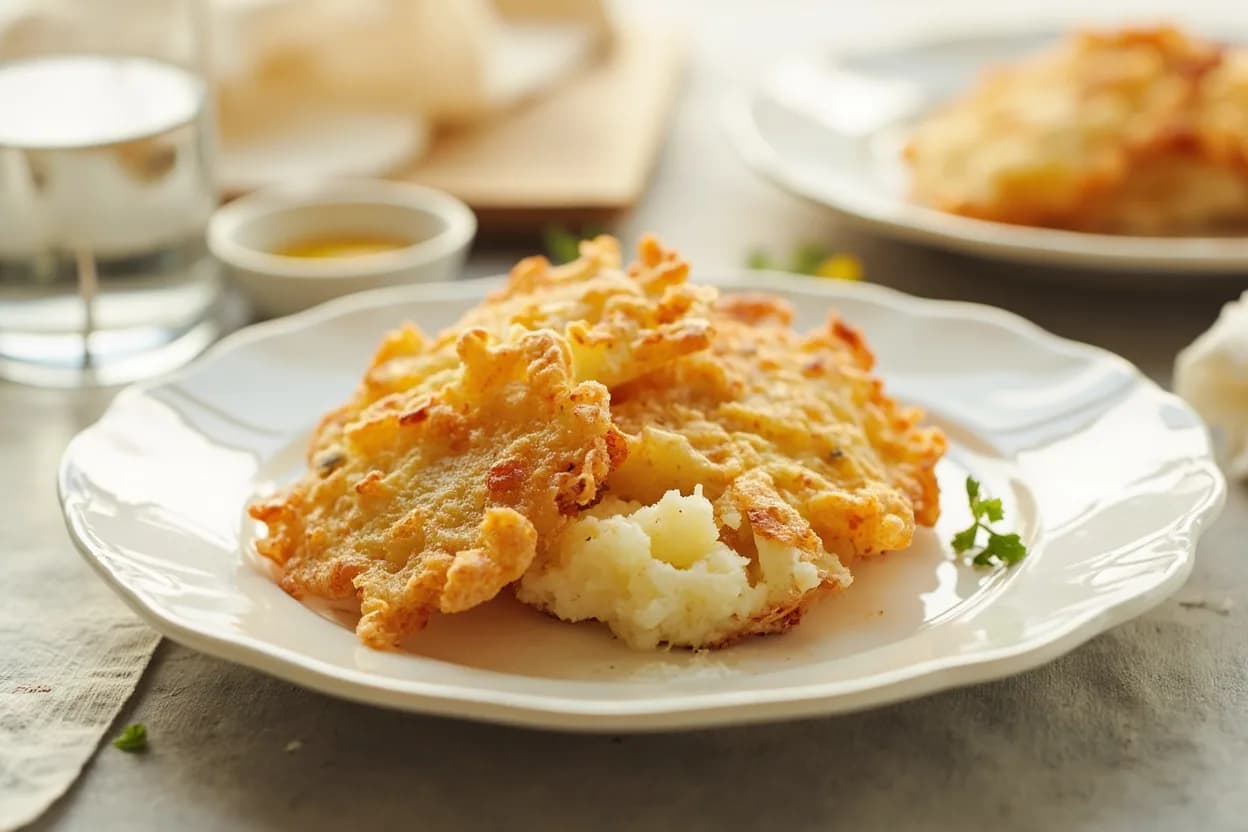
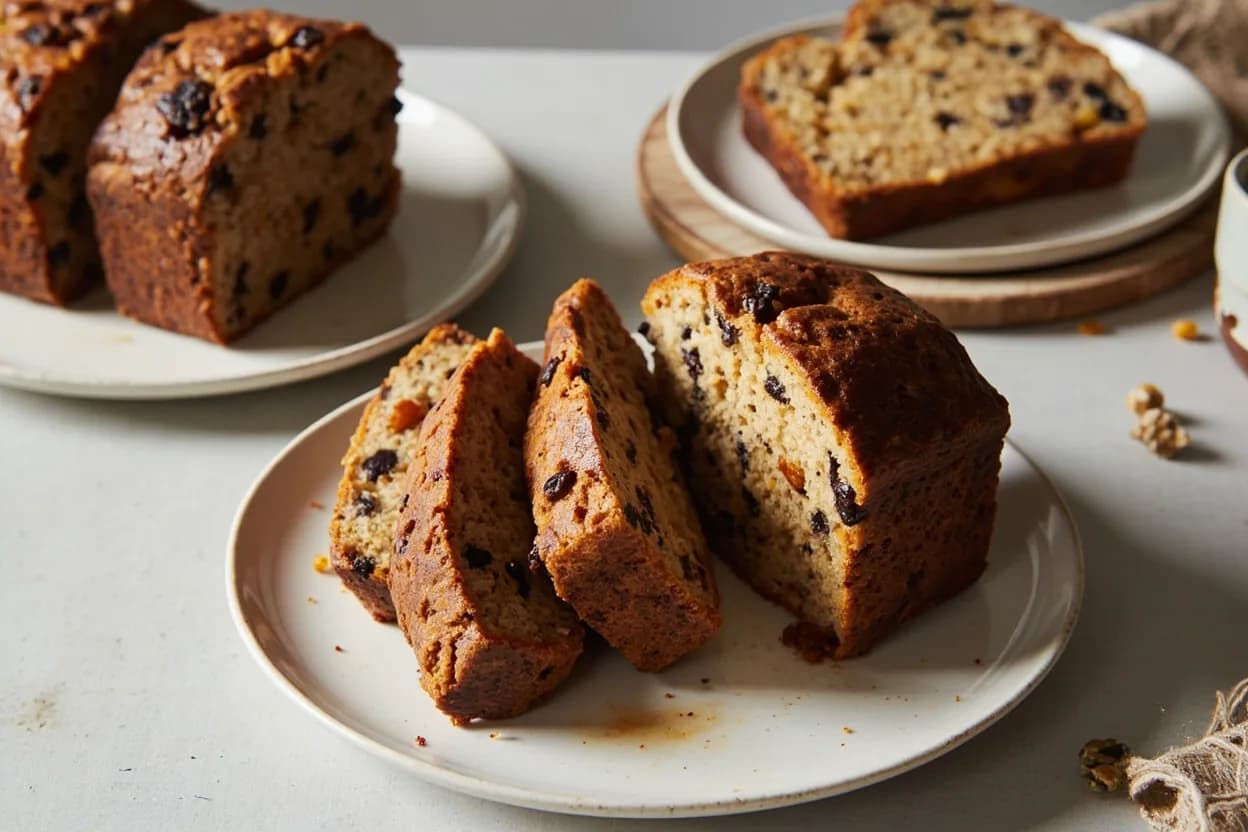
The traditional 'big breakfast' fry — bacon, egg, sausage, black and white pudding, soda bread or potato farls — anchors the day. Historically the midday dinner was the largest meal, tied to farm labor, with a lighter evening tea of baked goods (barmbrack, scones) and bread; Sunday roast dinner remains the week's ceremonial meal. The potato appeared in some form at nearly every course in the traditional diet, serving as the caloric anchor beneath stews, fries, and mashes alike.
History & context
Early Gaelic Ireland's diet was dairy-centered — milk, butter, curds, and whey alongside oats, some grain, wild game, and fish — a pattern set by Ireland's grass-rich, temperate maritime climate. Norman and English arrivals from the 12th century introduced some continental technique, but rural Ireland remained largely separate from elite English kitchens. The potato, arriving from the late 16th century, spread rapidly through the 18th century as a calorie-dense crop that could be grown on the tiny plots left to tenant farmers under the landlord system, eventually becoming the dominant staple of the rural poor. The Great Famine of 1845–1852, triggered by potato blight, killed roughly a million people and drove mass emigration that nearly halved the population over the following decades, entrenching decades of dietary conservatism and stigma around 'poor' food. Ireland's 20th century was economically constrained, keeping home cooking modest and largely unchanged. From the 1960s onward, and accelerating through the 1980s and 1990s, a farm-to-table revival led by figures such as Myrtle Allen and later Darina Allen at Ballymaloe House and Cookery School re-elevated Irish ingredients and technique, feeding today's artisan cheese, craft butter, and new-Irish restaurant movement.
Regional variations
- Dublin
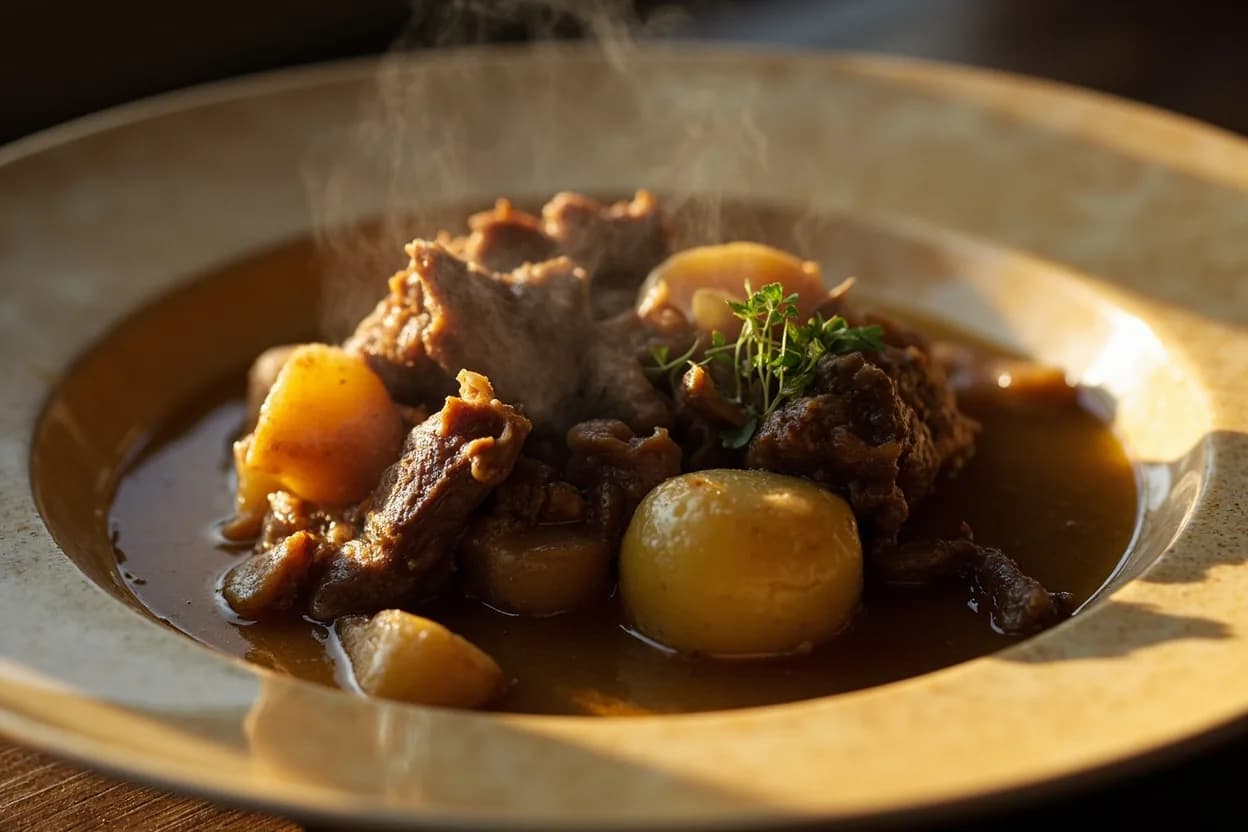
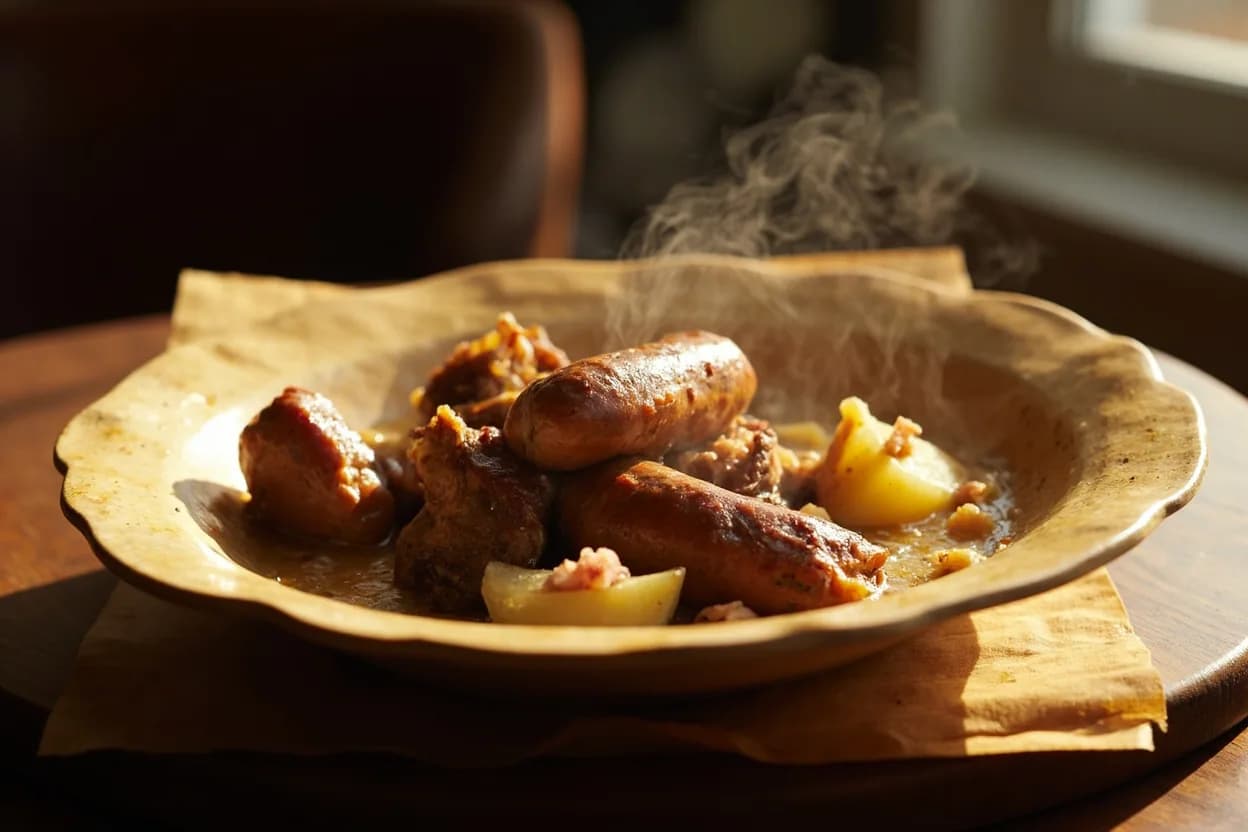
Coddle — a loose stew of sausage, bacon, and potato simmered rather than browned — is the city's defining working-class dish, traditionally made from whatever meat was on hand.
- West of Ireland (Galway & Connemara)
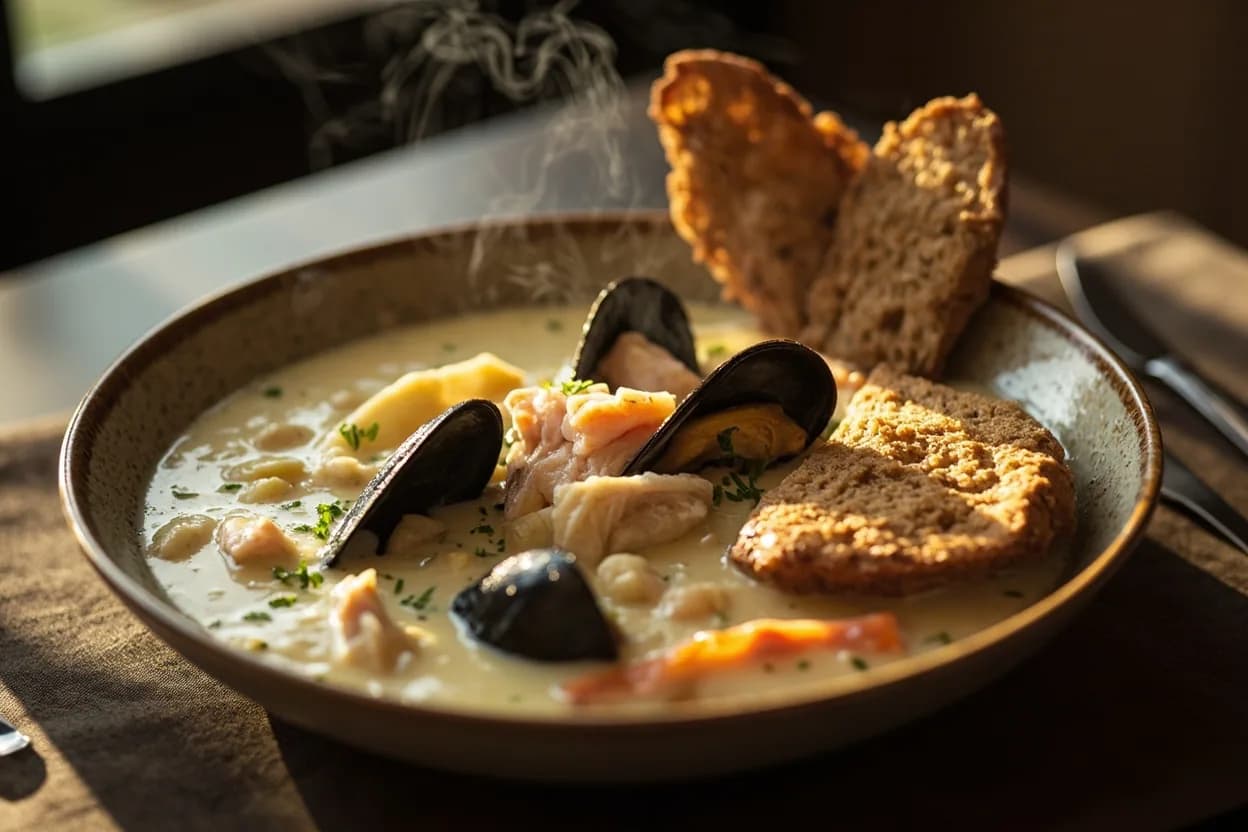
Seafood-forward tradition of Galway Bay oysters, mussels, and wild salmon; the Aran Islands preserve Irish-language foodways and an especially plain, ingredient-first style.
- Ulster / Northern regions
The Ulster fry adds soda farls and potato farls alongside bacon and eggs, distinguishing it from the Republic's version of the same fried breakfast.
- County Cork
Home of the Ballymaloe-led farm-to-table revival, a strong artisan cheese and charcuterie scene, and the Christmas tradition of spiced beef.
Related cuisines
- British
Shares the potato, dairy, and one-pot stew base, but diverges in bread style (soda bread vs. yeasted loaf) and pudding traditions; see British Farmhouse & Pub Tradition.
Shared oat culture and a similar repertoire of simple one-pot dishes (stovies parallels Irish stew); both lean on dairy and preserved fish.
Shared Celtic dairy and lamb traditions; cawl (Welsh lamb-and-leek broth) is a close structural cousin of Irish stew.
Canonical recipes
The dishes that define Irish, documented in the Canon.
References
- 1.Irish Traditional Cooking — Darina Allen (Kyle Books, revised ed. 2012)
- 2.The Country Cooking of Ireland — Colman Andrews (Chronicle Books, 2009)
- 3.A Little History of Irish Food — Regina Sexton (Kyle Cathie, 1998)
- 4.Irish Traditional Food — Theodora FitzGibbon (Gill & Macmillan, 1983)
Confidence: high
Notes
Soda bread: chemistry as tradition
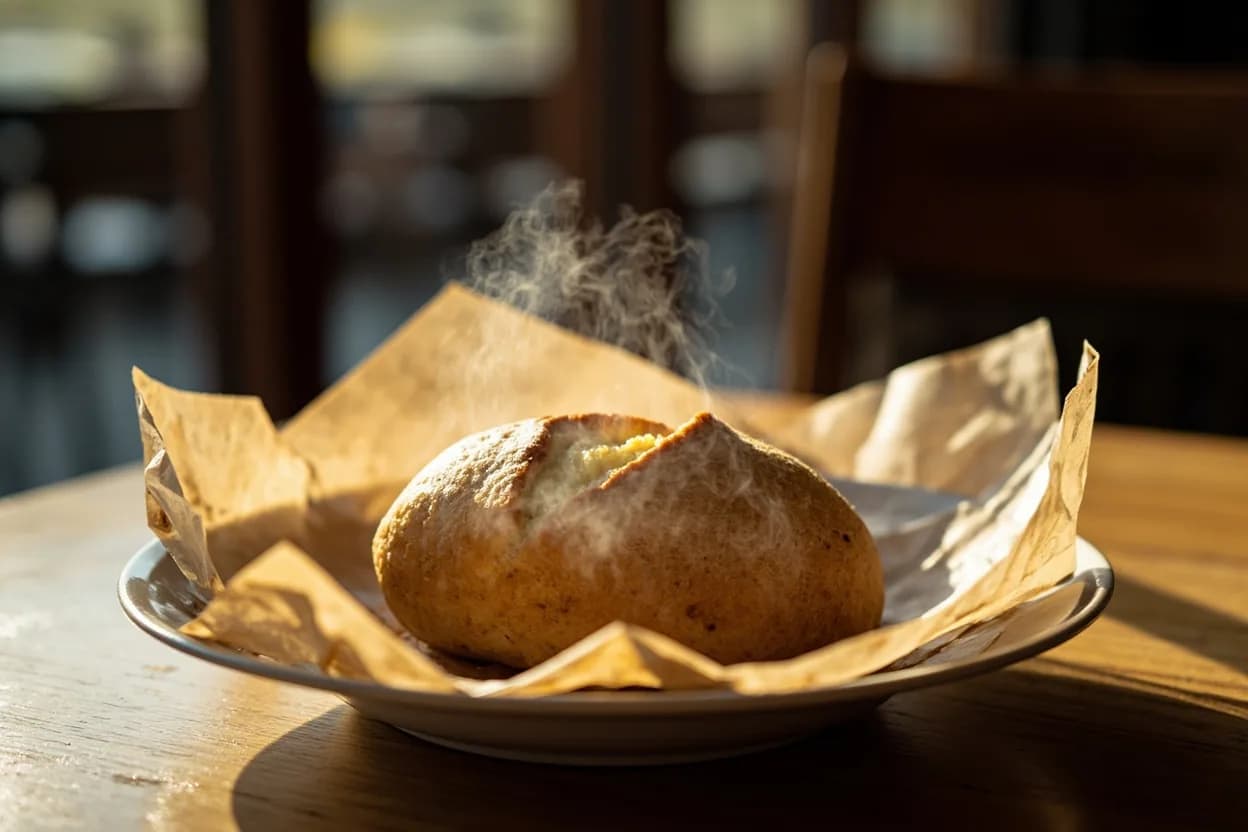
Ireland's dominant quick bread exploits a chemical reaction rather than yeast fermentation: buttermilk's lactic acid reacts with bicarbonate of soda to release carbon dioxide instantly, letting a loaf go from mixing bowl to oven in minutes with no proofing time. This suited a rural economy without reliable yeast supply or the fuel to keep an oven hot for a long slow bake, and produced the dense, faintly sour brown bread found at nearly every Irish table — traditionally scored with a cross, said by different tellers to let the fairies out or simply to help the loaf bake through evenly.
The Great Famine's dietary shadow
The potato blight (Phytophthora infestans) that struck from 1845 to 1852 destroyed the crop that had become, for much of the rural poor, close to the entire diet. An Gorta Mór killed roughly a million people and drove a million more to emigrate, halving the island's population over the following decades. The famine left a lasting stigma around the potato as 'poor food' that took over a century to shake off, and it scattered the diaspora that later reinterpreted Irish cooking abroad — corned beef and cabbage, often assumed to be classic Irish fare, is in fact a largely Irish-American dish, born of cheap kosher-deli beef substituting for the bacon used at home.
Bog butter
For centuries, Irish households buried wooden kegs of butter in peat bogs, whether for cold storage, tax avoidance, or to deliberately mature its flavor. The bog's cool, acidic, oxygen-starved conditions preserve organic matter remarkably well, and peat cutters still occasionally unearth kegs of bog butter, some dated to the early medieval period, recognizably butter-like after a thousand years underground — a striking physical record of how central dairying has always been to the Irish table.