Northern Europe
Scottish
Also: Scottish Cuisine, Scottish Cookery, Traditional Scottish Fare
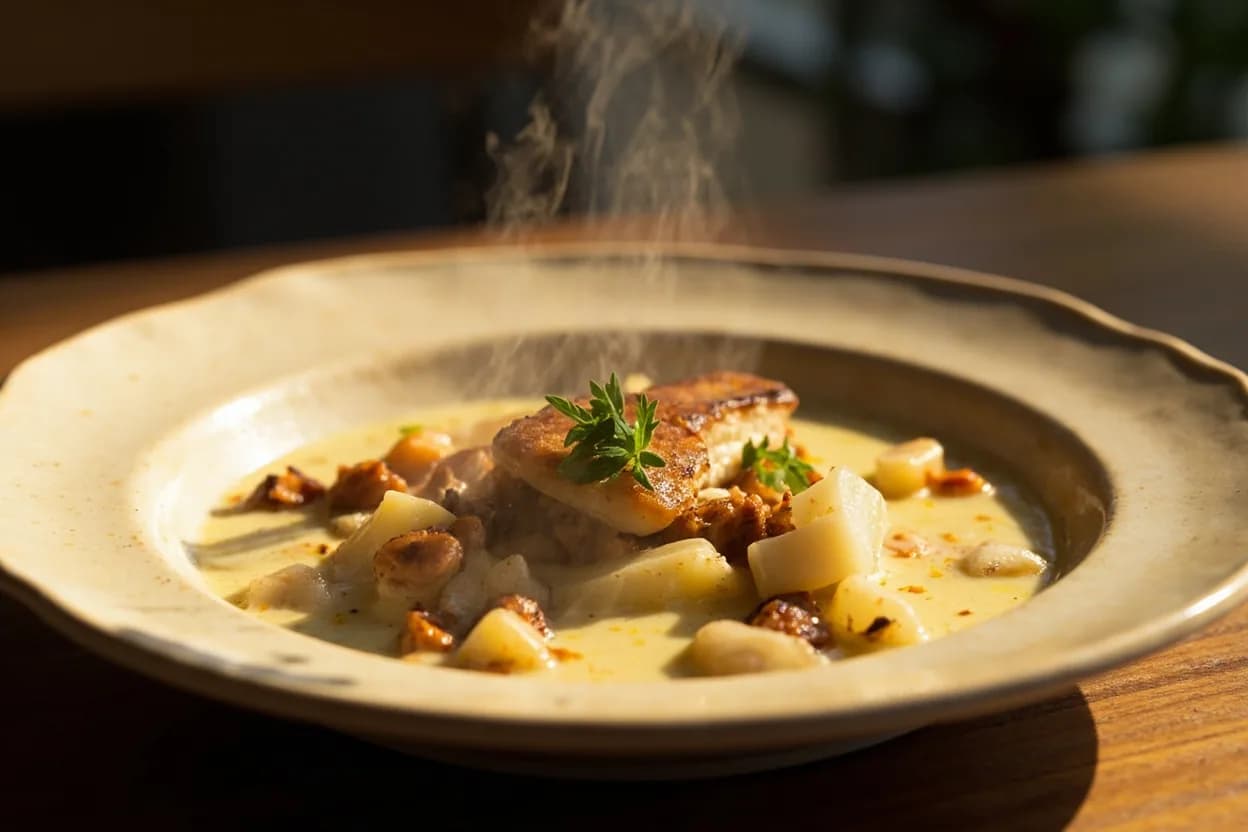
An oat-and-livestock cuisine of a cool, maritime nation — haggis with neeps and tatties, smoked-fish cullen skink, cranachan built on oats and cream, and a whisky tradition woven through cooking as much as drinking.
Scottish cuisine is the vernacular cooking of a cool, maritime, agriculturally marginal nation — a tradition built on oats, dairy, root vegetables, and hardy livestock, historically shaped by scarcity and by the social upheaval of the Highland Clearances, and expressed today in one-pot broths, offal cookery elevated to ceremony (haggis), and a whisky tradition that runs through both drink and dish. Modern Scottish cooking layers a farm-to-table revival — built on Aberdeen Angus beef, wild and farmed salmon, and North Sea shellfish — onto that older oat-and-broth foundation.
The flavour base
Oats as both structural staple and flavor signature (porridge, oatcakes, coatings, cranachan); black pepper and mace-like warm spice in haggis; smoked fish (haddock, salmon) contributing a distinctive smoky backbone to soups and breakfasts; whisky as a marinade, deglazing, and dessert-flavoring agent; cream and butter for richness; raspberries as the defining native fruit note in desserts.
Pantry staples
Key ingredients
Signature techniques
Signature dishes
At the table
The traditional Scottish breakfast (porridge, and often a full cooked breakfast with bacon, egg, and tattie scone) anchors the morning; the main midday or evening meal historically centered on a one-pot broth or stew (Scotch broth, stovies) with bread. Sunday and celebratory meals elevate to roasted meat or game. The Burns Supper, held on and around January 25th, follows a fixed ceremonial structure — cock-a-leekie or Scotch broth, haggis piped in and addressed with Burns's poem, neeps and tatties, then a dessert such as cranachan or Tipsy Laird, accompanied by whisky toasts.
History & context
Early Scotland's diet was shaped by a cool, wet, often marginal agricultural climate that favored oats over wheat, alongside barley, kale, and root vegetables, with fishing and livestock (particularly hardy cattle and sheep breeds suited to upland grazing) supplying protein. Norse settlement of the northern isles and west coast from the 8th century onward left lasting traces in Orkney and Shetland foodways, while trade with France through the 'Auld Alliance' (from the late 13th century) is often credited with French culinary vocabulary entering Scots cooking, such as 'ashet' (a serving platter, from French assiette) and 'gigot' for a leg of lamb. The 18th and 19th centuries' agricultural improvements and the Highland Clearances reshaped rural life and diet, displacing crofting communities and concentrating sheep farming; industrialization built Glasgow's and Dundee's urban working-class diets around cheap, dense, fried, and preserved food. Scotch whisky distilling, formalized and increasingly regulated through the 18th and 19th centuries, grew into both an export industry and a culinary institution woven through the national cuisine's flavoring and ceremony. Robert Burns's 1786 poem 'Address to a Haggis' elevated a humble offal dish into a national emblem, cemented by the now-global tradition of the Burns Supper each January 25th. Twentieth-century Scotland saw its traditional cooking overshadowed for decades by industrial and fast food, but a farm-to-table and artisan revival from the late 20th century onward — championed by food writers such as Catherine Brown and chefs working with Scottish beef, salmon, and game — has restored attention to the country's dairy, oat, and seafood strengths.
Regional variations
- Highlands
Game (venison, grouse), whisky distilling heartland, and oat-and-barley staples suited to poorer upland soil.
- Northern Isles (Orkney and Shetland)
Norse-influenced foodways with distinctive dishes such as Orkney bere bannocks (made from an ancient barley variety) and a strong fish-preservation tradition.
- Aberdeenshire / North East
Aberdeen Angus cattle country and home of Arbroath smokies and the Aberdeen buttery (a laminated, salty breakfast roll).
- Central Belt (Glasgow and Edinburgh)
Urban industrial-era cooking gave rise to the deep-fried food culture (fish and chips, and the famously deep-fried Mars bar) alongside a growing fine-dining and farm-to-table scene.
Related cuisines
Shared oat culture and a similar repertoire of simple one-pot dishes (stovies parallels Irish stew); both traditions lean on dairy, potatoes, and preserved fish.
- British
Shares potato, dairy, and roast traditions, but diverges in Scotland's oat-centrality, haggis, and whisky-forward flavoring not found in the English pub repertoire.
Shared Celtic dairy and lamb-broth traditions; cawl parallels Scotch broth as a national one-pot soup built on lamb or mutton and root vegetables.
Canonical recipes
The dishes that define Scottish, documented in the Canon.

References
- 1.The Scots Kitchen: Its Traditions and Lore, with Old-Time Recipes — F. Marian McNeill (Blackie & Son, 1929; Mercat Press reprint, 1993)
- 2.Scottish Cookery — Catherine Brown (Mercat Press, rev. ed. 1999; orig. 1985 as Scottish Regional Recipes)
- 3.Scots Cooking: The Best Traditional and Contemporary Scottish Recipes — Sue Lawrence (Hamlyn, 2004)
Confidence: medium
Notes
Haggis: offal cookery elevated to national dish
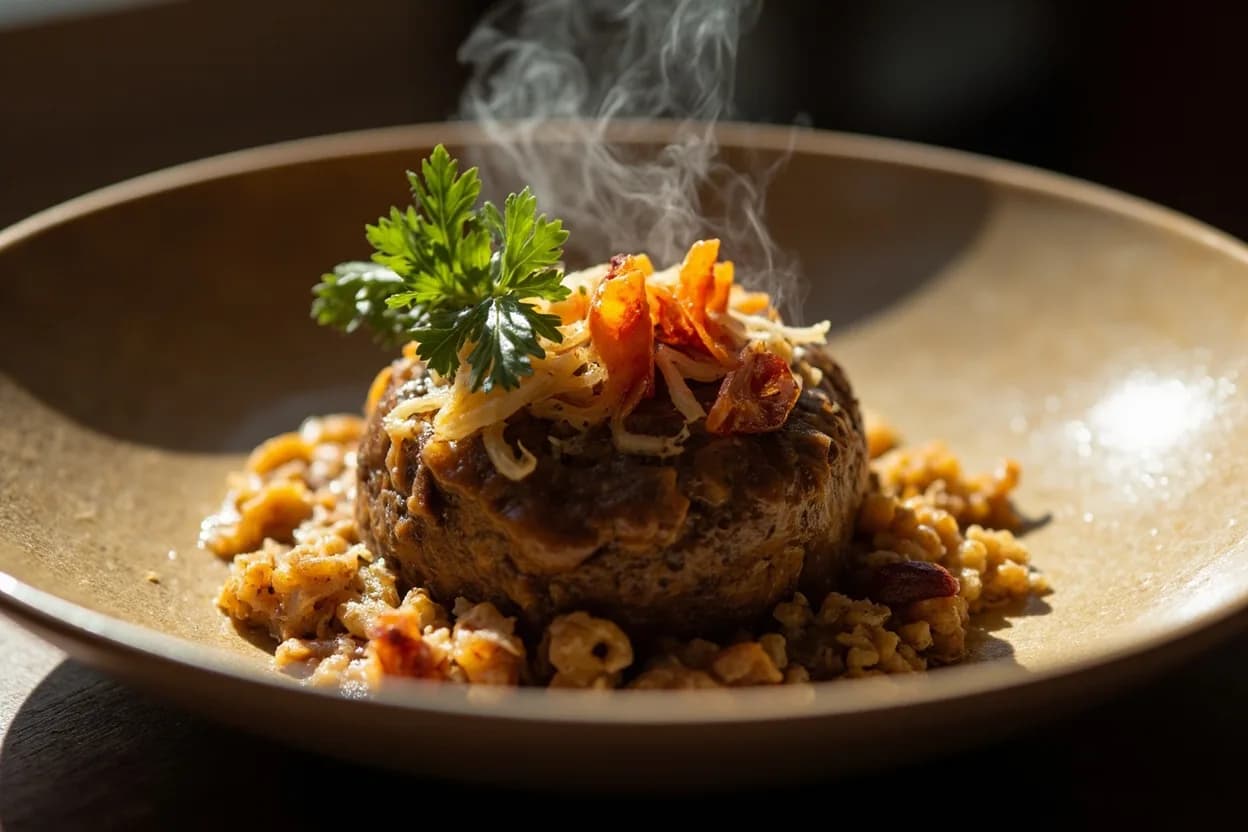
Haggis — a sheep's pluck (heart, liver, and lungs) minced with oatmeal, suet, onion, and spices, traditionally encased and simmered in a sheep's stomach lining — descends from a wider European and even ancient tradition of stuffed-organ cookery that used every part of a slaughtered animal, but Scotland is the place it survived and became an emblem of national identity rather than fading as industrial butchery made offal easier to discard. Robert Burns's 1786 poem 'Address to a Haggis' cemented its ceremonial status, and the dish is still piped in and ceremonially cut at Burns Suppers held every January 25th around the world.
Oats as the structural staple
Scotland's cool, wet climate suits oats far better than wheat, and for centuries oatmeal — as porridge, oatcakes, brose (oatmeal steeped in hot water or stock), and skirlie (fried oatmeal with onion) — served as the everyday caloric staple of the rural poor, much as the potato did in Ireland. The tradition survives today less out of necessity than as a defining flavor signature: oats appear as a coating for herring, a thickener in cranachan, and a defining ingredient of Scotland's export shortbread and oatcake industries.
Whisky as a culinary institution, not just a drink
Scotch whisky's protected geographic categories (Highland, Speyside, Islay, Lowland, Campbeltown) and centuries-old distilling tradition make it as culturally load-bearing to Scottish food identity as any dish — it appears as a marinade and deglazing liquid in sauces, a flavoring in cranachan, and the anchor of the Burns Supper toast, and its export success has done more than any single dish to define 'Scottish food' internationally.