Northern Europe
Welsh
Also: Welsh Cuisine, Cymraeg Cookery, Cooking of Wales
A pastoral cuisine of hardy lamb-and-leek cawl broth, toasted Welsh rarebit, seaweed laverbread paired with cockles, and griddle-baked bara brith and Welsh cakes — shaped by upland sheep farming and coastal foraging.
Welsh cuisine is the vernacular cooking of a mountainous, pastoral, and coastal nation within the British Isles, built on sheep and dairy farming in its uplands, purple laver seaweed and shellfish foraging along its coast, and a griddle-and-buttermilk baking tradition suited to homes historically without conventional ovens — distinct within Britain for its lamb-and-leek broth (cawl), its use of seaweed as everyday breakfast food (laverbread), and its Welsh-language-rooted dish names.
The flavour base
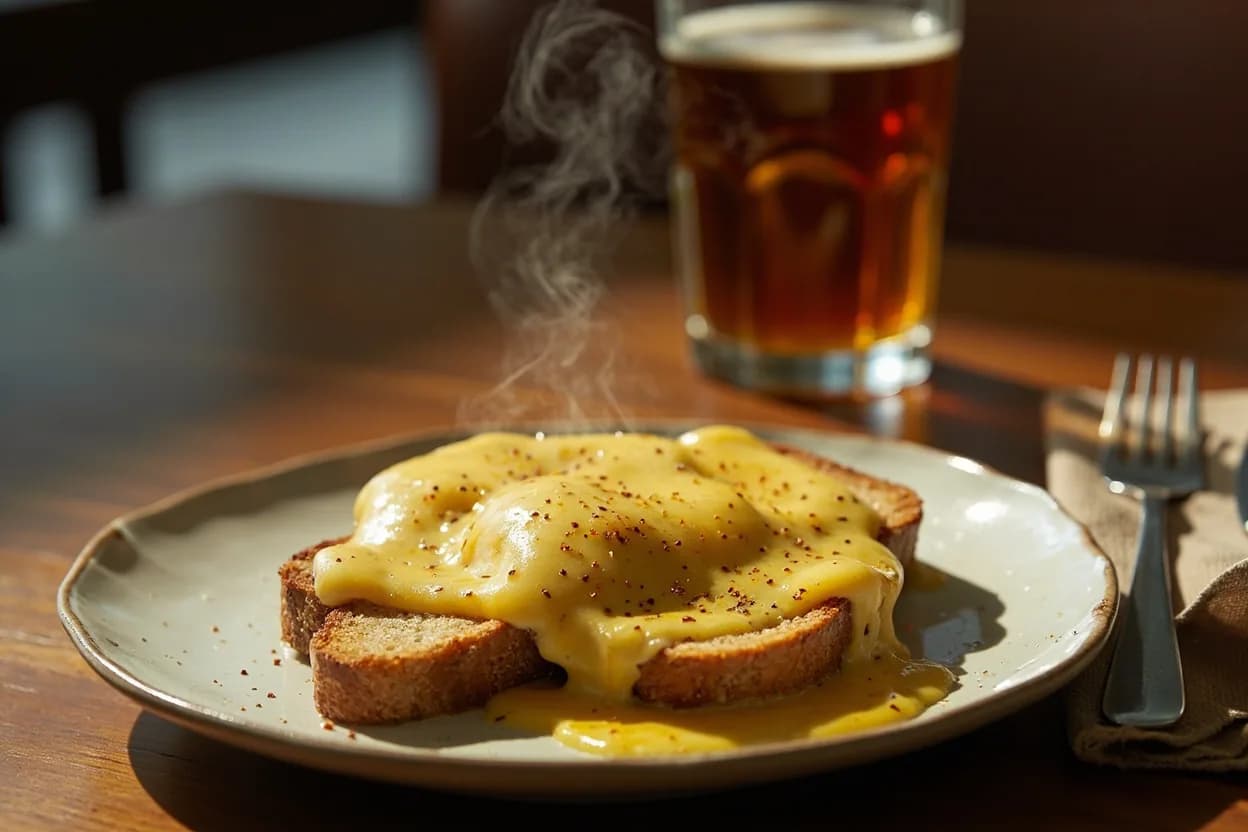
Leek and lamb as the defining savory pairing (cawl); Caerphilly and other Welsh cheeses melted into rarebit's mustard-and-ale sauce; buttermilk and oats in griddle baking; dried fruit (currants, raisins) steeped in tea for bara brith; salt and bacon fat seasoning laverbread and cockles; butter as the primary fat throughout.
Pantry staples
Key ingredients
Signature techniques
Signature dishes
At the table
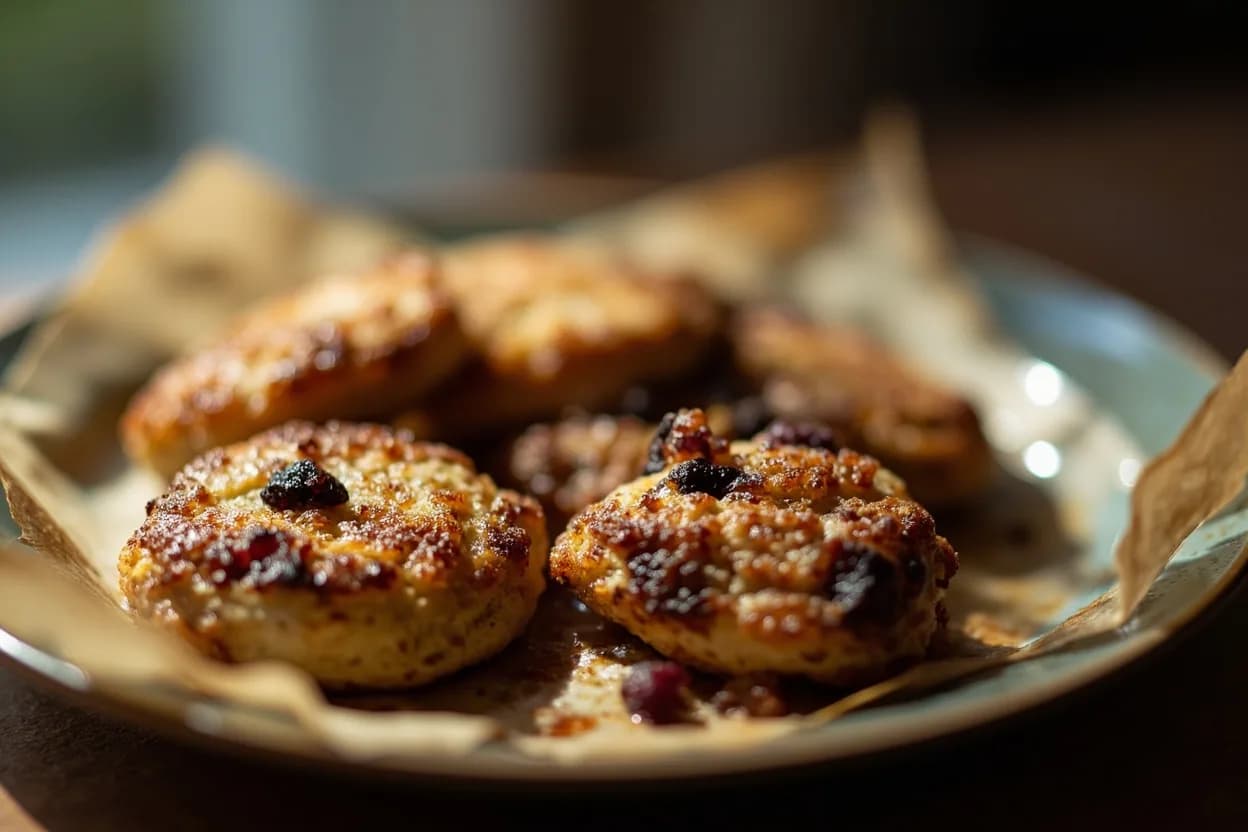
A traditional Welsh breakfast may include laverbread fried with bacon and cockles alongside eggs. Cawl historically served as a substantial midday or evening meal in farming households, its broth sometimes drunk first from a cup and the meat and vegetables eaten after as a second course. Welsh rarebit functions as a light lunch or snack, historically popular among industrial workers as a quick, cheap, hot meal. Afternoon tea in Wales customarily features Welsh cakes griddled fresh and bara brith sliced and buttered, alongside St David's Day (March 1st) as the occasion for the most deliberately 'Welsh' meal of the year, centered on cawl and leeks.
History & context
Wales's mountainous, wet terrain historically favored sheep and cattle pasture over arable grain farming, and its long Atlantic and Bristol Channel coastline supplied cockles, mussels, and laver seaweed to coastal communities from the medieval period onward, giving rise to a pastoral-and-coastal foodway distinct from lowland English wheat-and-beef cooking even as the two nations shared centuries of political union (formalized by the Laws in Wales Acts of 1535–1542). Cawl, a lamb-or-bacon-and-root-vegetable broth, developed as the archetypal dish of this upland economy, alongside oat- and buttermilk-based griddle baking (Welsh cakes, bara brith) suited to homes without a conventional oven. The 18th and 19th centuries' coal and slate industrialization of the South Wales valleys created a dense industrial working class whose diet leaned on cheap, calorie-dense foods — Welsh rarebit (toasted bread with a seasoned cheese sauce), bread and dripping, and laverbread with bacon among miners' breakfasts — while rural upland Wales retained its older lamb-and-dairy pastoral cooking largely unchanged. Welsh-language culture and identity, historically suppressed under English-dominated institutions, persisted strongly in rural foodways and named dishes (cawl, bara brith, teisen lap), and 20th-century food writers such as Theodora FitzGibbon documented and helped preserve this repertoire as industrial decline reshaped Welsh communities from the mid-20th century onward. A late-20th- and 21st-century revival of interest in Welsh lamb, Caerphilly cheese, and coastal foraged foods such as laverbread has renewed national and international attention to a cuisine long overshadowed by broader 'British' food framing.
Regional variations
- Gower Peninsula and Pembrokeshire (south-west coast)
Historic center of laverbread and cockle harvesting, with Penclawdd near Swansea especially associated with cockle-gathering.
- South Wales Valleys (industrial heartland)
Welsh rarebit and other cheap, calorie-dense dishes rose here alongside 19th- and 20th-century coal-mining life; faggots and peas is another valleys staple.
- Mid and North Wales (upland farming country)
Strongest pastoral lamb-and-dairy tradition and the heartland of cawl as an everyday farmhouse meal, alongside Caerphilly's namesake cheese-making town in the south.
- Anglesey and North Wales coast
Additional shellfish and dairy traditions, alongside a strong Welsh-language culture that keeps traditional dish names in everyday use.
Related cuisines
Shares a lamb-and-root-vegetable broth tradition (cawl parallels Irish stew) and a Celtic dairy-and-oat pastoral economy shaped by similar wet, upland farming conditions.
Shares Celtic dairy, lamb-broth, and griddle-baking traditions; cawl and Scotch broth are close national-soup cousins, and both nations griddle-bake oat- and buttermilk-based cakes.
- British
Shares rarebit, roast lamb, and pub-food framing with the wider British tradition, while retaining distinct Welsh-language dishes (cawl, bara brith) England's cuisine does not share.
Canonical recipes
The dishes that define Welsh, documented in the Canon.
References
- 1.The Taste of Wales — Theodora FitzGibbon (J.M. Dent, 1971)
- 2.Traditional Food in Wales — S. Minwel Tibbott (National Museum of Wales, 1991)
- 3.Bara Brith: The Story of Welsh Food — Carwyn Graves (Calon, 2022)
- 4.The Cambridge World History of Food — Kenneth F. Kiple and Kriemhild Conée Ornelas, eds. (Cambridge University Press, 2000)
Confidence: medium
Notes
Cawl as national dish
Cawl — a broth of lamb or bacon simmered with leek, potato, swede, and other root vegetables, traditionally served in two courses (the broth first, the meat and vegetables after, or the whole together with bread and Caerphilly cheese) — is widely treated as Wales's closest equivalent to a national dish, its ingredients and long, slow simmering reflecting a pastoral upland economy built on sheep and small-scale root-vegetable farming rather than the wheat and beef of lowland England.
Laverbread: seaweed as breakfast food
Bara lawr (laverbread) is a puréed, slow-cooked preparation of purple laver seaweed (Porphyra), traditionally sold rolled in oatmeal and fried, and served with bacon and cockles as part of a Welsh breakfast — one of the few Western European cuisines to treat seaweed as an everyday, rather than novelty, food, harvested for generations along the Gower Peninsula and Pembrokeshire coast.
Leeks, daffodils, and national symbol
The leek has been a Welsh national emblem since at least the Tudor period, worn on St David's Day (March 1st) and said, in a widely repeated tradition, to trace to a battle in which Welsh soldiers wore leeks in their caps to distinguish themselves from Saxon enemies — a legend of uncertain historical accuracy but a long-fixed piece of Welsh identity, reflected in cawl's leek-forward flavor and in the dragon-and-leek imagery of national celebration.