Central Asia
Kazakh
Also: Kazakh Cuisine, Qazaq Cuisine
A steppe herding cuisine of boiled horse and mutton, fermented mare's milk and dried curd — beshbarmak and kazy sausage over hand-cut noodles — reshaped mid-century by forced collectivization and Russian, Korean and German settlement.
Kazakh cuisine is, structurally, a nomadic-pastoral cuisine of the Eurasian steppe: boiled meat (historically horse and mutton above all), dried and fermented dairy, and minimal reliance on grain or vegetables, which the vast grassland terrain never supported at scale. Its base unit is not a spiced sauce or a vegetable preparation but an animal, butchered and used almost entirely — meat boiled, fat rendered, blood and offal made into sausage, milk fermented or dried for storage across a season with no fresh supply. Twentieth-century settlement (Russian, Ukrainian, Korean, German, Soviet-era agricultural expansion) layered bread, dill, cabbage and rice-based dishes on top of this base without replacing it.
The flavour base
Salt, rendered fat (mutton or horse) and the meat's own boiling liquor are the primary flavor base; black pepper is used but the palate stays plain rather than spiced. Dill is a distinctly Russian-influenced addition used in broths and salads. Fermented dairy — kumys, shubat, kurt — supplies a sour note that runs through the cuisine independent of any hot seasoning. Onion, boiled or raw, is the main aromatic vegetable.
Pantry staples
Key ingredients
Signature techniques
Signature dishes
At the table
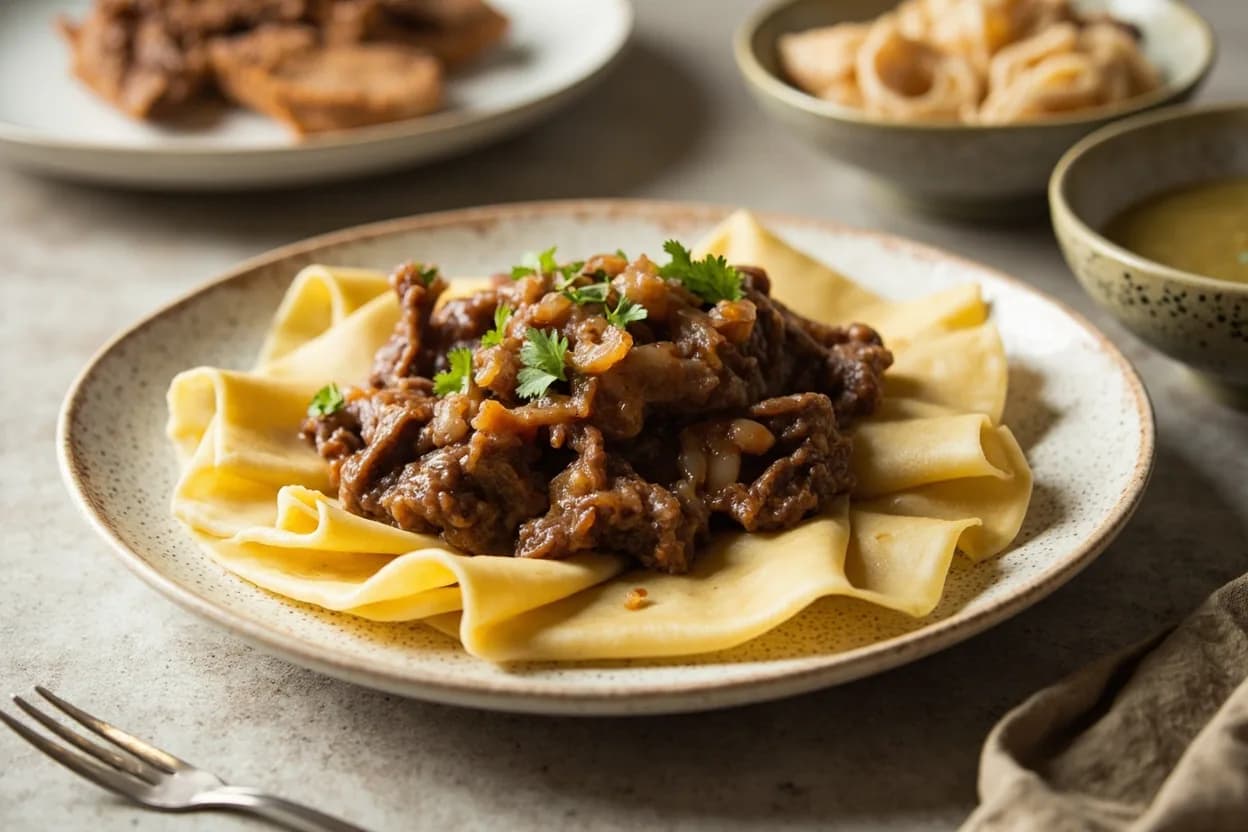
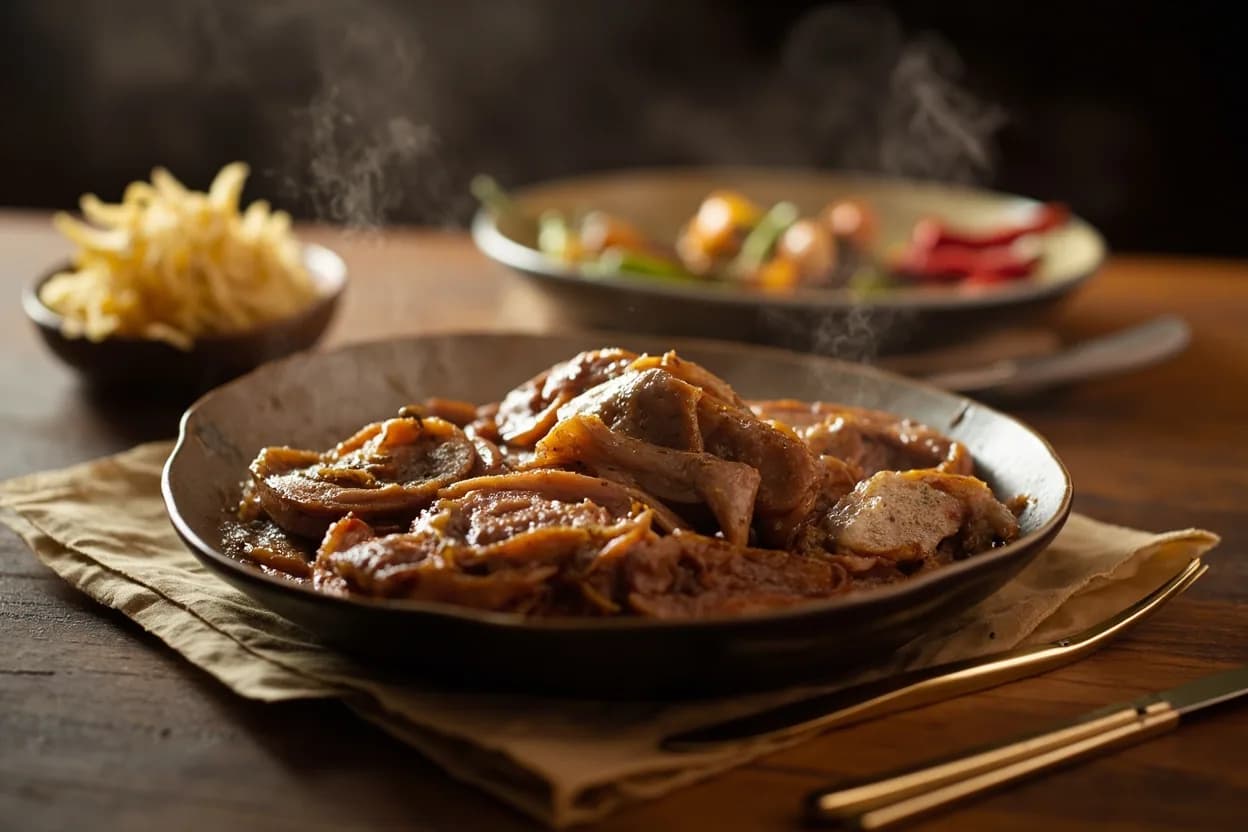
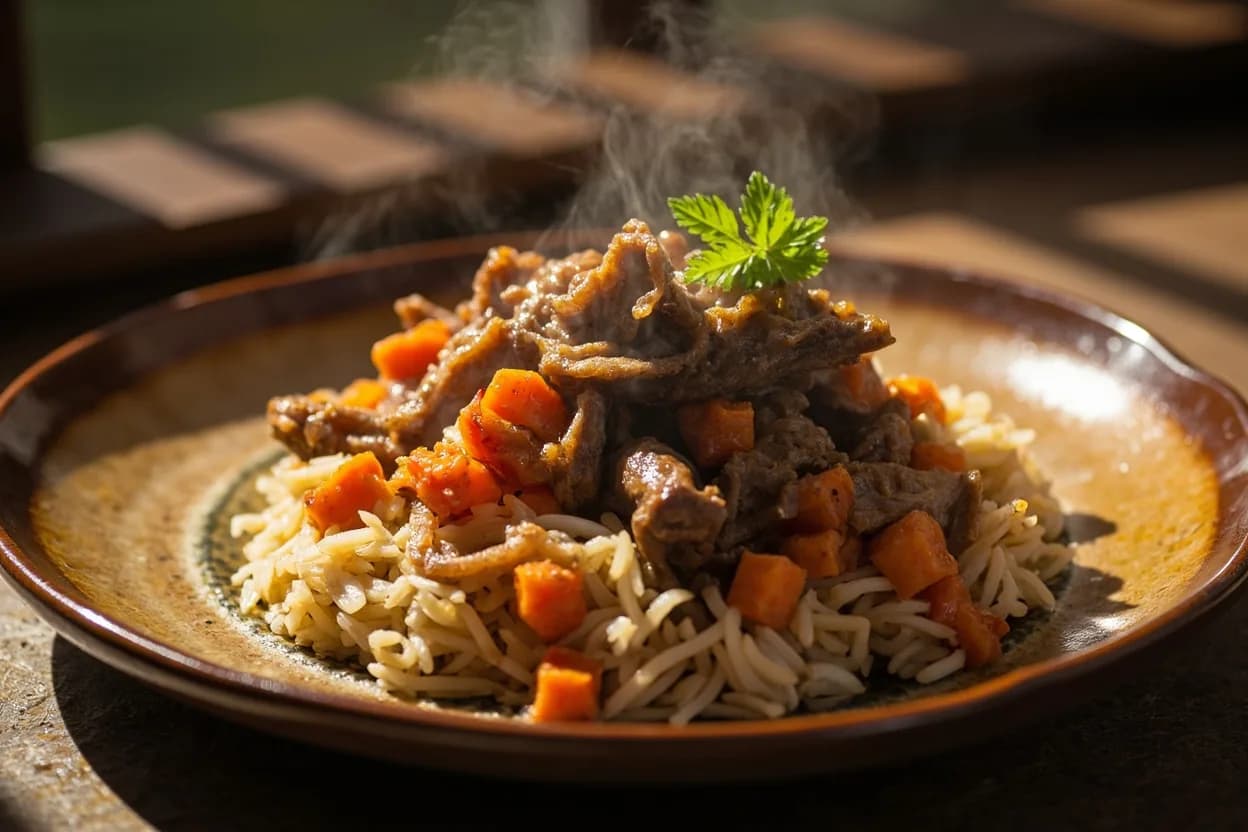
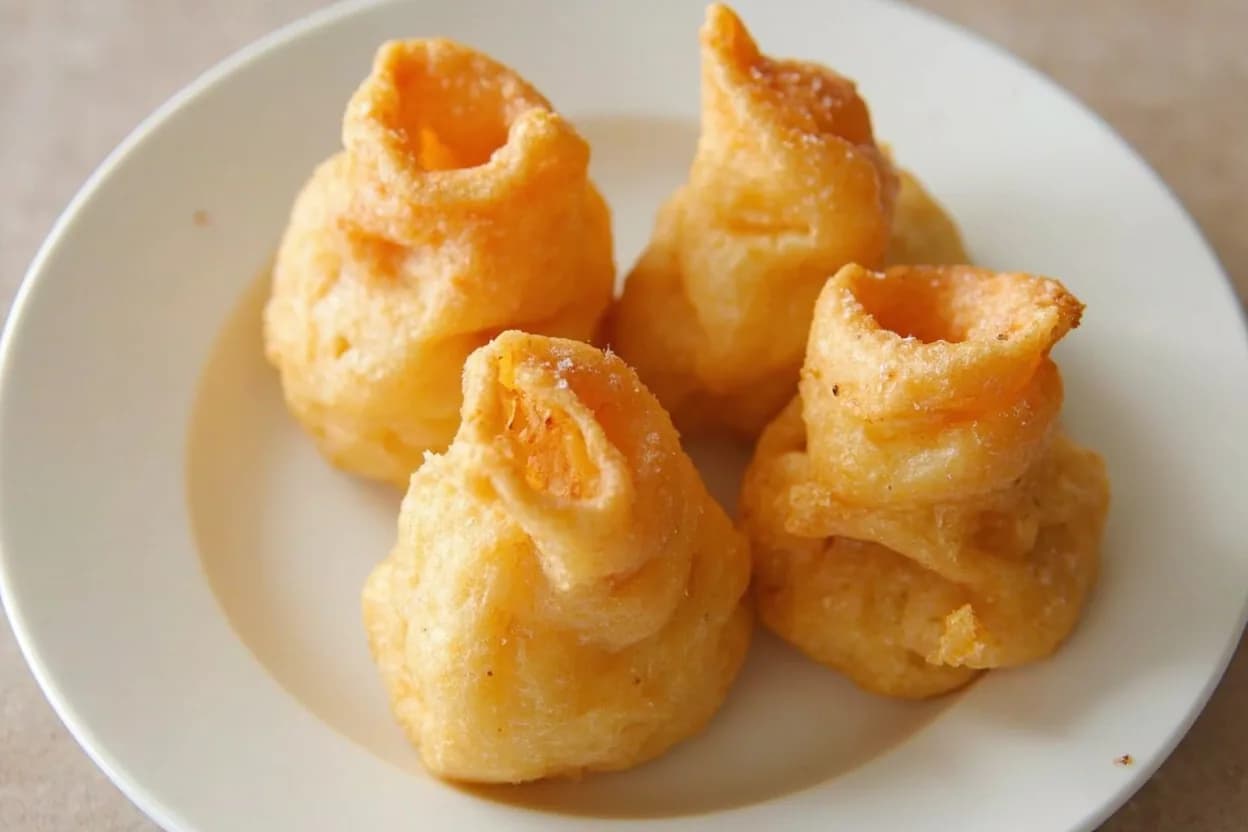
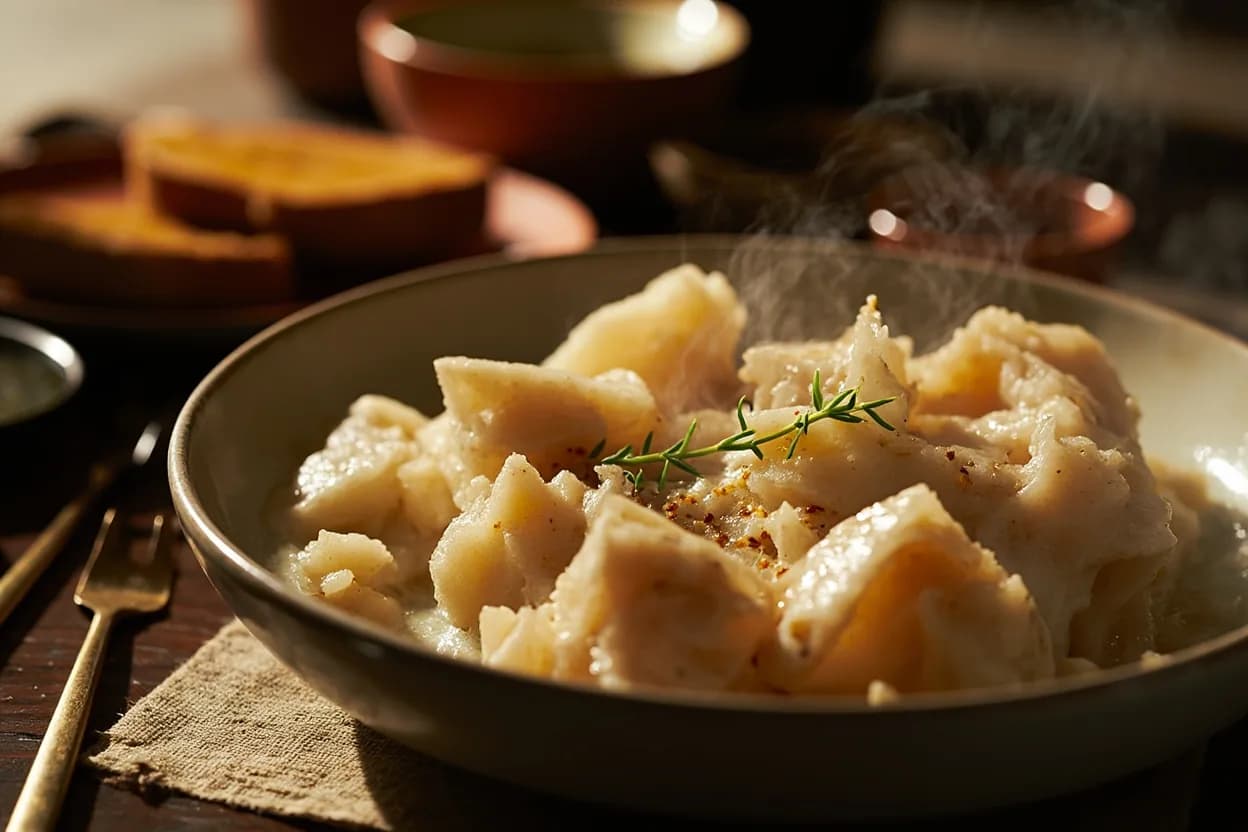
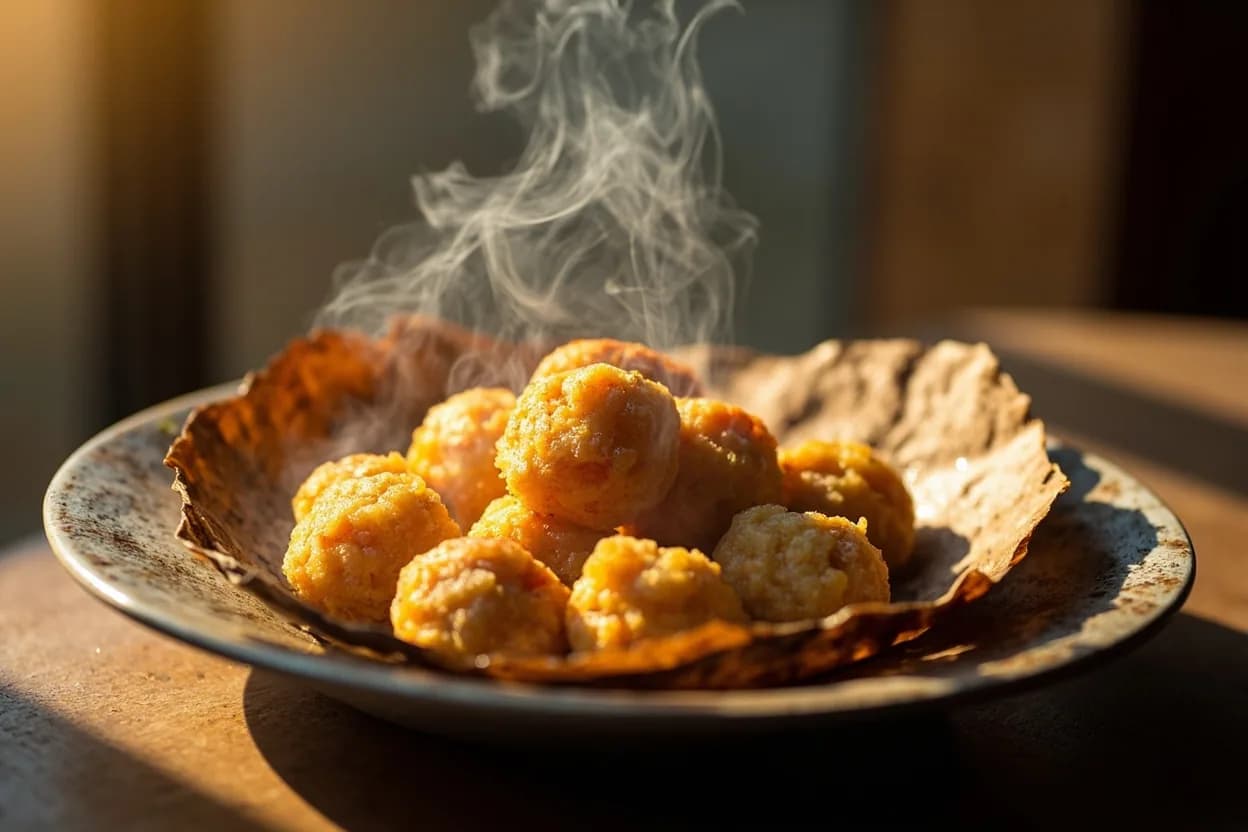
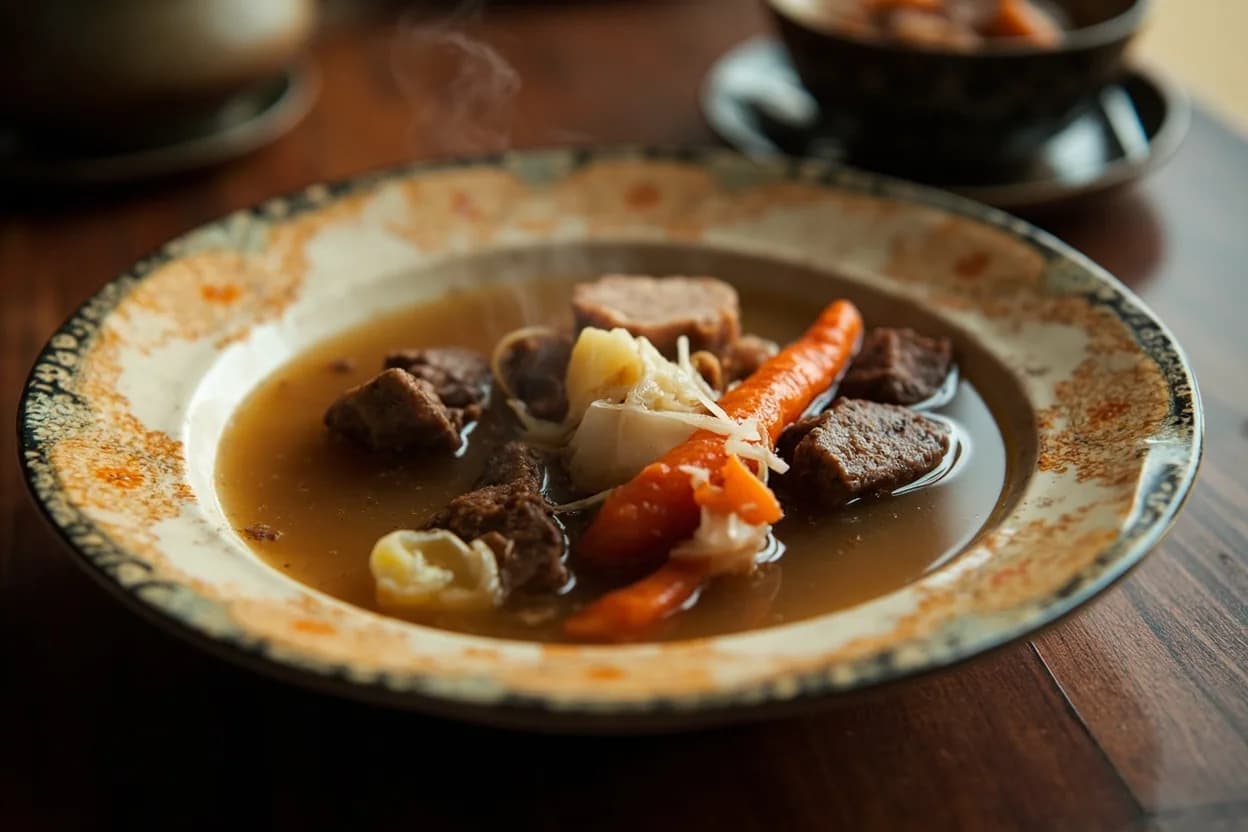
The largest, most ceremonial meal centers on a whole boiled sheep or horse served over broad hand-cut noodles (beshbarmak, literally 'five fingers,' eaten by hand), with the head presented to the most honored guest and portioned out by them according to strict protocol. Meals otherwise proceed from tea and dairy snacks (kurt, baursak fried dough, bread) through a soup or broth to the main boiled-meat course; hospitality obliges a host to feed any guest without notice, a norm that long predates and outlives any single meal's contents. Horsemeat sausage (kazy) and other cured meats are festival and winter foods, tied to the autumn slaughter (soghym) that once supplied a family's meat for the entire cold season.
History & context
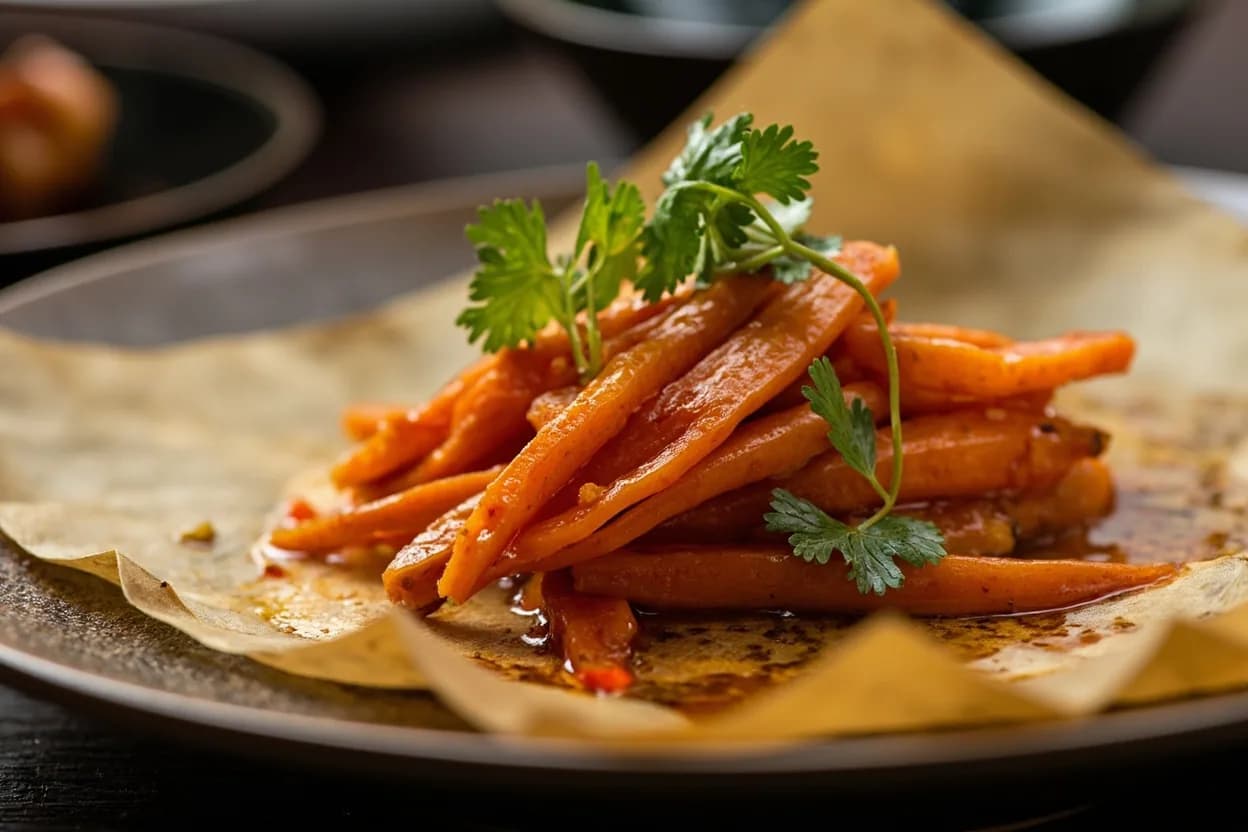
Kazakh food culture through the 19th century was that of Turkic-Mongol steppe nomads whose wealth and diet were measured in livestock — horses above all, prized for meat as much as transport, alongside sheep, goats, cattle and camels. The single most consequential event in modern Kazakh food history is the Soviet collectivization campaign of 1929-1933: forced settlement of nomadic herders and confiscation of livestock for state farms destroyed the majority of the national herd and triggered a famine (the Goloshchekin famine, or Asharshylyq) that killed an estimated 1.5 million Kazakhs — around 38% of the ethnic Kazakh population, the deadliest famine relative to population of the entire Soviet collectivization era. It permanently altered the demographic and economic base of the cuisine, pushing many survivors into settled agricultural or urban life. The same Soviet period brought mass deportations into Kazakhstan of Volga Germans, Chechens, and, in 1937, ethnic Koreans from the Russian Far East, whose spiced pickled-carrot salad (kore morkovi, 'carrots in Korean style') became a fixture of tables across the whole former USSR, Kazakh included. Virgin Lands agricultural campaigns from 1954 turned huge areas of the steppe to wheat farming under Khrushchev, adding bread and grain dishes to a diet that had had little of either. Post-1991 independence has seen beshbarmak promoted as a national symbol even as it is shared, with local variation, across Kazakh, Kyrgyz and other Central Asian nomadic Turkic peoples.
Regional variations
- Western Kazakhstan (Caspian/Mangystau)
Closer historical contact with camel-herding Turkmen and Karakalpak neighbors gives more prominence to shubat and camel meat.
- Southern Kazakhstan (Shymkent, near Uzbekistan)
Greater Uzbek influence brings more rice-based plov, orchard fruit and irrigated vegetables into an otherwise meat-and-dairy diet.
- Northern Kazakhstan (Virgin Lands wheat belt)
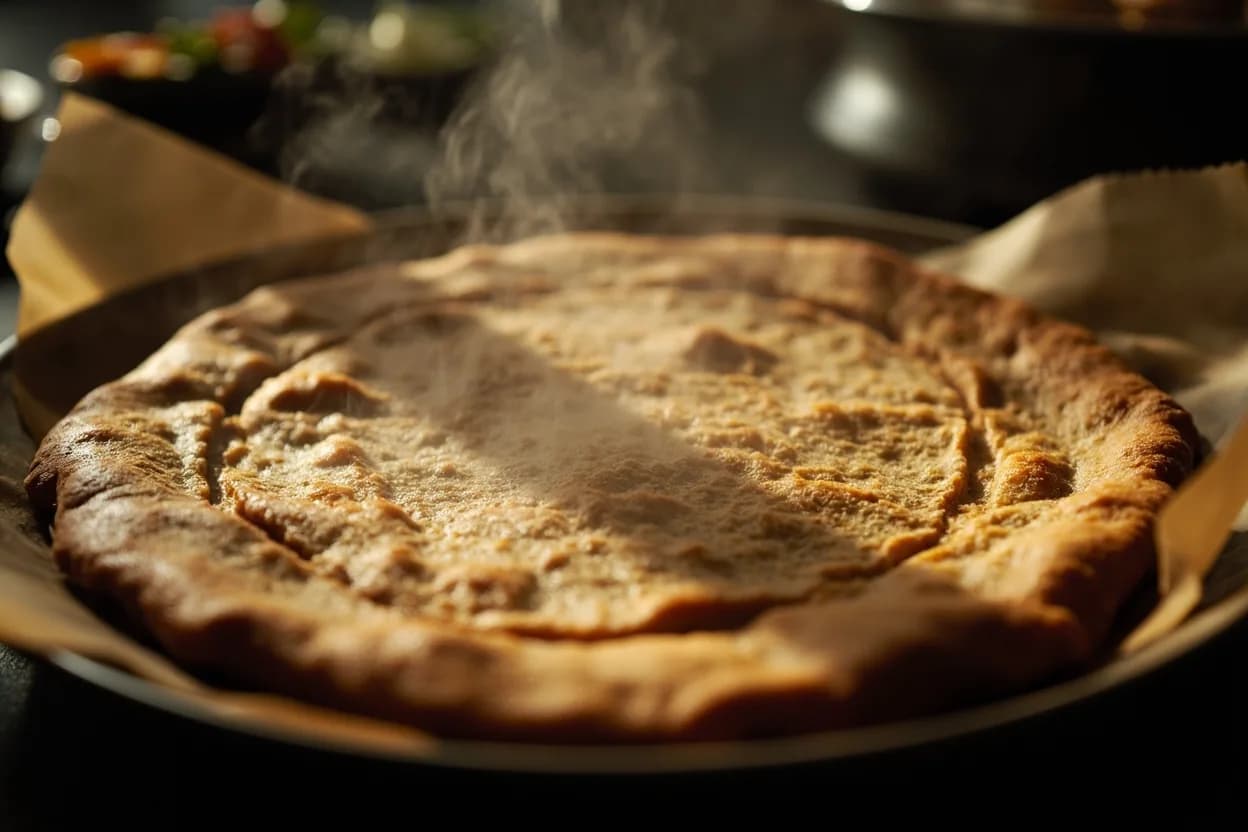
Heavier Russian and Ukrainian settlement from the 1950s Virgin Lands campaign means more bread, dumpling (pelmeni-style) and cabbage dishes.
- Almaty and other cities
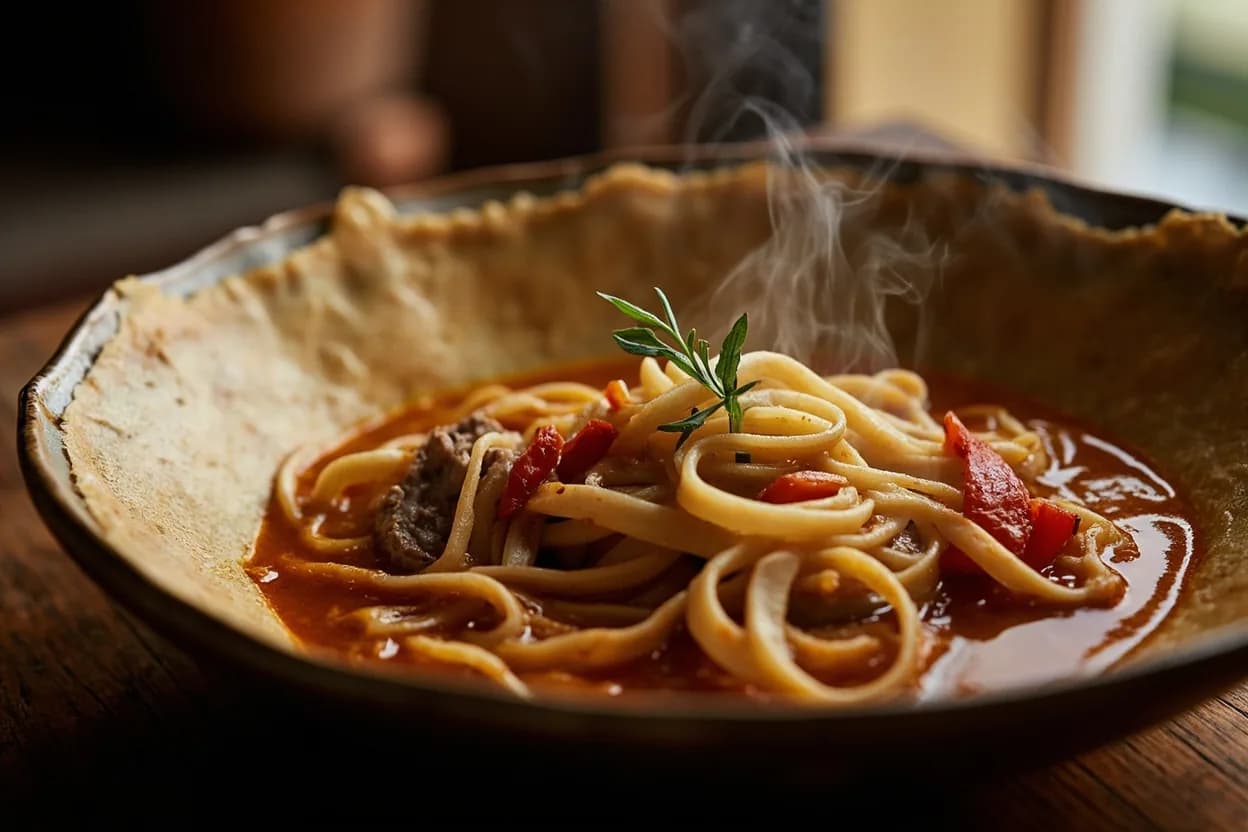
Large Uyghur and Dungan (Hui Chinese Muslim) communities have made spiced noodle dishes like lagman and ashlan-fu common urban street food alongside traditional Kazakh dishes.
Related cuisines
Both are nomadic-pastoral cuisines built on boiled meat and fermented mare's milk, but Kazakh cuisine developed horsemeat sausage (kazy) and hand-cut noodle beshbarmak in longer contact with settled Turkic and Russian neighbors that Mongolia's more isolated steppe did not share.
- Kyrgyz
Beshbarmak, kumys and boiled-mutton hospitality customs are shared almost dish-for-dish; the two cuisines are closer to regional variants of one nomadic tradition than to separate national cuisines, and both peoples claim beshbarmak as their own.
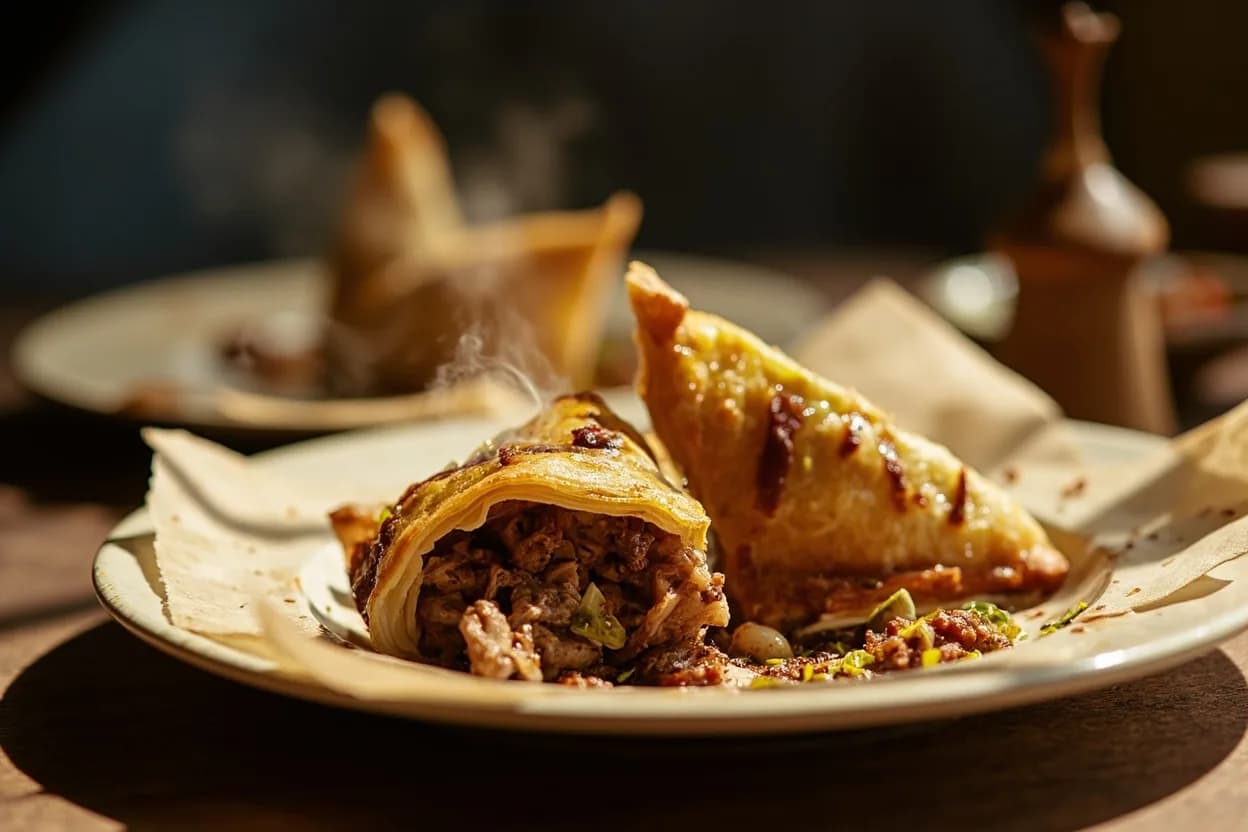
Shares plov, samsa, manti and lagman, but Kazakh versions of these borrowed dishes sit inside a pastoral, dairy-heavy diet, while in Uzbek cuisine plov and bread are the structural center of a settled, irrigation-agriculture cuisine.
Canonical recipes
The dishes that define Kazakh, documented in the Canon.
References
- 1.Please to the Table: The Russian Cookbook — Anya von Bremzen and John Welchman (Workman, 1990)
- 2.Milk! A 10,000-Year Food Fracas — Mark Kurlansky (Bloomsbury, 2018)
- 3.Stalin's Genocides — Norman Naimark (Princeton University Press, 2010)
- 4.The Kazakh Famine of 1930-33: Stalin and the Making of Soviet Kazakhstan — Sarah Cameron (Cornell University Press, 2018)
Confidence: medium
Notes
Beshbarmak as 'the national dish' is a modern framing over an older shared practice
Beshbarmak's promotion as Kazakhstan's singular national dish is largely a post-1991 nation-building move rather than an old, exclusive claim. The dish itself — boiled meat served over broad noodles with onion sauce, eaten by hand, meat portioned by seniority — is a genuinely old nomadic Turkic practice shared essentially identically across Kazakh, Kyrgyz, and other steppe peoples, each of whom now promotes it as their own national emblem in tourism material and state ceremony. The underlying custom (whole-animal hospitality, meat portioned to guests by rank, noodles as a late, wheat-derived addition to an older boiled-meat tradition) long predates any modern state; the 'national dish' label is a 20th/21st-century overlay assigning single ownership to a practice that was never exclusive to one nation.
The 1930-33 famine was demographically catastrophic and reshaped the cuisine's base
The Soviet collectivization drive against Kazakh nomads in 1929-1933 forced settlement and confiscated livestock on a scale that destroyed roughly 90% of Kazakhstan's pre-collectivization herd and killed an estimated 1.5 million people, around 38% of the ethnic Kazakh population — proportionally the worst famine death toll of the entire Soviet collectivization era, worse even than the Ukrainian Holodomor's share of Ukraine's population. Historian Sarah Cameron's research frames it as a near-genocidal event carried out with foreseeable knowledge of its consequences. Its food-culture legacy is durable: a huge share of the population that survived did so by abandoning nomadism for good, which is a large part of why Kazakhstan today, unlike Mongolia, has permanently shifted toward settled agriculture and urban food supply rather than any post-Soviet revival of mobile herding.
Kore morkovi is a deportation dish that became pan-Soviet, not a Korean import in any direct sense
The spicy shredded carrot salad ubiquitous on Kazakh and Central Asian tables today, kore morkovi ('Korean-style carrots'), was invented in the USSR by ethnic Koreans (Koryo-saram) forcibly deported from the Russian Far East to Kazakhstan and Uzbekistan in 1937 under Stalin's ethnic-cleansing policy against border populations deemed suspect. Lacking napa cabbage and the ingredients for true Korean kimchi, the deported community adapted the technique to locally available carrots, garlic, vinegar and coriander seed, producing a dish that exists nowhere in Korea itself but became, within a couple of generations, a standard item on Kazakh, Uzbek, and Russian tables alike — a rare case of a deportee community's improvised substitute becoming mainstream host-nation food.